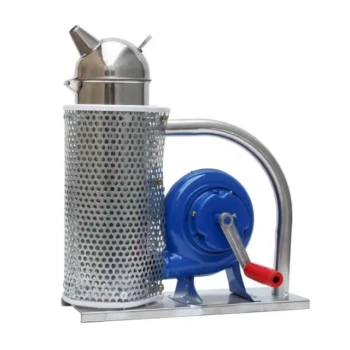
Hyperthermia devices in beekeeping operate on the principle of thermal differential. By precisely raising the temperature of the hive or capped brood frames to a range typically between 40°C and 47°C, these devices exploit the biological vulnerability of parasites. This targeted heat eliminates Varroa mites through metabolic disruption and protein damage while leaving the more heat-tolerant honeybee larvae unharmed.
The core mechanism is the "heat gap"—a specific temperature window where Varroa mites undergo fatal protein denaturation, but honeybee larvae survive. This offers a physical, chemical-free alternative for pest management.
The Science of Thermal Differential
Exploiting Biological Limits
Every organism has an upper critical temperature that it can withstand before biological systems fail.
Hyperthermia devices are engineered to identify and target the specific gap between the heat tolerance of the honeybee and the heat tolerance of the Varroa mite.
The Critical Temperature Range
The effectiveness of this method relies on staying within a precise window, specifically 40°C to 47°C.
Within this narrow band, the environment becomes lethal to the parasite but remains safe for the host (the honeybee brood).
Mechanism of Action
Protein Denaturation
When exposed to temperatures in the target range, the proteins within the Varroa mite's body begin to lose their structure.
This process, known as denaturation, causes the proteins to unfold and stop functioning, leading to irreversible cellular damage.
Metabolic Disruption
Heat stress impacts the metabolic rate of the mite.
The elevated temperatures force the mite's metabolism into a state of disruption that it cannot sustain, ultimately causing death.
Understanding the Trade-offs
The Requirement for Precision
The most significant challenge with hyperthermia is the need for exact temperature regulation.
If the temperature drops too low, the treatment is ineffective; if it spikes too high, you risk killing the bee larvae along with the mites.
Reliance on Hardware
Unlike simple chemical strips, this method requires specialized equipment to control the hive environment.
This shifts the beekeeper's burden from managing chemical schedules to managing hardware and power sources.
Making the Right Choice for Your Goal
This technology represents a shift from chemical warfare to physical intervention. Here is how to determine if it fits your apiary management strategy:
- If your primary focus is chemical-free honey: This method allows you to treat pests without risking residue accumulation in your wax or honey supers.
- If your primary focus is resistance management: Use this physical method to break the cycle of chemical resistance often seen in mite populations treated repeatedly with acaricides.
By mastering the thermal differential, you gain a powerful, non-toxic tool for maintaining colony health.
Summary Table:
| Feature | Hyperthermia Treatment Detail |
|---|---|
| Core Principle | Thermal Differential (Heat Gap) |
| Target Temperature Range | 40°C to 47°C (104°F to 116.6°F) |
| Primary Mechanism | Protein denaturation & metabolic disruption in mites |
| Treatment Focus | Targeted elimination of Varroa mites in capped brood |
| Key Advantage | Chemical-free pest control with no wax/honey residue |
| Equipment Requirement | Specialized hardware for precise thermal regulation |
Revolutionize Your Apiary Management with HONESTBEE
Transitioning from chemical treatments to physical pest control requires the right equipment. HONESTBEE empowers commercial apiaries and distributors with the high-performance tools and machinery needed to scale sustainable operations. From specialized hardware to full-scale honey-filling machines, our comprehensive wholesale offering ensures your colony health remains a top priority.
Partner with HONESTBEE to access:
- Advanced Machinery: Hive-making, honey-processing, and thermal regulation equipment.
- Wholesale Efficiency: A full spectrum of beekeeping tools and essential industry consumables.
- Expert Support: Tailored solutions for commercial-scale beekeepers and global distributors.
Ready to enhance your efficiency and offer chemical-free beekeeping solutions? Contact us today to explore our full portfolio!
References
- Hannes Oberreiter, Robert Brodschneider. Austrian COLOSS Survey of Honey Bee Colony Winter Losses 2018/19 and Analysis of Hive Management Practices. DOI: 10.3390/d12030099
This article is also based on technical information from HonestBee Knowledge Base .
Related Products
- Heavy Duty 12V Oxalic Acid Evaporator Vaporizer for Bee Varroa Mite Treatment Beekeeping Fumigator Atomizer
- Durable 12V Oxalic Acid Vaporizer for Varroa Mite Treatment Beehive Beekeeping Tool
- Oxalic Acid Vaporizer 12V for Bee Varroa Mite Treatment
- Compact Circular Bee Mite Treatment Dispenser
- Adjustable Formic and Acetic Acid Dispenser for Bee Mite Treatment
People Also Ask
- How can oxalic acid treatment be applied effectively when capped brood is present? Master the 3-Stage Vapor Protocol
- What are the main advantages of using oxalic acid vaporization for Varroa mite control? Achieve 90%+ Efficacy Safely
- What is the process of using an oxalic acid vaporizer? A Step-by-Step Guide to Safe Varroa Control
- How can oxalic acid vaporization be used effectively in a hive that contains brood? Master Multi-Stage Mite Control
- Why is it necessary to control varroa mite infestations? Protect Your Colony with Oxalic Acid Vaporizers