Robbing is a distinct behavioral phenomenon where honey bees from one colony invade another to steal nectar, honey, or syrup from feeders. This aggressive behavior typically arises when foraging resources are scarce, leading to intense competition. To avoid this through placement, hives should be situated at a significant distance from large commercial apiaries and spaced adequately apart from one another to minimize interaction and resource overlap.
Core Takeaway Robbing is driven by resource scarcity, causing bees to pillage neighboring colonies for survival. While management techniques like entrance reduction are vital, the foundational defense is strategic placement: isolating your hives from high-density commercial operations to reduce competition and disease transmission.
The Dynamics of Robbing
The Root Cause: Scarcity
Robbing is not an act of malice; it is a survival instinct triggered by a lack of nectar in the environment.
When natural resources dry up—often during late summer—foraging bees become desperate. Instead of seeking flowers, they seek out the concentrated resources found in the feeders or honey stores of other hives.
The Target
Invading bees will target any accessible sugar source. This includes open feeders, internal honey stores, and even harvested frames left exposed by the beekeeper.
Weak colonies are particularly vulnerable, as they lack the workforce to defend their stores against a coordinated attack from a stronger colony.
Strategic Hive Placement
Distance from Commercial Operations
The most effective passive defense against robbing is geographical isolation.
You should avoid placing your hives near large commercial apiaries. These operations contain high densities of bees, creating an environment of intense competition for limited resources.
By maintaining a buffer zone, you significantly lower the probability of your colonies being discovered and overwhelmed by a massive commercial workforce.
Inter-Colony Spacing
Even within your own apiary, density matters.
Maintaining adequate distance between your own colonies helps prevent "drift" (bees entering the wrong hive) and makes it harder for robbing behavior to spread from one hive to the next. Crowded hives facilitate the rapid transmission of both robbing behavior and pests.
Operational Defenses
Entrance Reduction
While placement is the first line of defense, physical barriers are the second.
You should reduce the hive entrance to a size that allows only one or two bees to pass at a time. This creates a "choke point" that is significantly easier for the resident guard bees to defend.
This is critical when using internal hive top feeders. The smell of syrup can attract robbers, so a reduced entrance balances the playing field for the defending colony.
Scent Management
Robbing is driven by smell. During the robbing season, you must mask the scent of honey to avoid attracting intruders.
Keep the hive covered with an inner cover or burlap whenever you are not actively manipulating frames.
Speed and Sanitation
When harvesting or inspecting, efficiency is safety.
Move harvested frames to a clean, enclosed workspace immediately. Leaving frames exposed acts as a beacon for robber bees. Work calmly but quickly to minimize the time the hive is open and vulnerable.
Common Pitfalls to Avoid
Neglecting Defense During Feeding
Feeding a colony is often the trigger for a robbing event.
A common mistake is filling feeders without simultaneously installing an entrance reducer. The scent of syrup is a potent attractant; without a reduced entrance, you are inviting a stronger colony to overpower the one you are trying to help.
The Risk of Sloppy Inspections
Working too slowly or leaving hive parts exposed can incite a frenzy.
Once robbing starts, it is difficult to stop. Defensive behavior increases, and the apiary can become dangerous. Prevention through clean, fast work is far superior to trying to halt an active attack.
Strategies for a Secure Apiary
To protect your colonies from theft and starvation, apply the following protocols:
- If your primary focus is Site Selection: Locate your apiary far from commercial operations to avoid high-density competition.
- If your primary focus is Colony Management: Install entrance reducers immediately when nectar flows end or when you are feeding syrup.
- If your primary focus is Harvesting: Remove honey frames quickly and place them in sealed containers to prevent scent from triggering a robbing frenzy.
Robbing is a management problem, not a bee aggression problem; secure your resources through distance and physical barriers to ensure colony survival.
Summary Table:
| Aspect | Prevention Strategy | Key Benefit |
|---|---|---|
| Site Selection | Distance from commercial apiaries | Reduces resource competition and theft |
| Internal Spacing | Adequate inter-colony distance | Minimizes bee drift and disease spread |
| Physical Defense | Entrance reducers | Creates defensible choke points for guards |
| Operational | Fast inspections & scent control | Prevents attracting robbers with honey/syrup scents |
| Feeding | Internal feeders with reduced entrances | Supplies nutrition without inviting invaders |
Secure Your Apiary for Maximum Productivity with HONESTBEE
Protecting your hives from robbing is just the first step in successful beekeeping. At HONESTBEE, we empower commercial apiaries and distributors with the high-quality tools and machinery needed to maintain secure, high-yielding operations.
Our comprehensive wholesale portfolio includes:
- Advanced Machinery: Hive-making and honey-filling machines for industrial scale.
- Durable Hardware: Professional-grade beekeeping tools and equipment built for longevity.
- Essential Consumables: A wide array of industry-standard supplies to keep your colonies thriving.
- Cultural Merchandise: Unique honey-themed products to expand your market reach.
Whether you are scaling your production or supplying the next generation of beekeepers, HONESTBEE provides the specialized hardware and expertise to give you a competitive edge.
Ready to upgrade your beekeeping operations? Contact us today to explore our wholesale catalog!
Related Products
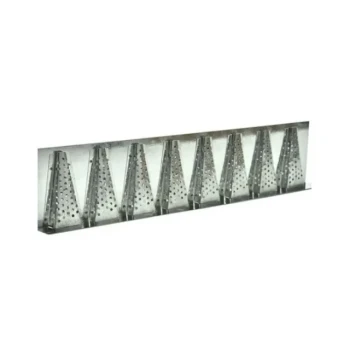
- 8-Cone Galvanized Steel Bee Robber Guard
- Metal Hive Feet Bee Hive Stand for Ant Protection
- Modern Flat-Mount Hive Number Set for Beekeeping
- Professional Reversible Beehive Hive Entrance
- Metal Bee Hive Stand Bee Box Stand for Beekeeping
People Also Ask
- What protective functions do beehive entrance guards provide? Defend Your Hive Against Wasps and Moths
- What is the primary function of protective guards at hive entrances? Block Rodents & Boost Winter Survival Rates
- How do conical metal guards or rubber inner tubes function as pest control tools? Stop Ants with Mechanical Barriers
- What is the function of Hive Entrance Guards? Master Bee Colony Defense Against Small Hive Beetles
- How can hardware mesh be applied to a beehive entrance for winter protection? Secure Your Colony Against Pests