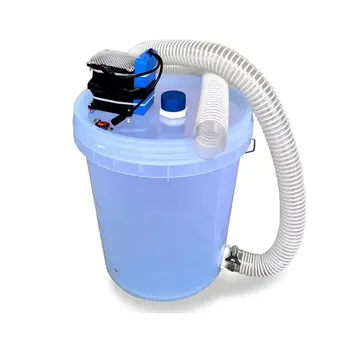
The primary function of a handheld bee vacuum device is to capture live honeybees efficiently as they depart from the hive, without causing them physical harm. By utilizing controllable suction, the device gently transports bees into a collection container, ensuring they remain intact for scientific study.
The Core Value While standard collection methods can harm specimens, the handheld bee vacuum solves the problem of "collection trauma." It allows researchers to gather large numbers of bees while preserving their normal physiological states and learning capacities, which are critical for accurate behavioral experiments.
The Mechanics of Non-Destructive Collection
Controllable Suction
The device operates on a principle of regulated airflow.
Unlike industrial vacuums, this tool offers controllable suction. This allows the operator to dial in the precise amount of force needed to capture the bee without subjecting it to high-velocity impact or pressure changes that could rupture internal organs.
Targeted Capture at the Hive
The device is specifically designed to intercept bees as they depart from the hive.
This timing is strategic. It allows for the isolation of active foragers or specific cohorts of bees outside the colony environment, streamlining the sorting process before the bees even reach the lab.
Minimizing Physical Stress
The internal architecture of the device focuses on a non-destructive path.
Bees are directed into a collection container through a smooth airflow channel. This minimizes collision with the device walls and prevents the crushing injuries common with nets or manual handling.
Preserving Biological Integrity
Maintaining Physiological States
For research data to be valid, the subject must be in a "normal" state.
The handheld vacuum ensures that the bees do not enter a state of shock. By reducing physical stress during capture, the bees maintain their baseline physiological conditions, ensuring that subsequent biological markers are accurate.
Protecting Learning Capacities
Many experiments involve testing a bee's memory or ability to learn.
Rough handling can impair a bee's cognitive functions. This device preserves the bee's learning capacities, making it the ideal tool for behavioral experiments where cognitive performance is the primary variable.
Understanding the Trade-offs
Equipment vs. Manual Handling
Using a vacuum device introduces a layer of technical dependency compared to simple manual methods.
You must rely on the device's power source and mechanical integrity. However, the trade-off is a massive gain in specimen quality. Manual methods are simpler but introduce high variability in bee health, which can ruin experimental data.
Specificity of Application
This tool is optimized for live collection for research, not necessarily for agricultural mass-harvesting.
It is a precision instrument designed for specific experimental workflows where the individual viability of the bee is paramount. It is less suited for scenarios where bee health is secondary to speed or volume.
Making the Right Choice for Your Goal
To determine if this device aligns with your project needs, consider your end-use for the specimens:
- If your primary focus is Behavioral Research: You must use this device to ensure that cognitive functions and learning capacities remain unaltered by the collection process.
- If your primary focus is Specimen Physiology: You should prioritize this method to prevent stress responses from skewing your biological data.
The handheld bee vacuum is not just a collection tool; it is a preservation instrument that ensures your test subjects arrive in the lab as they existed in the hive.
Summary Table:
| Feature | Benefit | Research Impact |
|---|---|---|
| Controllable Suction | Prevents physical trauma and impact injuries | High specimen survival rates |
| Targeted Hive Capture | Isolates active foragers during departure | Streamlined cohort sorting |
| Non-Destructive Path | Smooth airflow channel prevents crushing | Intact physiological markers |
| Cognitive Preservation | Minimizes stress-induced shock | Valid learning & memory data |
Elevate Your Beekeeping Operation with HONESTBEE
At HONESTBEE, we understand that precision tools are the backbone of successful commercial apiaries and research-focused distributors. Whether you are conducting advanced behavioral studies or managing large-scale honey production, our comprehensive wholesale portfolio has you covered.
Our Value to You:
- Specialized Machinery: From honey-filling to hive-making machines.
- Precision Tools: High-quality bee vacuums and essential handling equipment.
- Industry Consumables: A full spectrum of supplies to keep your colonies thriving.
- Cultural Merchandise: Unique honey-themed products for diverse market appeal.
Ready to upgrade your equipment and secure the highest quality specimens? Contact us today to explore our wholesale solutions!
References
- Théotime Colin, Andrew B. Barron. The miticide thymol in combination with trace levels of the neonicotinoid imidacloprid reduces visual learning performance in honey bees (Apis mellifera). DOI: 10.1007/s13592-020-00737-6
This article is also based on technical information from HonestBee Knowledge Base .
Related Products
- Portable Electric Bee Vacuum with Lithium Battery and 20L Collection Bucket
- Plastic Handle Single Row Artificial Fiber Bee Brush
- HONESTBEE Professional Long Handled Hive Tool with Precision Cutting Blade
- Commercial Grade Vertical Electric Bee Sweeper for Bee Removal
- Professional Stainless Steel Frame Cleaner with Ergonomic Wood Handle
People Also Ask
- What are the advantages of using portable bee vacuums for sampling honey bees? Optimize Nosema Detection Efficiency
- Who is qualified to use a bee vacuum? Essential Safety and Experience Requirements for Effective Bee Relocation
- What potential problems can occur when using a bee vacuum? Prevent Colony Mortality and Ensure Safe Bee Removal
- What are the benefits of using a bee vacuum? Safely Remove & Preserve Honey Bee Colonies
- Why do people use bee vacuums? A Humane Solution for Live Bee Removal