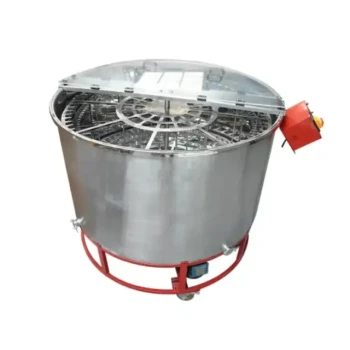
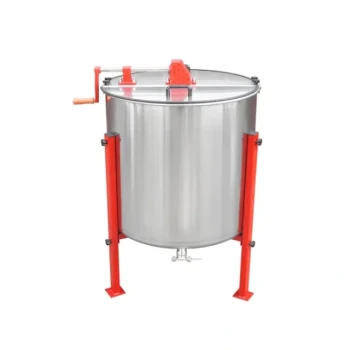
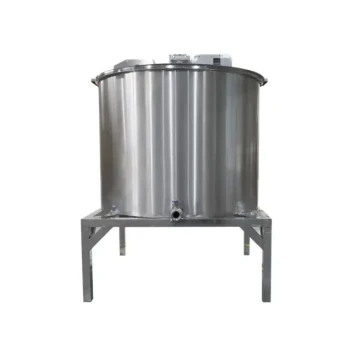
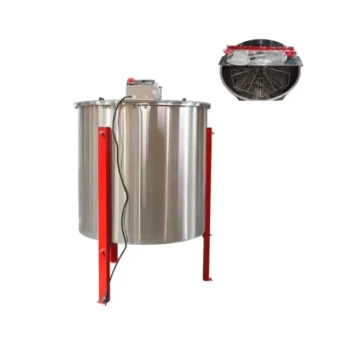
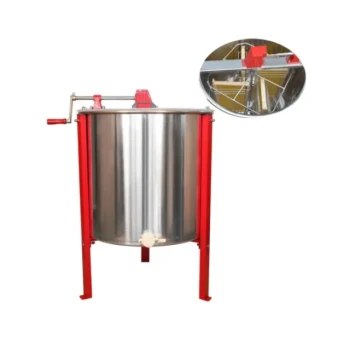
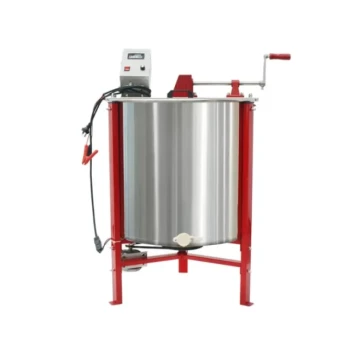
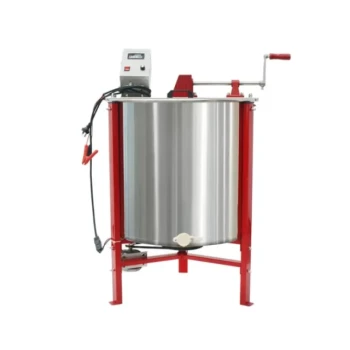
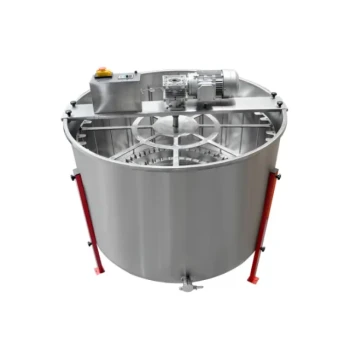
The primary function of a mechanical Honey Extractor is to remove liquid honey from honeycombs using centrifugal force without destroying the wax structure. Unlike manual methods that involve squeezing or crushing, the extractor spins the frames to release the honey, leaving the delicate honeycomb intact for future use.
Core Insight While the immediate function is extraction, the strategic value of this tool is energy conservation for the colony. By preserving the physical structure of the honeycomb, the extractor eliminates the need for bees to rebuild wax, allowing them to redirect their metabolic energy toward nectar collection and honey production.
The Mechanics of Extraction
Utilizing Centrifugal Force
The extractor operates on a simple physical principle. Frames containing uncapped honeycombs are placed into a drum and spun.
Centrifugal force pulls the liquid honey out of the wax cells and throws it against the inner wall of the extractor, where it drains to the bottom for collection.
Preserving Structural Integrity
The defining characteristic of this mechanical process is its non-destructive nature.
Manual harvesting methods often require crushing the comb to release the honey. In contrast, the extractor holds the frames securely, ensuring the physical structure of the honeycomb remains undamaged throughout the process.
The Impact on Apiary Efficiency
Enabling Comb Reuse
Because the honeycomb structure is preserved, beekeepers can return the empty, intact combs directly to the hive.
This creates a cycle of reuse that is impossible with destructive harvesting methods. The colony is provided with ready-made storage space immediately after harvest.
Reducing Biological Energy Expenditure
Producing beeswax is biologically expensive for bees. They must consume significant amounts of honey and nectar to secrete the wax required to build new combs.
By reusing combs, you significantly reduce the energy bees must expend on reconstruction.
Increasing Production Yields
When bees are relieved of the burden of rebuilding the nest, their focus shifts.
The colony can redirect its energy from wax secretion to pollen and nectar collection. This shortens the production cycle and increases the overall efficiency and output of the apiary.
Understanding the Operational Trade-offs
Mechanical vs. Manual Hygiene
Manual squeezing forces the beekeeper to handle the wax and honey directly, which can introduce contaminants.
Mechanical extraction significantly improves hygiene standards. The process minimizes human contact with the product and ensures a cleaner separation of honey from the frame.
Equipment vs. Biological Cost
The trade-off here is between capital investment and biological cost.
Manual methods are free but incur a high biological cost on the hive, forcing bees to rebuild from scratch. Mechanical extraction requires equipment but optimizes the biological resources of the colony for maximum production.
Making the Right Choice for Your Goal
To determine how best to integrate a Honey Extractor into your workflow, consider your primary objectives:
- If your primary focus is Maximum Yield: Prioritize mechanical extraction to return drawn combs to the hive quickly, allowing bees to fill them immediately during peak nectar flow.
- If your primary focus is Colony Health: Use the extractor to minimize the metabolic stress on bees, reducing the calories they must burn to secrete new wax.
By shifting the workload from the bees to the machine, you transform the harvesting process from a destructive event into a sustainable cycle of renewal.
Summary Table:
| Feature | Mechanical Extraction | Manual Harvesting |
|---|---|---|
| Primary Force | Centrifugal Force | Physical Crushing/Squeezing |
| Comb Condition | Intact & Reusable | Destroyed/Melted |
| Bee Energy Cost | Low (Minimal Rebuilding) | High (Full Reconstruction) |
| Hygiene Level | High (Food-grade Stainless) | Moderate (Higher Contact) |
| Production Yield | Maximized Cycle Efficiency | Slower Turnaround |
Maximize Your Colony’s Potential with HONESTBEE
Preserving the integrity of your honeycombs is the key to a high-yielding commercial apiary. At HONESTBEE, we empower commercial beekeepers and distributors with professional-grade honey extraction machinery, hive-making equipment, and a full spectrum of beekeeping tools designed for scale and durability.
By choosing HONESTBEE equipment, you reduce biological stress on your bees and accelerate your honey production cycle. From specialized honey-filling machines to essential industry consumables, our wholesale offerings provide everything you need to succeed in the global honey market.
Ready to upgrade your harvesting efficiency? Contact HONESTBEE today to discuss our comprehensive equipment solutions and wholesale pricing!
References
- Husen Bona. Improvement and Evaluation of Honey Extractor. DOI: 10.54536/ajise.v1i1.875
This article is also based on technical information from HonestBee Knowledge Base .
Related Products
- Commercial Electric 12 Frame Honey Extractor Spinner Motorized Honey Extractor
- Stainless Steel Manual 8 Frame Radial Honey Extractor Machine for Beehives
- Stainless Steel 3 Frame Manual Honey Extractor Spinner for Bee Honey Extraction
- Manual Hand Crank 4 Frame Honey Extractor Centrifuge for Beekeeping
- HONESTBEE 72 Frame Industrial Electric Honey Extractor for Beekeeping
People Also Ask
- Who are commercial honey extractors designed for? Scaling Your Industrial Beekeeping Success
- What is a commercial honey extractor? The Essential High-Volume Solution for Large Apiaries
- How is honey extracted commercially? Maximize Your Apiary's Efficiency and Honey Yield
- What are commercial honey extractors used for? Boost Your Apiary's Efficiency & Profitability
- What are the advantages of motorized extractors? Boost Honey Production and Save Time