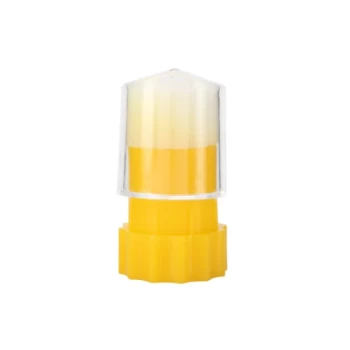
Artificial queen cell cups are specialized beekeeping consumables designed to simulate the natural physical environment required for rearing queen bees. By introducing these standardized containers into a colony, beekeepers induce nurse bees to enter a state of high-intensity secretion, allowing for the efficient, large-scale collection of royal jelly that would otherwise be impossible in a natural hive setting.
The primary function of artificial queen cell cups is to act as a biological trigger that prompts worker bees to deposit large quantities of royal jelly into a harvestable format. This standardization is the technical foundation for commercial-grade yield and predictable production cycles.
The Biological Mechanism of High-Yield Production
Simulating the Queen Rearing Environment
Artificial queen cell cups serve as a direct substitute for natural queen cells. By mimicking the specific shape and size of a queen's nursery, these tools tap into the innate instincts of worker bees, who naturally prioritize the feeding and development of potential queens.
Inducing High-Intensity Secretion
Once larvae are transferred into these cups—a process known as grafting—nurse bees are biologically programmed to fill the cells with royal jelly. In a commercial setting, the introduction of a large number of these cups forces the colony into a state of high-intensity production, ensuring that the cups are filled rapidly and consistently.
Commercial Efficiency and Standardization
Precision in the Harvest Cycle
In professional royal jelly production, timing is a critical factor for quality control. These artificial cells allow for a strictly controlled harvest cycle, typically occurring every 48 to 72 hours after the larvae are transferred, ensuring the jelly remains at peak purity and nutrient density.
Scaling Through One-Stop Sourcing
For distributors and wholesalers, these cups are essential consumables that must be compatible with a wide range of professional beekeeping tools. Utilizing standardized cell specifications ensures a stable output per unit and facilitates the use of automated or semi-automated collection systems, which are vital for rapid order fulfillment and large-scale operations.
Understanding the Trade-offs
Material Selection vs. Acceptance Rates
The choice of material—typically plastic, acrylic, or wax—directly impacts the acceptance rate of the larvae by the nurse bees. While plastic cups offer greater durability and ease of cleaning for re-use, they may require a "seasoning" period within the hive to lose synthetic odors that can lead to lower acceptance compared to natural wax.
Maintenance and Contamination Risks
Because these cups are used in a high-intensity biological environment, they are subject to debris and wax buildup. Failing to maintain high standards of cleanliness or using low-quality materials can result in batch contamination or reduced secretion levels, making the selection of premium-grade components a necessity for technical reliability.
Applying This to Your Inventory Strategy
The selection of artificial queen cell cups is a foundational decision that impacts the entire production chain of royal jelly. For those managing supply chains or bulk distribution, the focus must remain on technical compatibility and material quality.
- If your primary focus is consistent yield: Prioritize standardized plastic or acrylic cups that integrate seamlessly with professional grafting frames to ensure a predictable 72-hour harvest window.
- If your primary focus is high-purity niche markets: Offer wax-coated or premium-grade synthetic cups that minimize the risk of colony rejection and maximize the biological response of the nurse bees.
- If your primary focus is operational efficiency: Source from a full-spectrum portfolio that includes both the cups and the associated transfer tools to provide a comprehensive, one-stop solution for commercial beekeepers.
Providing the right artificial queen cells ensures that commercial producers can maintain the high-intensity secretion cycles required for global royal jelly markets.
Summary Table:
| Key Feature | Primary Function | Commercial Impact |
|---|---|---|
| Biological Trigger | Mimics natural queen cells to induce worker secretion | Ensures high-intensity, predictable royal jelly output |
| Standardization | Provides uniform dimensions for grafting larvae | Facilitates automated collection and rapid fulfillment |
| Harvest Control | Enables a strict 48–72 hour production cycle | Guarantees peak nutrient density and product purity |
| Material Quality | Optimizes larval acceptance rates | Minimizes batch contamination and maximizes ROI |
Scale Your Wholesale Operations with HONESTBEE
Are you looking to streamline your supply chain with premium beekeeping equipment? HONESTBEE specializes in providing commercial apiaries and B2B resellers with a comprehensive, one-stop sourcing experience.
From high-acceptance queen cell cups to advanced honey-filling machinery and specialized hardware, our full-spectrum portfolio is designed to maximize your profit margins and operational efficiency.
Why partner with HONESTBEE?
- Deep Industry Expertise: Professional-grade products tailored for large-scale production.
- Rapid Fulfillment: Ultra-fast delivery and efficient order processing to keep your inventory ready.
- Exceptional Service: Dedicated support for OEM/ODM requirements and bulk distribution.
Contact our team today to access our wholesale catalog and expert consulting!
References
- Oleh KLYM, Yurii Kovalskyi. The importance and uniqueness of royal milk of bees. DOI: 10.32636/01308521.2025-(78)-2-13
This article is also based on technical information from HonestBee Knowledge Base .
Related Products
- 10-Cell Silicone Beeswax Bee Queen Cups Forming Mold
- JZBZ Type Wide Base Plastic Queen Cell Cups for Base Mounting and Queen Rearing
- Brown Nicot Queen Cell Cups for Breeding Queen Bees Beekeeping
- Clear Black Plain Polystyrene Queen Bee Grafting Cell Cups No Lug for Bee Queen Cup
- JZBZ Push-In Queen Cell Cups for Beekeeping
People Also Ask
- How do beeswax queen cell cups function? Optimize Queen Rearing with Biological Mimicry
- What is the biological function of beeswax queen cell cups? Boost Acceptance in Artificial Queen Rearing
- What role do specialized queen rearing tools play in developing mite-resistant honeybee stock? Master Genetic Selection
- What materials are used to make artificial queen cell cups for grafting? Beeswax vs. Plastic Guide
- What roles do specialized queen cell cups play in royal jelly production? Optimize Your Hive's Secretion and Yield