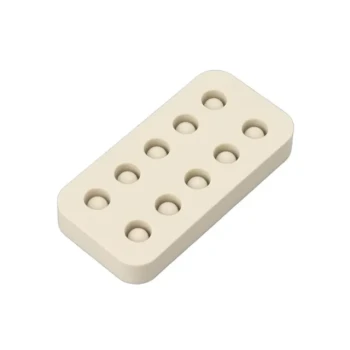
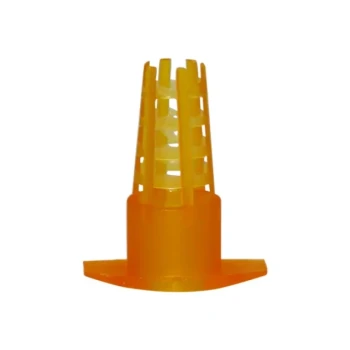
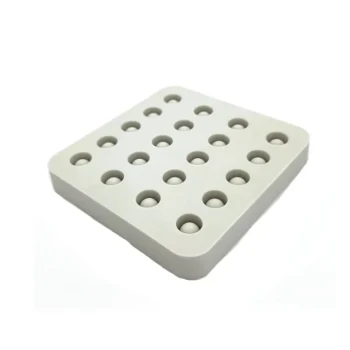
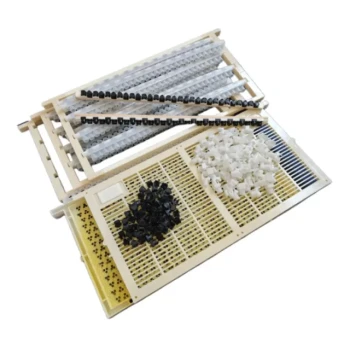
The primary function of artificial queen cells is to simulate the natural environment required for rearing queen bees to induce mass secretion of royal jelly. By transferring young larvae into these specialized containers, beekeepers trigger the worker bees' innate nursing instinct, compelling them to fill the cups with royal jelly far beyond what is needed for a standard colony.
Artificial queen cells serve as the "industrial standard" for royal jelly production, transforming a biological rarity into a scalable process. They allow producers to systematize the collection of jelly by inducing the hive to rear multiple "queens" simultaneously, maximizing yield and efficiency.
The Mechanism of Induced Secretion
Simulating the Natural Nest
In a natural hive, bees only build queen cells when the colony needs a new reproductive leader. Artificial queen cells mimic the shape and structure of these natural cells.
This mimicry tricks the colony into shifting into a "rearing mode," which is the biological prerequisite for royal jelly production.
Triggering the Nursing Instinct
The process relies on a technique called grafting. Technicians transfer 1-2 day old worker larvae into the artificial cups.
Once the bees perceive these larvae within the queen-cell structure, they instinctively treat them as potential queens. This triggers nurse bees to secrete massive quantities of royal jelly to feed and float the larvae.
Accumulation for Harvest
Unlike standard brood cells where food is consumed immediately, queen cells are designed to hold a surplus.
The artificial cups act as reservoirs. The bees fill them with more jelly than the larvae can consume, allowing the producer to harvest the excess nutrient-rich substance after 48 to 72 hours.
Standardization and Commercial Efficiency
Enabling Mass Production
Natural hives generally produce very few queen cells at a time. Artificial cells allow for the insertion of dozens of cups into a single colony frame.
This density enables high-volume production, shifting the hive from general maintenance to a specialized factory for royal jelly secretion.
Streamlining the Harvest
The design of artificial cells is highly standardized, typically using plastic or wax-coated materials.
This uniformity is critical for extraction. It allows for the use of specialized manual tools or suction devices to harvest the jelly quickly, which is essential for maintaining production speed.
Understanding the Trade-offs
Material Impact on Acceptance
While plastic cups offer durability and standardization, they are not always immediately accepted by the bees.
To mitigate this, artificial cells are often coated in beeswax. This hybrid approach improves the acceptance rate of the grafted larvae, ensuring the bees do not reject the artificial material.
The Sensitivity of Larval Age
The system relies entirely on the precise age of the larvae transferred (1-2 days old).
If the larvae are too old, the bees will not feed them royal jelly; if they are damaged during transfer into the artificial cell, the bees will clean out the cup rather than fill it. The artificial cell is useless without precise biological inputs.
Making the Right Choice for Your Goal
Whether you are setting up a small operation or a large commercial apiary, the type of cell you choose impacts your workflow.
- If your primary focus is High Acceptance Rates: Prioritize artificial cells made of pure beeswax or plastic cups with a heavy beeswax coating to maximize the number of larvae the bees choose to nurse.
- If your primary focus is Scalability and Automation: Utilize standardized plastic queen cell bars that fit into mechanized harvesting frames, allowing for rapid suction extraction and cleaning.
Artificial queen cells are the bridge between bee biology and industrial output, allowing us to harvest nature's most potent secretion without relying on the unpredictability of natural swarming.
Summary Table:
| Feature | Purpose in Production | Commercial Benefit |
|---|---|---|
| Structural Mimicry | Simulates natural queen cells | Triggers colony's "rearing mode" and nursing instinct |
| Grafting Capacity | Holds 1-2 day old larvae | Enables high-density production of dozens of cells per frame |
| Reservoir Design | Acts as a nutrient container | Collects surplus royal jelly for efficient 48-72 hour harvest |
| Material Standardization | Durable plastic/wax-coated cups | Facilitates automated extraction and maintains high acceptance |
| Scalability | Systematic cell bar integration | Transforms biological rarity into a predictable industrial output |
Elevate Your Royal Jelly Yield with HONESTBEE Solutions
At HONESTBEE, we specialize in empowering commercial apiaries and distributors with the precision tools needed for high-volume production. From high-acceptance artificial queen cells and grafting tools to advanced honey-filling and hive-making machinery, our comprehensive wholesale portfolio covers every essential industry consumable.
Why partner with HONESTBEE?
- Scalable Wholesale Supply: Full spectrum of beekeeping hardware and specialized machinery.
- Optimized Performance: Equipment designed to maximize larval acceptance and streamline harvesting.
- Global Industry Expertise: Supporting large-scale operations with reliable consumables and honey-themed cultural merchandise.
Ready to transform your apiary into a high-efficiency production powerhouse? Contact us today to discuss your wholesale equipment needs!
References
- Dimitrios Kanelis, Andreas Thrasyvoulou. Investigating the Effect of Supplementary Feeding on Carbohydrate Composition and Quantity of Royal Jelly. DOI: 10.4236/ojapps.2018.84011
This article is also based on technical information from HonestBee Knowledge Base .
Related Products
- 10-Cell Silicone Beeswax Bee Queen Cups Forming Mold
- JZBZ Type Wide Base Plastic Queen Cell Cups for Base Mounting and Queen Rearing
- Clear Black Plain Polystyrene Queen Bee Grafting Cell Cups No Lug for Bee Queen Cup
- Premium Nicot Style Cell Bar Holder and Queen Cell Cup Holder System
- Brown Nicot Queen Cell Cups for Breeding Queen Bees Beekeeping
People Also Ask
- How do beeswax queen cell cups function? Optimize Queen Rearing with Biological Mimicry
- What is the biological function of beeswax queen cell cups? Boost Acceptance in Artificial Queen Rearing
- What role do specialized queen rearing tools play in developing mite-resistant honeybee stock? Master Genetic Selection
- What materials are used to make artificial queen cell cups for grafting? Beeswax vs. Plastic Guide
- What roles do specialized queen cell cups play in royal jelly production? Optimize Your Hive's Secretion and Yield