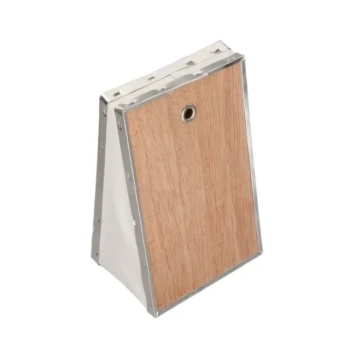
The primary function of industrial convective drying equipment is to generate a uniform thermal field that effectively removes moisture from bee pollen. By circulating a heat transfer medium—typically heated air—this technology dehydrates the pollen within a controlled environment, serving as the core processing solution for small and medium-sized agricultural enterprises seeking to balance production efficiency with investment costs.
Core Takeaway While the mechanical action is dehydration, the strategic purpose of convective drying is biological stabilization. It provides a cost-effective method to reduce water activity significantly, inhibiting microbial spoilage while maintaining the integrity of heat-sensitive nutrients through precise temperature management.
The Mechanics of Convective Drying
Creating a Uniform Thermal Field
The fundamental engineering goal of this equipment is consistency. It circulates heated air to create a uniform thermal field throughout the drying chamber. This ensures that every granule of bee pollen is exposed to the same drying conditions, preventing uneven processing where some batches might remain damp while others are over-dried.
The Heat Transfer Medium
The equipment utilizes a heat transfer medium, usually forced air, to carry moisture away from the product. As the heated air passes over the pollen, it absorbs moisture and carries it out of the chamber. This continuous circulation is the engine of the dehydration process, allowing for steady moisture reduction.
Critical Preservation Objectives
Reducing Moisture Content
Fresh bee pollen is highly volatile, typically containing 20% to 30% moisture. Convective drying reduces this level to below 12.5%. This specific threshold is critical because it inhibits the growth of mold, yeast, and bacteria, preventing the formation of harmful toxins that would otherwise render the product unsafe for consumption.
Lowering Water Activity
Beyond simple moisture content, the equipment reduces water activity (a measure of free water available for microbial growth) from approximately 0.7 to 0.3. By physically removing this available water, the equipment stabilizes the pollen for long-distance transport and long-term storage without the need for chemical preservatives.
Preserving Nutritional Integrity
Bee pollen is rich in heat-sensitive bioactive components, including enzymes, amino acids, and Vitamin B complexes. Advanced convective dryers operate at controlled temperatures—typically around 42°C—to dehydrate the pollen without thermally degrading these nutrients. This ensures the final product retains its commercial and medicinal value.
Understanding the Trade-offs
Temperature Sensitivity vs. Speed
There is an inherent tension between drying speed and product quality. While increasing the temperature would speed up the drying process, exceeding 42°C risks destroying the heat-sensitive bioactive components that give bee pollen its value. Operators must prioritize temperature control over speed to avoid degrading the product's antioxidant concentration and vitamin content.
Uniformity Risks
While the goal is a uniform thermal field, improper loading or airflow obstruction can lead to inconsistent drying. If the air circulation is not perfectly managed, "dead zones" can occur where moisture remains trapped, potentially leading to localized spoilage even if the rest of the batch is dry.
Making the Right Choice for Your Goal
- If your primary focus is Cost-Efficiency: Utilize convective drying as your core technology, as it offers the best balance between equipment cost and production output for small to medium-sized operations.
- If your primary focus is Product Safety: Ensure your equipment is calibrated to reduce moisture content below 12.5% and water activity to 0.3 to guarantee microbial inhibition and prevent toxin formation.
- If your primary focus is Nutritional Quality: Implement strict temperature controls that cap heat exposure at 42°C to preserve Vitamin B complexes and enzyme activity during the dehydration process.
Effective bee pollen processing relies not just on removing water, but on precise thermal management that secures the product's biological stability and market value.
Summary Table:
| Parameter | Raw Bee Pollen | After Convective Drying | Purpose of Change |
|---|---|---|---|
| Moisture Content | 20% - 30% | Below 12.5% | Inhibits mold and bacterial growth |
| Water Activity (aw) | ~0.7 | ~0.3 | Biological stabilization for storage |
| Operating Temp | Ambient | Max 42°C | Protects heat-sensitive vitamins |
| Nutrient Profile | High | Preserved | Maintains medicinal/market value |
Elevate Your Pollen Processing with HONESTBEE Professional Solutions
At HONESTBEE, we specialize in supporting commercial apiaries and distributors by providing professional-grade beekeeping tools and industrial machinery. Whether you are scaling up production with hive-making and honey-filling machines or need specialized convective drying equipment to preserve your bee pollen's nutritional integrity, our comprehensive wholesale offering has you covered.
Why partner with us?
- Full Spectrum Supply: From hardware to essential industry consumables.
- Quality Assurance: Equipment designed to maintain biological stability and market value.
- Targeted Expertise: Solutions tailored for high-volume distributors and commercial operations.
Ready to optimize your apiary's efficiency and product quality? Contact us today to discuss your equipment needs!
References
- Sergey Kharchenko, Dmitry Tsokur. Modeling of bee-bread drying process. DOI: 10.22616/erdev.2020.19.tf100
This article is also based on technical information from HonestBee Knowledge Base .
Related Products
- High Quality Honey Dehumidifier Dryer Thickening Machine for Beekeeping
- Heavy-Duty Ergonomic Grip Galvanized Pollen Shovel
- Stainless Steel Pollen Shovel with Wooden Handle
- Removable Plastic Pollen Trap With Ventilated Tray for Bees Pollen Collector
- 30 cm Plastic Entrance Hole Bee Pollen Trap and Collector
People Also Ask
- Can you dehumidify honey? A Beekeeper's Guide to Preventing Fermentation
- How to dry up honey? The Safe Guide to Stabilizing Honey and Preventing Fermentation
- How can the moisture content of honey be reduced? A Guide to Safe, Effective Drying Methods
- How to remove humidity from honey? Protect Your Harvest from Fermentation
- How to decrease moisture in honey? Prevent Fermentation and Ensure Long-Term Quality