Pollen and pollen substitutes serve as the cornerstone of protein intake for a honey bee colony. While sugar sources like honey and syrup provide the carbohydrates necessary for daily energy and flight, protein is the non-negotiable nutrient required for raising brood and ensuring the structural survival of the hive.
Carbohydrates provide the energy for flight, but protein provides the building blocks for life. Pollen intake is the primary trigger for brood rearing, supporting the physiological development of young bees and the overall expansion of the colony.
The Biological Imperative of Protein
To understand the role of pollen, you must look beyond individual nutrition and view the colony as a superorganism that relies on protein to reproduce and mature.
Fueling Brood Production
The primary function of pollen consumption is to enable reproduction. Nurse bees consume significant amounts of pollen to produce brood food, which they then feed to developing larvae.
Signaling Colony Expansion
The presence of pollen acts as a biological signal. An increased availability of pollen or substitutes signals the colony to increase the rate of brood rearing, prompting the queen to lay more eggs to match the available resources.
Physiological Development
Protein is critical for the maturation of individual bees. High-protein intake provides essential amino acids that support the physiological development of newly emerged bees, specifically helping to establish their immune systems and motor skills.
Strategic Use of Substitutes
When natural pollen is scarce, beekeepers use substitutes to bridge nutritional gaps and manipulate colony behavior.
Composition and Ingredients
Common substitutes are often formulated from ingredients like brewer’s yeast and corn gluten. These are processed into a cake form to maintain a consistent density, preventing the separation of nutrients and allowing for easy placement on the hive's top bars.
Seasonal Concentrations
The concentration of pollen in a patty should change based on the season. A 15 percent pollen content is typically used in the spring to aggressively stimulate brood rearing. Conversely, a 4 percent pollen content is ideal for the fall to build strong bees for the winter without over-stimulating population growth.
Practical Considerations and Trade-offs
While substitutes are effective tools, they require careful handling to ensure they provide value rather than creating issues.
Texture and Accessibility
The physical state of the feed determines its utility. Dry pollen should be ground or powdered to make it accessible to bees, whereas cake-form substitutes must be textured to prevent sedimentation so bees can collect it efficiently.
Storage Stability
Natural pollen degrades if not stored correctly. To remain shelf-stable and nutritionally viable, dry pollen must be kept frozen until it is ready to be processed or fed to the colony.
Potential as a Vector
Because of how effectively bees consume these patties, they can act as carriers for other agents. In research settings, pathogens are sometimes mixed into patties to standardize infection challenges, highlighting how thoroughly bees process this food source.
Making the Right Choice for Your Colony
The correct application of pollen and substitutes depends entirely on where your colony is in its seasonal cycle.
- If your primary focus is Spring Build-up: Utilize patties with higher pollen content (approx. 15%) to signal the queen to maximize egg-laying and stimulate rapid brood rearing.
- If your primary focus is Winter Preparation: Switch to lower pollen content (approx. 4%) to nourish the current population without triggering an unsustainable brood boom.
- If your primary focus is Research or Standardization: Use homogenized patties to deliver exact dosages of nutrients or test agents, ensuring every bee receives a consistent level of exposure.
By treating pollen not just as food, but as the fuel for population growth, you gain control over the biological rhythm of the hive.
Summary Table:
| Nutritional Function | Role in the Hive | Recommended Usage |
|---|---|---|
| Protein Intake | Building blocks for larvae & young bee development | Essential during all active brood cycles |
| Brood Signaling | Triggers queen to increase egg-laying rates | High protein (15%) for Spring build-up |
| Immune Health | Establishes motor skills & physiological defense | Critical for newly emerged nurse bees |
| Seasonal Prep | Ensures colony survival through winter | Low protein (4%) for Fall conditioning |
| Substitutes | Fills nutritional gaps when natural forage is low | Use stabilized patties (yeast/corn gluten) |
Maximize Your Colony Productivity with HONESTBEE
At HONESTBEE, we understand that protein is the lifeline of your commercial apiary. As a dedicated partner to large-scale beekeeping operations and distributors, we provide more than just equipment; we provide the tools for biological success.
Whether you need specialized machinery for processing feed, high-efficiency hive-making equipment, or a bulk supply of essential industry consumables, our comprehensive wholesale portfolio is designed to scale your business. From honey-filling machines to honey-themed cultural merchandise, we equip you to lead the market.
Ready to scale your production? Contact us today to discover how our professional beekeeping solutions can optimize your hive health and operational efficiency.
Related Products
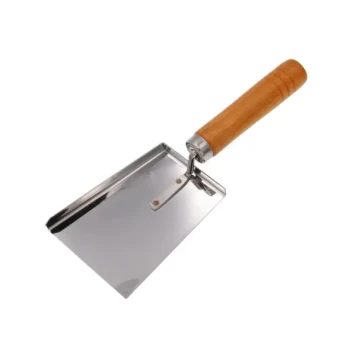
- Stainless Steel Pollen Shovel with Wooden Handle
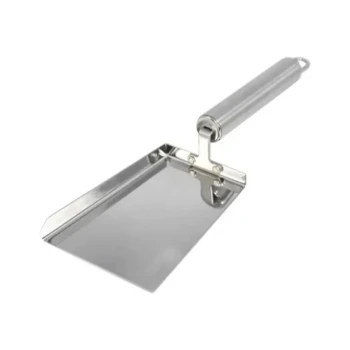
- Heavy-Duty Ergonomic Stainless Steel Pollen Shovel
- Heavy-Duty Ergonomic Grip Galvanized Pollen Shovel
- Removable Plastic Pollen Trap With Ventilated Tray for Bees Pollen Collector
- Plastic Bee Pollen Trap Strips Comb Catcher Collector
People Also Ask
- How do bee pollen collection tools affect the quality of bee pollen used in functional dairy ice cream production?
- Why should commercial apiaries focus on the collection of diversified bee products? Maximize Your Hive’s Profit Potential
- How does a specialized pollen collector facilitate the harvesting of diverse bee products? Automate High-Value Yields
- What is the impact of pollen collectors and associated equipment on the cost structure of pollen production? Maximize ROI
- What is the technical significance of using specialized cutting tools for propolis? Master Precision Pollen Harvesting