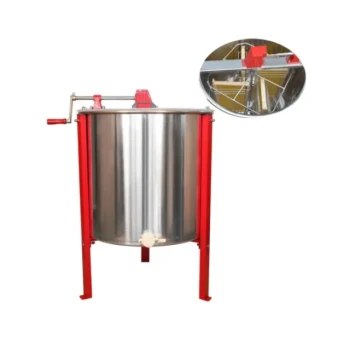
The primary purpose of utilizing manual pressing equipment and laboratory-grade filter screens is to isolate pure raw honey from the honeycomb structure while simultaneously eliminating solid contaminants. This two-step process extracts the liquid through physical pressure and subsequently removes impurities like wax debris and bee fragments to achieve high physical clarity.
Core Takeaway By combining manual extraction with precision filtration, you establish a "clean baseline" for the honey. This ensures the sample is physically pure enough for accurate physicochemical analysis and quality grading, without compromising its natural chemical composition or pollen content.
The Mechanics of Extraction and Purification
Manual Pressing for Physical Separation
Manual pressing equipment serves as the initial extraction mechanism. Unlike centrifugal force used in industrial settings, this method applies direct physical pressure to the honeycomb.
This action forces the liquid honey out of the comb structure. It effectively separates the fluid resource from the solid wax architecture.
Achieving Optical Clarity via Filtration
Once extracted, the raw honey is passed through laboratory-grade filter screens. These high-precision tools are calibrated to intercept specific solid impurities.
The screens capture wax debris, bee fragments, and other particulate residues that result from the harvesting process. This step is critical for transforming a crude mixture into a transparent, analyzable liquid.
The Strategic Value of "Laboratory-Grade" Processing
Establishing a Baseline for Analysis
The ultimate goal of using this specific equipment tier is to prepare the honey for physicochemical analysis.
To accurately grade honey or test its chemical properties, the sample must be free of random physical contaminants. Impurities can skew results or degrade the sample, making precision filtration a prerequisite for scientific assessment.
Preservation of Integrity
While the goal is clarity, the process is distinct from ultra-filtration which might sterilize the honey.
Laboratory-grade screens are typically designed to remove macro-impurities while retaining natural pollen grains. This preserves the honey's nutritional profile and allows for botanical origin testing, which is essential for quality grading.
Understanding the Trade-offs
Efficiency vs. Sample Quality
Manual pressing is significantly slower and more labor-intensive than industrial centrifugation.
However, it generates less heat and aeration. This protects heat-sensitive enzymes and prevents the oxidation that can occur with high-speed machinery, ensuring the chemical profile remains authentic.
The Risk of Over-Filtration
Selecting the wrong mesh size for your filter screens can yield negative results.
If the mesh is too fine (below the standard ~1 mm threshold often used in initial processing), you risk removing pollen. This strips the honey of its unique fingerprint and nutritional value, rendering it less useful for comprehensive analysis.
Making the Right Choice for Your Goal
To select the correct processing protocol, you must define the end-use of the honey sample.
- If your primary focus is scientific analysis: Ensure your filter screens are calibrated to remove wax and insect parts but possess a pore size large enough to retain pollen grains for botanical identification.
- If your primary focus is commercial presentation: Prioritize filtration that maximizes transparency and smoothness to prevent early crystallization and meet consumer sensory standards.
Ultimately, the use of manual pressing and lab-grade screens is about prioritizing data integrity and sample purity over processing speed.
Summary Table:
| Process Phase | Equipment Used | Primary Function | Key Benefit |
|---|---|---|---|
| Extraction | Manual Pressing | Physical pressure separation | Minimal heat/aeration; protects enzymes |
| Purification | Lab-grade Screens | Precision filtration | Removes wax/debris; retains natural pollen |
| Analysis Prep | Combined Method | Establishing clean baseline | Ensures accurate grading & scientific data |
Elevate Your Honey Processing with HONESTBEE
At HONESTBEE, we specialize in empowering commercial apiaries and distributors with professional-grade solutions. Whether you need high-precision honey-filling machines, specialized hive-making equipment, or essential beekeeping consumables, our comprehensive wholesale portfolio is designed to maximize your efficiency and product integrity.
Ready to scale your operations or upgrade your laboratory setup? Contact us today to discover how our industry-leading tools and honey-themed cultural merchandise can add value to your business.
References
- Bienvenu CITO MULEMANGABO, JOSEPH SAILE JOSEPH SAILE. Physicochemical characterization of honeys sold in the city of Bukavu and the those obtained from production sites in the province of south Kivu in the Democratic Republic of Congo.. DOI: 10.35629/2532-11073945
This article is also based on technical information from HonestBee Knowledge Base .
Related Products
- Stainless Steel Manual Honey Press with Guard for Pressing Honey and Wax
- Easy Use Manual Stainless Steel Honey Press for Honey Comb
- Manual Honey Filling Machine Bottling Machine for Honey
- Electric Honey Press Machine for Squeezing Honey Comb Press Equipment
- HONESTBEE 2 Frame Manual Acrylic Honey Extractor Beekeeping Equipment
People Also Ask
- What other functions can a honey press serve besides honey extraction? Discover Versatile Multi-Purpose Uses
- How does the honey press preserve the quality of honey during extraction? Maintain Pure Enzymes and Flavor
- What materials are used to construct the honey press? Choose Durable, Food-Grade Solutions for Your Apiary
- What are the fundamental differences between manual honey presses and centrifugal honey extractors? A Guide for Pros
- What are some general features of a honey press? Maximize Your Yield with Durable Extraction Tools