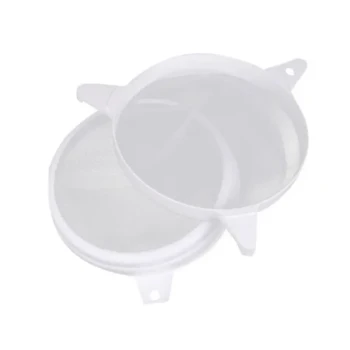
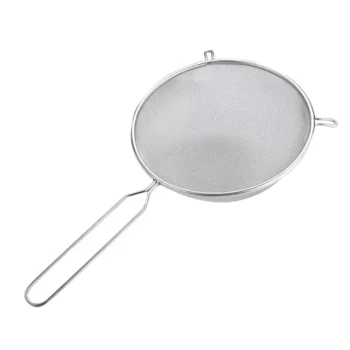
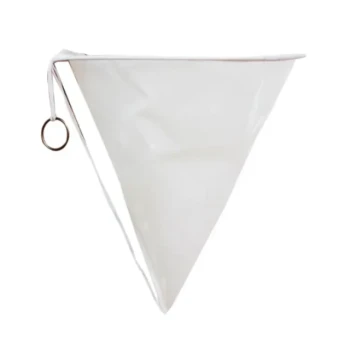
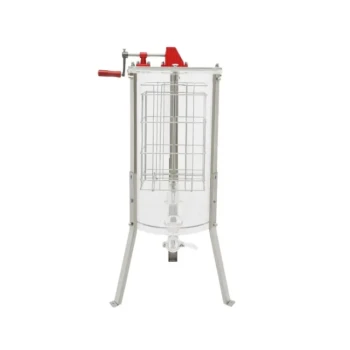
Dual filtration serves as a progressive refining system used to separate honey from hive debris without compromising its biological integrity. By utilizing a coarse sieve (typically 5mm) followed by a fine sieve (typically 0.5mm), processors can efficiently remove macroscopic impurities like wax caps and bee parts. This ensures a commercially clear product that retains its natural pollen and nutritional profile.
The core objective of dual filtration is to achieve commercial clarity without sterilization. It removes the physical debris visible to the eye while preserving the microscopic pollen grains that provide honey with its nutritional value and distinct flavor profile.
The Mechanics of Progressive Filtration
To understand why two distinct pore sizes are necessary, one must look at the physical composition of raw honey immediately after extraction.
The Function of the Coarse Sieve
The first stage of filtration utilizes a coarse mesh, often around 5mm in size.
This step is designed to intercept large physical contaminants, such as wax fragments, larval remains, and bee debris.
By catching these larger solids first, the coarse sieve prevents the rapid clogging of tighter downstream filters, ensuring a continuous workflow.
The Function of the Fine Sieve
Once the larger particulate is removed, the honey passes through a finer mesh, typically around 0.5mm.
This stage is critical for enhancing the sensory quality and clarity of the final product.
It eliminates smaller suspended particles that contribute to cloudiness, ensuring the honey meets the stringent visual standards required for high-end retail markets and supermarket sales.
Balancing Purity with Nutrition
The most critical aspect of honey processing is distinguishing between "impurity" and "nutrient."
Retention of Pollen Grains
While consumers demand clear honey, over-filtration can strip the product of its identity.
Dual filtration is calibrated to remove waste while maximizing the retention of naturally occurring pollen grains.
These microscopic grains are essential for verifying the honey's floral source and maintaining its classification as a raw, natural product.
Preserving Nutritional Components
Honey contains heat-sensitive and size-sensitive nutritional compounds.
By relying on physical filtration rather than high-heat or ultra-fine pressure filtering, this method preserves the honey's natural enzymes and nutritional components.
Operational Efficiency and Resource Recovery
Beyond quality control, dual filtration systems offer significant economic advantages for the producer.
The Circular Resource Model
The filtration process does not just remove waste; it facilitates the recovery of beeswax.
The wax collected by the sieves can be processed into secondary products such as candles, lubricants, or polishes.
Increasing Profitability
This creates a circular resource model, where byproducts become revenue streams.
Effective sorting equipment transforms what would be processing waste into a value-added asset, increasing the overall profitability of the beekeeping operation.
Understanding the Trade-offs
While dual filtration is the industry standard for high-quality honey, it requires a precise balance.
The Risk of Over-Filtration
If the "fine" sieve is too restrictive (significantly smaller than 0.5mm), you risk filtering out pollen.
This removes the honey's nutritional benefits and may disqualify it from being labeled as "raw" or "natural" in certain jurisdictions.
The Risk of Under-Filtration
Conversely, relying solely on a coarse sieve leaves visible debris in the jar.
While nutritionally sound, this often results in lower sensory appeal, making the product difficult to sell in standard commercial environments where clarity is equated with quality.
Making the Right Choice for Your Goal
The configuration of your filtration system should depend on your specific end-market requirements.
- If your primary focus is High-End Retail: Prioritize the precision of the fine sieve (0.5mm) to ensure the crystal-clear appearance and sensory quality required by supermarkets.
- If your primary focus is Operational Efficiency: Focus on the throughput of the coarse sieve to maximize beeswax recovery for secondary product manufacturing (candles/polishes).
Ultimately, dual filtration is the technical bridge that turns raw hive harvest into a premium, shelf-ready product.
Summary Table:
| Filtration Stage | Typical Pore Size | Target Contaminants | Primary Benefit |
|---|---|---|---|
| Coarse Sieve | ~5mm | Wax caps, bee parts, larval remains | Prevents clogging & facilitates wax recovery |
| Fine Sieve | ~0.5mm | Smaller suspended particles, cloudiness | Ensures commercial clarity & sensory appeal |
| Microscopic Level | N/A | Pollen grains (Retained) | Preserves nutritional value & floral identity |
Scale Your Honey Production with HONESTBEE Professional Equipment
At HONESTBEE, we understand that commercial success in beekeeping requires a perfect balance between product purity and operational efficiency. Whether you are a distributor looking for high-quality retail solutions or a commercial apiary aiming to maximize byproduct revenue, we provide the tools to elevate your business.
Our value to your operation includes:
- Comprehensive Wholesale Offering: A full spectrum of beekeeping tools, machinery, and essential consumables.
- Industrial Machinery: Specialized hardware including high-efficiency honey-filling and hive-making machines.
- Value-Added Solutions: Equipment designed to support a circular resource model, turning beeswax recovery into profitable secondary products.
Ready to enhance your processing line? Contact us today to explore our wholesale catalog and see how HONESTBEE can streamline your honey production from hive to shelf.
References
- Andrés Rivera-Mondragón, Hermógenes Fernández‐Marín. Assessment of the Quality, Chemometric and Pollen Diversity of Apis mellifera Honey from Different Seasonal Harvests. DOI: 10.3390/foods12193656
This article is also based on technical information from HonestBee Knowledge Base .
Related Products
- Electric Double Wall Honey Filtering Machine Purifier Equipment for Honey Processing Plant
- Stainless Steel Double Layer Honey Strainer Sieve Filters
- Two-Stage Plastic Honey Filter for Buckets
- Honey Concentrating and Filtering Dehumidifier Machine 2T Capacity for Honey
- Stainless Steel Triangle Support Honey Strainer and Filters
People Also Ask
- What types of equipment are used in honey filtering? Build an Efficient System for Pure, Marketable Honey
- What is the process of filtering honey? A Guide to Clean, Pure, and Market-Ready Honey
- What is the overall importance of using the right equipment in honey filtering? Boost Quality & Marketability
- What role do professional honey harvesting and filtering equipment play in meeting honey market quality standards? Boost ROI
- What steps are involved in maintaining honey filtering equipment? A Guide to Protecting Your Honey Quality