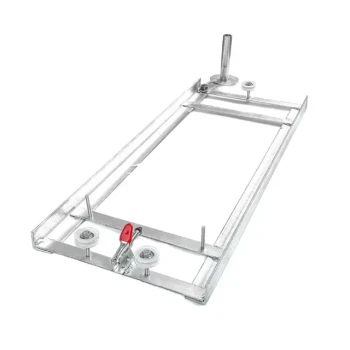
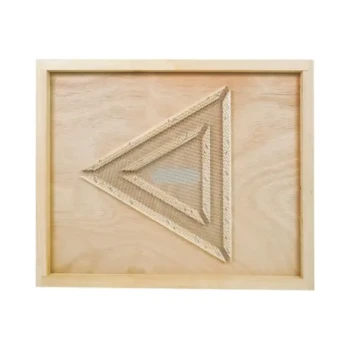
Wire mesh or wooden frames installed above collection boards function as a critical physical isolation barrier within the beehive. Their primary purpose is to prevent honeybees from accessing the bottom board, ensuring they cannot remove fallen Varroa mites or debris before inspection.
By blocking the bees' natural hygienic instinct to clean the hive floor, these barriers guarantee that the monitoring data reflects a true and complete count of fallen mites rather than a partial dataset diminished by bee activity.
Preserving Data Integrity
Counteracting Hygienic Behavior
Honeybees possess a strong instinct to keep their hive clean. Without a barrier, bees will naturally attempt to remove foreign objects, including dead Varroa mites and debris, from the bottom of the hive.
This cleaning behavior distorts monitoring data because the bees carry the "evidence" out of the hive before it can be counted. The wire mesh isolates the bees from the collection area, preserving the fallen mites for accurate quantification.
Selective Permeability
The mesh is designed with a specific aperture size to act as a selective filter.
The openings are large enough to allow small Varroa mites and fine debris to fall through to the collection board. However, they are small enough to effectively block adult bees from passing through, creating a one-way flow of debris.
Ensuring Colony Safety
Preventing Contact with Adhesives
Many bottom collection boards use a sticky substance to trap mites and prevent them from crawling away.
Direct contact with these sticky surfaces can harm or kill honeybees. The wire mesh barrier ensures that while mites are trapped, the bees remain suspended safely above the adhesive layer.
Reducing Disease Transmission
By separating the colony from the waste accumulation zone, the mesh prevents bees from walking through fallen debris.
This separation minimizes the risk of bees re-introducing pathogens or pests back into the main brood nest.
Operational Considerations and Trade-offs
The Risk of Obstruction
While effective at separation, these barriers introduce a maintenance requirement.
If the mesh openings are too small or if debris is heavy, the screen can become clogged. This prevents mites from falling through to the board, which—ironically—can lead to the same data inaccuracy the screen was meant to solve.
Structural Integrity
Wooden frames provide the necessary rigidity to hold the wire mesh flat and secure.
However, if these frames are not fitted precisely, gaps may form at the edges. Enterprising bees will find these gaps, bypass the screen, and clean the board, rendering the isolation system useless.
Making the Right Choice for Your Goal
To maximize the effectiveness of your monitoring system, ensure your barrier setup aligns with your specific objectives:
- If your primary focus is Data Accuracy: Verify that the mesh aperture is large enough to pass mites freely but small enough to exclude all bees, preventing any removal of specimens.
- If your primary focus is Colony Safety: Ensure the barrier is rigid and positioned high enough above sticky boards to prevent sagging, which could allow bees to contact the adhesive.
The most effective monitoring system is one that physically separates the observer's data from the colony's daily activity.
Summary Table:
| Feature | Primary Function | Benefit to Beekeeper |
|---|---|---|
| Physical Isolation | Blocks bees from reaching the bottom board | Prevents bees from removing mites, ensuring accurate data |
| Selective Aperture | Allows debris to pass while excluding bees | Creates a one-way flow for reliable pest quantification |
| Adhesive Barrier | Maintains distance from sticky boards | Protects bees from accidental contact with traps |
| Hygienic Separation | Isolates waste from the brood nest | Minimizes disease transmission and re-infestation risks |
Maximize Your Colony Health with HONESTBEE
At HONESTBEE, we understand that precision is the foundation of successful beekeeping. Whether you are a commercial apiary scaling operations or a distributor seeking reliable supplies, we provide the industrial-grade solutions you need.
Our extensive portfolio includes everything from specialized hive-making and honey-filling machinery to high-quality beekeeping tools and essential consumables. We empower our partners with durable equipment designed to optimize honey production and colony monitoring.
Ready to elevate your apiary's efficiency? Contact us today to explore our wholesale offerings and discover how our expertise can drive your business forward.
References
- GHADA S. REFAEI. Comparing Effect of Plant-derived Oils on Varroa destructor Infesting Honeybee, Apis mellifera. DOI: 10.21608/ajesa.2008.164296
This article is also based on technical information from HonestBee Knowledge Base .
Related Products
- Langstroth Solid Bottom Board for Beekeeping
- Langstroth Screen Bottom Board for Beekeeping Wholesale
- Solid Bottom Board Australian Pine Wood Langstroth Bottom Board for Wholesale
- Australian Pine Wood Langstroth Screen Bottom Board for Wholesale
- Modern Flat-Mount Hive Number Set for Beekeeping
People Also Ask
- What are the functions of solid bottom boards for a beehive? Essential Thermal Protection and Winter Survival Tips
- What is the purpose of a solid bottom board for bee hives? Enhance Hive Health and Winter Survival
- How does climate influence the choice between a solid and screened bottom board? Optimize Your Hive for Local Weather
- What is the primary function of a bottom board in a modern modified beehive system? Essential Foundation Guide
- What are the characteristics of a solid bottom board for a beehive? Boost Colony Health and Thermal Insulation