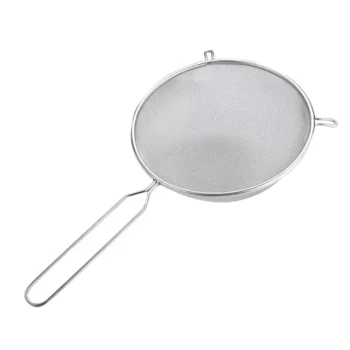
The efficient function of a honey extraction basket relies on balancing material permeability with structural geometry. The purpose of aluminum wire mesh side walls is to provide maximum permeability, allowing honey to pass through the basket unobstructed under the influence of centrifugal force. Simultaneously, the open-bottom design acts as a structural anchor, utilizing the gravity of the frames to maintain their vertical position and prevent them from falling into the tank during high-speed rotation.
Core Takeaway This design configuration optimizes the extraction process by pairing unrestricted honey flow through mesh walls with a gravity-assisted structural support system at the bottom. This ensures that frames remain stable and vertical even under the intense stress of rotational forces.
The Role of Aluminum Wire Mesh Walls
Maximizing Permeability
The primary function of the aluminum wire mesh is to reduce resistance.
Solid walls would trap the honey or require it to flow upward to escape. The wire mesh creates a highly permeable barrier that allows honey to exit the basket immediately as it is pulled from the comb.
Harnessing Centrifugal Force
The mesh design is specifically engineered to work in tandem with centrifugal force.
As the basket spins, the force pushes the honey outward. The mesh side walls ensure that this force results in immediate extraction rather than pooling or buildup within the basket.
The Mechanics of the Open-Bottom Design
Utilizing Gravity for Stability
Contrary to what one might expect, the open-bottom design provides critical structural support.
It allows the system to utilize the gravity of the honeycomb frames themselves. By not having a solid floor that frames might slide across, the design uses the frame's weight to lock it securely into a vertical position.
Preventing Equipment Displacement
The most critical safety function of the open bottom is retention.
This design prevents the frames from dislodging and falling to the bottom of the tank during operation. It ensures that despite the vibration and speed of rotation, the frames remain vertically aligned and stable throughout the extraction process.
Understanding the Trade-offs
Cleaning and Maintenance
While aluminum wire mesh offers superior flow, it introduces a maintenance challenge compared to solid surfaces.
The intricate weave of the mesh can trap wax and crystallized honey more easily than a smooth sheet of metal. This requires diligent cleaning to maintain the permeability that makes the design effective in the first place.
Frame Standardization
The open-bottom design relies heavily on the specific geometry of the frames to provide support.
Because the system uses gravity and the frame's structure to keep it vertical, using damaged frames or those with non-standard dimensions can compromise stability. If the frame does not seat correctly within the open structure, the safety benefits regarding vertical retention may be diminished.
Making the Right Choice for Your Goal
When evaluating extraction equipment, consider how these features align with your operational needs:
- If your primary focus is Extraction Speed: Prioritize the aluminum wire mesh density, as higher permeability correlates directly with faster honey release under centrifugal force.
- If your primary focus is Operational Safety: Ensure your frames are standard and in good condition to fully utilize the stability benefits of the open-bottom design, preventing jams or frame drops.
By leveraging mesh for flow and gravity for stability, this design turns the physical forces of extraction into advantages rather than risks.
Summary Table:
| Feature | Design Component | Primary Benefit | Operational Impact |
|---|---|---|---|
| Honey Flow | Aluminum Wire Mesh | Maximum Permeability | Reduces resistance; immediate extraction via centrifugal force |
| Stability | Open-Bottom Design | Gravity-Assisted Locking | Keeps frames vertical; prevents displacement into the tank |
| Efficiency | Mesh & Open Bottom | Optimized Force Balance | Faster honey release with enhanced safety during high-speed rotation |
| Maintenance | Mesh Texture | Weave Surface | Requires diligent cleaning to prevent wax and crystal buildup |
Elevate Your Honey Production with HONESTBEE
Maximize your apiary's efficiency with professional-grade extraction technology. HONESTBEE specializes in serving commercial apiaries and distributors with a robust selection of high-performance beekeeping tools and machinery.
From honey-filling machines and specialized hive-making hardware to our full spectrum of industry consumables, we provide the durability and precision required for large-scale operations. Partner with us to access wholesale solutions that streamline your workflow and protect your harvest.
Ready to upgrade your equipment? Contact us today to explore our wholesale catalog!
References
- M. A. Al-Rajhi, A. El-Sheikha. DEVELOPMENT AND EVALUATION OF A TANGENTIAL HONEY - EXTRACTOR. DOI: 10.21608/mjae.2014.98404
This article is also based on technical information from HonestBee Knowledge Base .
Related Products
- Conical Nylon Honey Strainer Filter Bag for Beekeeping and Honey Filtration
- Food Grade Plastic Honey Bucket Pail for Beekeeping
- Stainless Steel Beekeeping Honey Extractor Lid
- Professional Stainless Steel Honey Filter with Support Handle
- Acrylic Lid Beekeeping Honey Extractor for Beekeepers
People Also Ask
- What is the primary function of specialized filtering bags in honey purification? Enhance Quality & Equipment Life
- What are the primary functions of using muslin cloth or stainless steel filters? Ensure Pure and Marketable Honey
- What are the benefits of using a honey strainer for beekeepers? Achieve Clean, High-Quality Honey Efficiently
- What is the primary function of a honey strainer in beekeeping? Achieve Commercial Purity & Visual Clarity
- What can I use to strain honey? A Beekeeper's Guide to Choosing the Right Filter