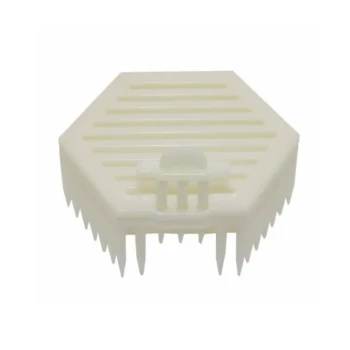
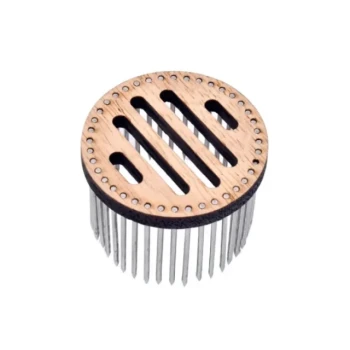
Internal screen cages are specialized isolation devices used to ensure precision in honeybee data collection. Their primary purpose is to create a controlled environment where larvae can develop using the host colony's natural temperature and humidity, while physically separating newly emerged bees from the rest of the hive. This allows researchers to obtain samples with a verified age and specific genetic background.
By leveraging the hive's stable climate for incubation while enforcing strict physical isolation, screen cages provide the only reliable method to harvest bees of an exact age and known lineage for controlled studies.
The Mechanics of Controlled Emergence
Preserving Environmental Stability
Honeybee larvae require precise environmental conditions to develop correctly. The screen cage design allows the brood to remain inside the active colony.
This ensures the developing bees benefit from the hive's regulation of temperature and humidity. Without this integration, removing the brood for isolation could lead to developmental failure or stress.
Guaranteeing Sample Purity
The defining feature of these cages is the physical barrier they create. Once a bee emerges from its cell, it is immediately contained.
This isolation prevents the new bee from mingling with the general colony population. It eliminates the risk of "contamination" from older bees, ensuring the sample consists exclusively of the target group.
Why Precision Matters in Bee Studies
Establishing Exact Age Cohorts
In many studies, the behavior or physiology of a bee is tied strictly to its age. Screen cages validate the timeline of the sample.
By isolating the comb before emergence, a researcher knows that every live bee found inside the cage has emerged within a specific time window (e.g., the last 24 hours).
Controlling Genetic Background
Research often requires comparing specific genetic lines. Cages ensure that the collected bees belong to the specific brood comb selected.
This removes the variable of "drift," where bees from other colonies or different queens might mix into the sample group, preserving the genetic integrity of the data.
Understanding the Trade-offs
Artificial Constraints
While beneficial for sampling, screen cages create an artificial boundary. Restricted bees cannot access resources or perform social duties outside the cage.
This means the sample is pristine regarding age and genetics, but the bees are prevented from immediate social integration. This isolation must be timed carefully to avoid stressing the newly emerged bees.
Making the Right Choice for Your Goal
When designing your sampling protocol, consider your specific data requirements.
- If your primary focus is controlled research: Use screen cages to strictly isolate variables of age and genetics, ensuring no cross-contamination with the general hive population.
- If your primary focus is general colony assessment: Screen cages may be unnecessary, as they require invasive manipulation of brood frames that is not required for broad health checks.
Precision in isolation is the key to accuracy in emergence studies.
Summary Table:
| Feature | Purpose | Benefit for Researchers |
|---|---|---|
| Environmental Stability | Integrates with hive climate | Maintains natural temp/humidity for healthy emergence |
| Physical Isolation | Barrier from general population | Guarantees zero contamination from older bees |
| Age Verification | Controlled time windows | Establishes exact age cohorts (e.g., <24 hours) |
| Genetic Integrity | Comb-specific containment | Ensures samples belong to a specific queen or lineage |
Elevate Your Apiary Operations with HONESTBEE
Precision in the field requires the right equipment. HONESTBEE specializes in supporting commercial apiaries and distributors with a comprehensive range of high-quality beekeeping tools, specialized machinery, and essential consumables. Whether you are scaling your research capabilities or optimizing honey production with our advanced honey-filling and hive-making machines, we provide the industrial-grade solutions you need to succeed.
Ready to upgrade your equipment or stock your distribution line?
Contact us today to explore our wholesale offerings!
References
- Ernesto Guzmán‐Novoa, Daniel Prieto-Merlos. Genotypic effects of honey bee (<i>Apis mellifera</i>) defensive behavior at the individual and colony levels: the relationship of guarding, pursuing and stinging. DOI: 10.1051/apido:2003061
This article is also based on technical information from HonestBee Knowledge Base .
Related Products
- Hexagonal Direct Comb Introduction Queen Bee Cage
- Premium Wood and Steel Push In Queen Cage
- Langstroth Screen Bottom Board for Beekeeping Wholesale
People Also Ask
- What is the technical purpose of using an introduction cage? Ensure Safe Queen Bee Integration and Colony Acceptance
- How does the introduction cage method differ from standard cage insertion for queen bees? Best Acceptance Strategies
- What is the mechanism of action for using temporary queen bee cages? Master Successful Queen Introduction
- Why are specialized queen bee cages used for the banking of mated queen bees? Maximize Commercial Apiary Storage Efficiency
- What is the importance of specialized queen introduction cages and tools? Secure High-Value Genetics & Scalability.