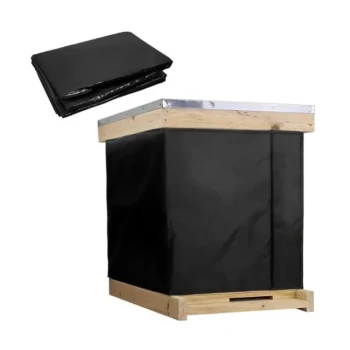
Winter packing serves as a vital life-support system for compromised honeybee colonies. By wrapping hives in materials with high thermal resistance, beekeepers create a barrier that significantly minimizes heat loss. This allows smaller or weaker colonies to maintain their required core temperature during periods of extreme cold without exhausting their energy reserves.
Winter packing acts as an external thermal shield, reducing the metabolic burden on smaller colonies and directly increasing survival rates by limiting heat transfer between the hive and the freezing environment.
The Mechanics of Winter Insulation
Establishing a Thermal Barrier
Winter packing involves wrapping the hive in specialized consumables designed with high thermal resistance.
This layer acts as an insulator, physically separating the hive's interior from the harsh external climate.
By impeding the flow of cold air inward and warm air outward, the packing drastically reduces the rate of thermal transfer.
Stabilizing Core Temperature
The primary biological goal of this insulation is the maintenance of the colony's core temperature.
Honeybees must generate heat to survive, but extreme cold can strip this heat away faster than the bees can produce it.
Insulation helps the colony retain the warmth they generate, stabilizing the internal environment even when outside temperatures plummet.
Why Weaker Colonies Require Intervention
Compensating for Lower Biomass
Smaller colonies lack the physical mass—the sheer number of bees—required to generate sufficient heat efficiently.
Without assistance, these colonies struggle to form a cluster dense enough to withstand freezing conditions.
Winter packing provides the artificial protection needed to compensate for this lack of biological "insulation."
Increasing Survival Rates
The correlation between insulation and survival is direct for these vulnerable populations.
By reducing the energy required to stay warm, the colony is less likely to succumb to cold stress or starvation.
This intervention transforms a lethal environment into a manageable one, significantly boosting overwintering success rates.
Operational Distinctions and Trade-offs
Stationary Retention vs. Transit Ventilation
It is critical to distinguish between keeping a hive warm in winter and managing a hive during transport.
While winter packing is designed to retain heat, it can be detrimental if used during hive transit where heat build-up is a risk.
The Role of Meshed Covers
For moving hives, particularly across ecological regions, beekeepers must utilize meshed covers rather than insulation.
These covers allow for maximum airflow and ventilation to prevent heat-induced stress and comb breakage.
confusing these two applications—insulating during transit or ventilating during deep winter—can lead to high mortality rates.
Making the Right Choice for Your Goal
To ensure the health and safety of your apiary, apply the correct material based on the colony's immediate environmental context:
- If your primary focus is overwintering weak colonies: Apply high-thermal-resistance packing to minimize heat loss and assist the bees in maintaining their core temperature.
- If your primary focus is transporting hives: Remove insulation and utilize meshed covers to ensure ventilation and prevent lethal heat accumulation.
Strategic thermal management is the key to turning a vulnerable colony into a survivor.
Summary Table:
| Feature | Winter Packing & Insulation | Meshed Covers & Ventilation |
|---|---|---|
| Primary Goal | Heat Retention & Energy Conservation | Heat Dissipation & Airflow |
| Best Used For | Overwintering weak colonies in cold climates | Transporting hives and transit |
| Thermal Impact | Minimizes heat transfer to the environment | Prevents lethal heat accumulation |
| Key Outcome | Prevents cold stress and starvation | Prevents comb breakage and transit stress |
Secure Your Apiary’s Success with HONESTBEE
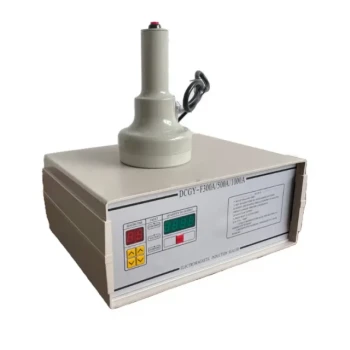
At HONESTBEE, we understand that commercial success in beekeeping starts with colony survival. We provide a comprehensive wholesale range of professional-grade beekeeping tools, machinery, and essential consumables—from high-thermal insulation materials for winter protection to specialized hive-making and honey-filling machines.
Whether you are a distributor or a commercial apiary, our premium hardware and honey-themed merchandise are designed to enhance your operational efficiency and market reach. Don't let the winter season compromise your stock.
Contact us today to explore our full spectrum of beekeeping solutions!
References
- V Jagadeesh, V Pavithra. Adoption of seasonal management practices of apiary colonies by beekeepers. DOI: 10.33545/26180723.2024.v7.i3c.459
This article is also based on technical information from HonestBee Knowledge Base .
Related Products
- Professional Insulated Winter Hive Wrap for Beekeeping
- Inner Beehive Cover for Beekeeping Bee Hive Inner Cover
- Professional Insulated Plastic Bee Hives
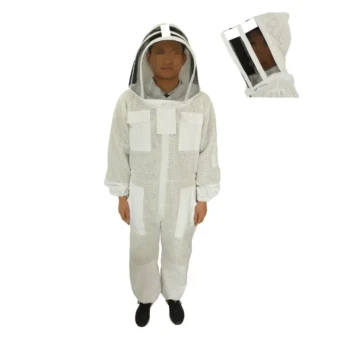
- White Cotton Beekeeping Jacket and Veil for Bee Keepers
- Economy Polyester Beekeeping Jacket with Veil and Hat
People Also Ask
- What are the steps to properly wrap a beehive for winter? Ensure Your Colony Survives the Cold
- When is the best time to wrap a beehive for winter? A Guide to Perfect Winterization Timing
- How do professional insulation wraps provide protection for bee colonies? Optimize Winter Survival & Energy Efficiency
- What are the technical benefits of using winter wraps for beehive insulation? Boost Colony Survival & Hive Health
- What are the benefits of using insulated covers for hives? Ensure Colony Survival and Health