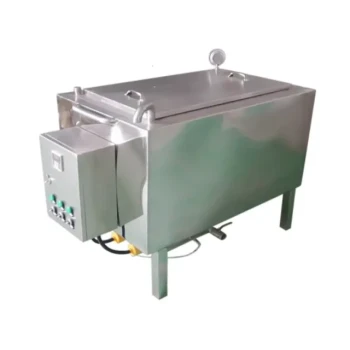
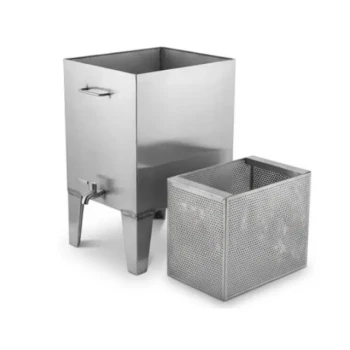
To process high-quality beeswax, you must utilize a water-bath melting method that leverages specific non-reactive equipment and gravity separation. The recommended procedure involves melting the wax in an enamel, aluminum, or stainless steel pot with twice its volume of clean rainwater, followed by filtration and a long cooling period to allow impurities to settle.
Core Takeaway Producing high-quality wax is fundamentally a purification process that relies on the density difference between wax, water, and debris. By melting wax with rainwater and allowing it to cool slowly, the clean wax solidifies into a cake on top while impurities sink to the bottom or wash away.
Equipment and Preparation
Selecting the Right Vessel
You must use a pot made of enamel, aluminum, or stainless steel. Using these specific materials prevents chemical reactions that can discolor or degrade the wax.
The Importance of Water Quality
The procedure requires clean rainwater rather than tap water. This ensures that mineral content or additives often found in municipal water sources do not interfere with the quality of the final product.
Establishing the Ratio
Add twice the volume of rainwater relative to the amount of wax you are processing. This high volume of water provides a sufficient buffer to wash the wax and separate heavy debris.
The Melting and Filtration Process
Heating the Mixture
Heat the pot until all the wax has completely melted. You must monitor this closely, as hot wax is highly flammable and poses a significant fire risk if overheated or exposed to open flame.
Straining the Mixture
Once melted, pour the hot liquid through a rough sieve into a separate bucket. This step acts as a primary filter, catching larger particulate matter like bee parts or wood chips before the settling phase begins.
Settling and Separation
The Cooling Phase
Allow the bucket to sit undisturbed for 12 hours or more. During this time, the mixture will cool, and the wax will rise to the top to form a solid cake.
Removing Impurities
As the wax hardens, fine debris will settle at the interface between the water and the wax. Once fully set, remove the hard wax cake and scrape the layer of debris off the bottom of the cake.
Common Pitfalls to Avoid
Avoiding Contamination
Stick strictly to the recommended pot materials (enamel, aluminum, stainless steel). Using reactive metals like iron or copper (implied by their exclusion) can permanently stain the wax.
Ignoring Safety Protocols
Never leave melting wax unattended. Because wax is a fuel, it can reach a flash point if the water evaporates or if the heat is too intense.
Rushing the Cooling Process
Do not attempt to accelerate the cooling process. The full 12-hour window is necessary for gravity to effectively pull the finer dirt particles out of the wax and into the water or the bottom sludge layer.
How to Apply This to Your Project
If your primary focus is basic utility wax: Perform the process once, scraping the bottom thoroughly to ensure the wax is clean enough for foundation or general hive use.
If your primary focus is high-purity wax (candles or cosmetics): Repeat the entire process using the cleaned wax and a fresh batch of rainwater to achieve a superior, debris-free finish.
Consistency and patience during the cooling phase are the defining factors in producing exhibition-grade beeswax.
Summary Table:
| Step | Process | Key Requirement |
|---|---|---|
| Preparation | Vessel Selection | Use Enamel, Aluminum, or Stainless Steel only |
| Melting | Water-Bath Method | Ratio of 2 parts rainwater to 1 part wax |
| Filtration | Primary Straining | Pour through a rough sieve to remove large debris |
| Cooling | Gravity Separation | Allow 12+ hours for impurities to settle at the bottom |
| Finishing | Scraping | Remove the bottom layer of debris from the solid cake |
Elevate Your Wax Production with HONESTBEE
At HONESTBEE, we specialize in empowering commercial apiaries and beekeeping distributors with the professional-grade tools needed to produce exhibition-quality beeswax. Whether you are looking for high-capacity honey-filling machines, specialized hive-making hardware, or a consistent supply of essential consumables, our comprehensive wholesale portfolio has you covered.
Why partner with HONESTBEE?
- Expert Machinery: Streamline your processing with our specialized beekeeping hardware.
- Wholesale Efficiency: Bulk supplies and tools designed for large-scale operations.
- Industry Expertise: We understand the nuances of high-purity wax and honey production.
Ready to scale your commercial apiary or expand your distribution line? Contact us today to discover how HONESTBEE can optimize your beekeeping business!
Related Products
- Electric Commercial Beeswax Melter for Factory Use
- Electric Beeswax Flat Sheet Machine with Operating Tray for Wax Processing
- Steam Beeswax Melter Wax Warmer for Wax Processing
- Beeswax Melter for Candle Making Honey Bee Wax Melter
- Solar Beeswax Melter Easy Solar Wax Melter for Beeswax
People Also Ask
- Why might a commercial beekeeper prefer an electric beeswax melter? Maximize Profit with Speed & Scale
- What safety precautions should be taken when melting beeswax? A Guide to Flammable Wax Handling
- What types of beeswax melters are available for different scales of beekeeping? Solar vs. Electric Melters Compared
- What are the three popular methods for melting beeswax? Safely Process Your Wax with Ease
- How do you melt beeswax without making a mess? Master Safe & Clean Techniques