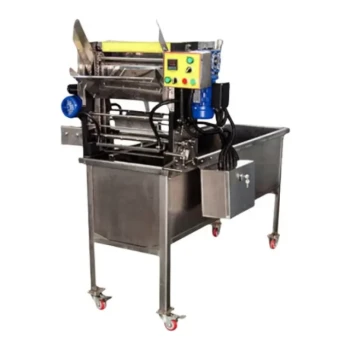
Automated honey filling machinery serves as the technological backbone of sustainable commercial beekeeping by bridging the gap between raw harvest and high-quality retail products. It utilizes closed, hygienic processing systems to maximize production efficiency while rigorously preserving the natural antioxidants and beneficial microorganisms, such as lactic acid bacteria, that are essential to honey's nutritional value. By ensuring product purity and standardizing production, this technology supports the economic viability required to maintain healthy pollinator populations.
By transforming bulk raw honey into high-value, standardized consumer goods, this machinery ensures the economic viability of beekeeping operations. This economic stability directly incentivizes the maintenance of pollinator populations, effectively aligning commercial profit with ecological preservation.
Preserving Biological Integrity
The primary role of automated filling machinery goes beyond simple packaging; it acts as a preservation system for the honey's complex biological profile.
The Closed-Loop Hygiene Advantage
Manual handling introduces significant risks of secondary contamination and oxidation. Automated machinery utilizes closed, sterile processing workflows to isolate the honey from environmental contaminants.
This isolation is critical for retaining the honey's physiological characteristics. It ensures that beneficial microorganisms, specifically lactic acid bacteria, survive the packaging process intact.
Retention of Natural Antioxidants
Honey is valued for its medicinal and nutritional properties, which are easily degraded by improper handling.
Advanced filling systems are designed to respect the product's delicate chemistry. By minimizing exposure to air and uncontrolled heat, the machinery maximizes the retention of natural antioxidants.
Economic Viability as a Sustainability Driver
Sustainability in beekeeping is not merely ecological; it is fundamentally economic. Without profitable operations, commercial apiaries cannot sustain the large bee populations necessary for global pollination.
Increasing Added Value
Automated machinery allows beekeepers to transition from selling low-margin bulk commodities to high-margin retail products.
Through precise weighing, sealing, and labeling, raw agricultural produce is converted into standardized consumer goods. This value addition provides the revenue necessary to reinvest in hive health and expansion.
Incentivizing Pollinator Support
Bee pollination contributes to approximately one-third of the human diet.
By making the post-processing phase efficient and profitable, automation incentivizes further commercial investment in the industry. This investment directly correlates to stable and managed pollinator populations, protecting the broader ecosystem.
Operational Efficiency and Scalability
To maintain sustainability at an industrial scale, operations must minimize waste and maximize throughput.
Precision and Waste Reduction
Manual filling often results in spills, overfilling, or underfilling, all of which represent economic loss.
Automated fillers integrate precise volumetric or weight sensors. This eliminates errors, ensures every unit meets regulatory standards, and significantly reduces the waste of the harvested resource.
Accelerating Market Turnover
Sustainability also relies on the speed at which products reach the consumer.
Industrial-grade filling machines significantly accelerate the turnover of honey from harvest to market. This speed prevents bottlenecks in the supply chain and improves the consistency of the final product available to consumers.
Understanding the Trade-offs
While automated machinery offers significant benefits, it introduces specific challenges that producers must manage to maintain true sustainability.
Capital Intensity and Access The shift to automation requires substantial upfront investment. This can create a barrier to entry for smaller apiaries, potentially consolidating the market into fewer, larger industrial players rather than a diverse network of local producers.
Thermal Management Risks To maintain fluidity for high-speed filling, many machines utilize temperature-controlled heating systems. If not monitored precisely, excessive heat can denature enzymes and destroy the very antioxidants and bacteria the machinery is meant to protect, negating the product's biological value.
Making the Right Choice for Your Goal
When integrating automated filling machinery into your operation, align your equipment choice with your specific sustainability targets.
- If your primary focus is Product Bio-activity: Prioritize machinery with advanced temperature controls and closed-loop systems to ensure the survival of lactic acid bacteria and antioxidants.
- If your primary focus is Economic Scaling: Focus on high-throughput systems with integrated labeling and precise metering to maximize the "added value" of your retail units.
- If your primary focus is Brand Authority: Select equipment that guarantees sterile sealing and traceability features to meet high-end market standards for purity.
Ultimately, the correct application of filling technology transforms beekeeping from a variable agricultural practice into a stable industry capable of supporting global pollination needs.
Summary Table:
| Key Sustainability Factor | Role of Automated Machinery | Primary Benefit |
|---|---|---|
| Biological Integrity | Closed-loop processing & thermal control | Preserves lactic acid bacteria and antioxidants |
| Economic Viability | High-precision retail packaging | Increases added value and profit margins |
| Operational Efficiency | Precise volumetric/weight sensors | Minimizes product waste and eliminates manual errors |
| Market Readiness | Accelerated throughput and scaling | Ensures consistent supply and faster market turnover |
| Ecological Impact | Financial stability for apiaries | Supports stable pollinator populations for the ecosystem |
Scale Your Beekeeping Operation with HONESTBEE
At HONESTBEE, we understand that sustainability in the honey industry requires a perfect balance between biological purity and commercial efficiency. As a leading provider for commercial apiaries and distributors, we offer a comprehensive wholesale range of beekeeping tools, machinery, and essential consumables.
From high-precision honey-filling machines and hive-making hardware to specialized honey-themed cultural merchandise, our equipment is designed to help you transition from bulk commodities to high-value retail products. Let us help you protect the integrity of your honey while maximizing your operation's economic potential.
Ready to upgrade your production? Contact us today to explore our full equipment catalog!
References
- O.V. Arnauta, L.H. Kalachniuk. Perspectives of studying causes and consequences of the mass death of honeybees. DOI: 10.15407/animbiol19.01.009
This article is also based on technical information from HonestBee Knowledge Base .
Related Products
- Fully Automatic Honey Filling Packaging Machine for Processing Line
- Automatic Honey Filling and Filtering Machine for Beekeeping Bottle Filling
- Precision Durable Efficient HONESTBEE Rotary Honey Filling Machine
- Semi Automatic Small Honey Bottle Filling Machine Honey Filler
- Precision Automated Packaging Turntable Honey Spoon Filling Sealing Packing Machine
People Also Ask
- Why are fully automatic honey filling and packaging lines essential? Boost Your Honey's Market Value and Quality
- What is a fully-automatic honey filler? Streamline Your Production with High-Precision Automation
- How do automated honey filling and packaging machines affect profitability? Boost Margins with HONESTBEE Technology
- How do automated honey filling and packaging machines contribute to the market value of honey products? Maximize Your ROI
- How do industrial-grade automated honey filling and packaging machines mitigate the risk of physical contamination?