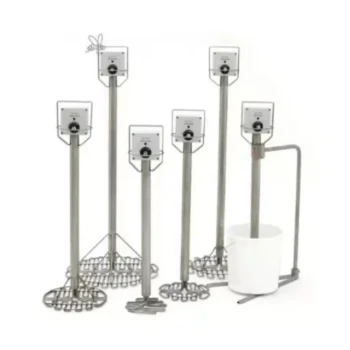
Industrial constant temperature heating equipment functions as the critical control point between raw, crystallized honey and a marketable liquid product. Its primary role is to restore hardened honey to a fluid state through precise thermal regulation, ensuring the substance becomes pourable without subjecting it to the temperature spikes that destroy quality. This technology replaces aggressive, high-heat methods with a gentle, uniform approach that prioritizes the chemical integrity of the honey.
Core Takeaway The definitive value of this equipment lies in its ability to liquefy honey without "cooking" it. By maintaining a strict temperature ceiling (often around 38°C), it enables the physical phase change from crystal to liquid while preventing the spike in Hydroxymethylfurfural (HMF) levels that signals nutritional degradation.
The Physics of Controlled Liquefaction
Eliminating Local Overheating
The greatest danger in liquefying honey is uneven heat distribution. Standard heating elements can create "hot spots" where the honey in direct contact with the heat source boils or scorches, even if the average temperature seems safe.
Industrial constant temperature equipment utilizes controlled physical heating to ensure thermal energy is distributed uniformly. This prevents localized thermal shock, protecting the honey's delicate matrix from partial caramelization or burning.
Preserving Bioactive Integrity
Honey is valued for its biological activity, specifically its enzymes (such as diastase) and vitamins. These components are highly heat-sensitive.
By strictly limiting the maximum temperature, this equipment prevents the denaturation of these active substances. It ensures that while the physical state changes (solid to liquid), the nutritional profile remains virtually identical to its raw state.
Operational Applications
Processing Bulk Containers
In industrial settings, honey is often stored in large metal drums where it crystallizes into a solid block, making extraction impossible via pouring.
Specialized heating ovens or belts create a controlled thermal environment around these drums. This slowly brings the honey to a semi-fluid state, allowing it to be pumped or poured for repackaging without the need for invasive mechanical extraction that could introduce contaminants.
Ensuring Analytical Accuracy
For quality control, accurate testing requires a homogeneous sample. Crystallized honey contains solid particles that can skew measurements of moisture and phenolic distribution.
Controlled heating is used to liquefy samples completely prior to testing. This ensures that data regarding HMF levels and moisture content is representative of the entire batch, preventing measurement errors caused by crystal lattices.
Common Pitfalls and Limitations
The Time-Temperature Trade-off
The primary trade-off of using constant temperature equipment is time. To avoid damaging the honey, temperatures are often kept low (e.g., 38°C), which requires extended processing times—often up to 20 hours. Attempting to rush this process by raising the temperature defeats the purpose of the equipment and risks increasing HMF levels.
The Need for Mechanical Intervention
Heat alone is often insufficient for a perfect finish. While thermal energy melts the crystals, it may not fully break down the residual crystal lattices.
Consequently, relying solely on heating equipment can result in honey that re-crystallizes quickly. A complete industrial process often requires following the heating stage with a mechanical homogenizer to break down remaining structures and ensure a uniform texture.
Optimizing Your Processing Strategy
To get the most out of industrial heating equipment, align your settings with your specific production goals.
- If your primary focus is Nutritional Preservation: Maintain temperatures strictly at or below 38°C to minimize HMF growth and protect diastase activity, accepting longer processing times as a necessary cost.
- If your primary focus is Texture and Shelf-Stability: Use the heating equipment to achieve a semi-liquid state, then immediately transfer the honey to a homogenizer to mechanically destroy residual crystal lattices.
- If your primary focus is Bulk Extraction: Utilize drum-specific heating ovens to achieve just enough fluidity for pumping, minimizing the total heat exposure time for the bulk of the product.
Precision heating is not just about melting honey; it is about respecting the biological complexity of the product while rendering it usable for the market.
Summary Table:
| Feature | Industrial Constant Temp Heating | Traditional High-Heat Methods |
|---|---|---|
| Temperature Control | Precise (usually max 38°C) | High and inconsistent |
| Nutritional Profile | Preserves enzymes & vitamins | Risk of thermal degradation |
| HMF Levels | Minimal/Controlled | Significant spikes |
| Heat Distribution | Uniform across the medium | Localized "hot spots" |
| Primary Use | Bulk processing & lab sampling | Rapid, low-quality melting |
Scale Your Honey Processing with HONESTBEE Professional Equipment
Transitioning from crystallized bulk honey to a premium liquid product requires the right thermal precision. HONESTBEE specializes in supporting commercial apiaries and distributors with high-performance beekeeping tools and industrial machinery designed to protect your product's biological integrity.
From honey-filling machines and hive-making hardware to specialized heating solutions and essential consumables, we provide the full spectrum of equipment needed to grow your wholesale business.
Ready to optimize your production and preserve your honey's nutritional value?
→ Contact HONESTBEE Today for a Quote
References
- Juozas Labokas, Gintarė Kleibaitė. Knowledge and Use of Bee Products in Lithuania. DOI: 10.3390/nu17243927
This article is also based on technical information from HonestBee Knowledge Base .
Related Products
- Professional Thermostatic Conical Honey Melter
- Stainless Steel Heated Honey Tank Warming Heating Tank
- Honey Concentrating Vacuum Heating Thickening Machine Dehumidifier for Honey
- Honey Tank Heater Drum Heating Blanket for Honey Barrel
- HONESTBEE Commercial Upright Honey Melter
People Also Ask
- What is melter honey used for? A Low-Cost Ingredient for Bakers and Brewers
- How do you melt a bucket of honey? Safely Reliquefy Crystallized Honey Without Damage
- How does a honey melter address the issue of crystallized honey in storage? Restore Flow and Quality Efficiently
- When is a honey melter necessary? Optimize Your Facility's Workflow for Crystallized Honey
- How to heat a bucket of honey? Safely Restore Liquid Honey While Preserving Quality