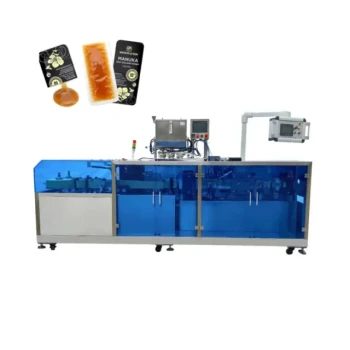
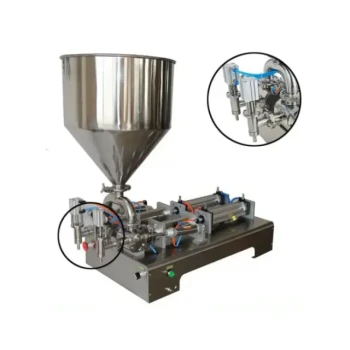
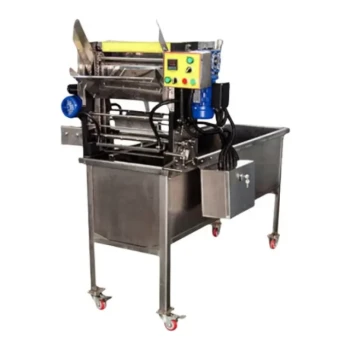
Automated honey filling machines are the linchpin of quality control in modern commercial honey processing. By utilizing high-precision weighing sensors and sterile filling technology, these systems ensure the accurate measurement of honey from specific botanical origins while significantly mitigating the risks of oxidation and environmental contamination.
The central value of automation lies in its ability to decouple production volume from product degradation. By replacing manual handling with precision engineering, you ensure that the purity, chemical stability, and net weight of the honey remain consistent, safeguarding its competitive value in international markets.
Preserving Chemical and Biological Integrity
Minimizing Oxidation and Contamination
The primary threat to processed honey is exposure to air and external contaminants. Automated machines utilize sterile filling technologies and vacuum suction systems to create a sealed processing environment.
This isolation significantly reduces the risk of oxidation, which can degrade the honey's flavor and color. Furthermore, by employing non-contact filling technology, these systems eliminate the secondary contamination risks inherent in manual handling and open-air packaging.
Stabilizing HMF Levels and Enzymes
Honey contains sensitive biological markers, such as enzymes and volatile components, which determine its quality and origin. Industrial-grade machines are designed to minimize heat exposure and strictly control flow.
This precision ensures that physical and chemical indicators—specifically Hydroxymethylfurfural (HMF) levels—remain stable. Keeping HMF levels low is critical for proving freshness and preserving the nutritional profile of honey derived from diverse bee species.
Controlling Air Incorporation
Manual pouring often traps air bubbles within the liquid, which detracts from visual appeal and can accelerate crystallization. Automated fillers minimize air incorporation during the metering process.
By reducing trapped air, the machinery helps maintain the honey's texture and shelf stability, ensuring the product remains in a liquid state for the expected duration.
Achieving Commercial Standardization
Handling Viscosity Variables
Honey viscosity changes depending on temperature and botanical source. High-precision machines utilize automated flow control systems to adapt to these variations without sacrificing speed.
This capability allows for the consistent dosage of different honey types, ensuring that every unit meets strict commercial circulation standards regardless of fluid thickness.
Precision Weight and Anti-Drip Control
To meet retail requirements, net weight must be uniform across thousands of units. Automated systems employ high-precision weighing sensors to achieve exact metering controls.
Additionally, specific anti-drip designs prevent product waste and sticky residue on packaging. This ensures the final product is clean, hygienic, and compliant with standardized branding requirements.
Understanding the Trade-offs
While automated filling is superior for quality, it introduces specific operational demands. Complexity in Calibration is a common challenge; the high-precision sensors required to measure specific botanical origins must be frequently calibrated to maintain accuracy.
Furthermore, Maintenance of Sterility is non-negotiable. Because the system relies on a "sterile filling technology" to prevent microbial contamination, the sanitation of the machine itself becomes a critical control point. Failure to rigorously clean the precision pumping systems can lead to cross-contamination between batches.
Making the Right Choice for Your Goal
To maximize the value of an automated filling system, align your equipment choice with your specific market strategy:
- If your primary focus is Premium or "Raw" Honey: Prioritize machines with vacuum suction and non-contact filling to protect enzymes and minimize heat exposure.
- If your primary focus is Mass Market Retail: Select equipment with robust anti-drip designs and high-speed flow controls to ensure strict weight compliance and clean packaging.
- If your primary focus is Export/International Trade: Ensure the machine offers verifiable sterile processing to meet low HMF and oxidation standards required by global distributors.
Automation transforms honey processing from a variable art into a precise science, securing both the product's quality and your market reputation.
Summary Table:
| Key Feature | Benefit for Honey Quality | Impact on Commercial Value |
|---|---|---|
| Sterile Filling Technology | Minimizes oxidation and external contamination | Extends shelf life and preserves flavor |
| High-Precision Sensors | Ensures exact net weight and dosage consistency | Guarantees compliance with retail standards |
| Vacuum Suction Systems | Reduces air incorporation and bubbles | Improves visual appeal and slows crystallization |
| Automated Flow Control | Adapts to varying viscosities without heat damage | Protects sensitive enzymes and HMF levels |
| Anti-Drip Design | Eliminates sticky residue on packaging | Reduces waste and maintains brand hygiene |
Elevate Your Honey Production with HONESTBEE Precision Solutions
Maintaining the biological integrity of your honey is vital for competing in global markets. At HONESTBEE, we empower commercial apiaries and distributors with high-performance honey-filling machines, specialized beekeeping tools, and advanced machinery designed for scale and purity.
Whether you are expanding a commercial honey line or outfitting a wholesale distribution center, our comprehensive portfolio—from industrial hardware to essential consumables—ensures your product meets the highest standards of excellence.
Ready to scale your operation with industry-leading technology?
Contact HONESTBEE Today to discover how our wholesale solutions can optimize your processing efficiency and protect your honey's premium value.
References
- Ahmad Al-Ghamdi, Nageeb A. Al‐Sagheer. Plant Species as Potential Forage for Honey Bees in the Al-Baha Mountain Region in Southwestern Saudi Arabia. DOI: 10.3390/plants12061402
This article is also based on technical information from HonestBee Knowledge Base .
Related Products
- Fully Automatic Honey Filling Packaging Machine for Processing Line
- Automatic Honey Filling and Filtering Machine for Beekeeping Bottle Filling
- Precision Durable Efficient HONESTBEE Rotary Honey Filling Machine
- Precision Automated Packaging Turntable Honey Spoon Filling Sealing Packing Machine
- Semi Automatic Small Honey Bottle Filling Machine Honey Filler
People Also Ask
- Why are fully automatic honey filling and packaging lines essential? Boost Your Honey's Market Value and Quality
- What is a fully-automatic honey filler? Streamline Your Production with High-Precision Automation
- How do automated honey filling and packaging machines affect profitability? Boost Margins with HONESTBEE Technology
- How do automated honey filling and packaging machines contribute to the market value of honey products? Maximize Your ROI
- How do industrial-grade automated honey filling and packaging machines mitigate the risk of physical contamination?