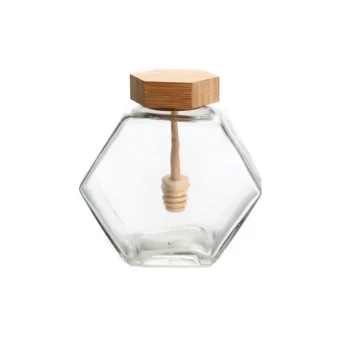
Professional packaging and labeling serve as the critical bridge between raw production and commercial success. At its core, this practice utilizes food-grade materials and precise technical labeling to safeguard honey against moisture, pollution, and oxidation. By ensuring physical stability during storage and transport, producers can extend shelf life while simultaneously unlocking access to high-end distribution channels.
The Core Reality: While the immediate function of professional packaging is to preserve quality by preventing fermentation and spoilage, its strategic value lies in transforming a raw agricultural commodity into a competitive, premium consumer brand capable of commanding higher market prices.
Preserving Quality and Extending Shelf Life
To understand the necessity of professional packaging, you must first understand the chemical vulnerabilities of honey. It is not merely a container; it is a preservation system.
Preventing Environmental Contamination
Honey is naturally hygroscopic, meaning it absorbs moisture from the air. Without a professional, hermetic seal, honey will absorb humidity, leading to fermentation and spoilage.
Professional packaging creates a barrier against this moisture, as well as against external pollution and oxidation. This protection is non-negotiable for maintaining the product's chemical stability over time.
Ensuring Physical Stability During Logistics
Commercial distribution often involves long-distance transportation and varied storage conditions. Professional packaging provides the structural integrity required to withstand these physical stresses.
Standardized, durable containers ensure that the product arrives at retail destinations intact, reducing loss from breakage or leakage. This reliability is a prerequisite for entering formal supply chains.
Unlocking Market Value and Brand Identity
Beyond protection, packaging and labeling are the primary drivers of commercial value. They shift the product from a bulk commodity to a high-value retail item.
Accessing High-End Distribution Channels
Retailers, especially in high-end markets and e-commerce platforms, require products to meet specific visual and physical standards. Professional packaging ensures your product fits these dimensions and aesthetic requirements.
Without this level of presentation, honey products are often relegated to lower-value bulk markets. High-quality packaging is the "entry ticket" to shelves where brand premiums can be achieved.
Building Trust Through Traceability
In a market often plagued by adulteration, the label is your tool for verification. Professional labeling systems allow for the clear communication of geographic origin, nectar sources, and nutritional profiles.
For consumers, this transparency builds trust. For producers targeting export markets, precise labeling ensures compliance with strict international food safety standards and marketing regulations.
Differentiation in a Crowded Market
Visual presentation directly influences purchasing decisions. Professional design conveys brand identity and distinguishes a product from competitors.
By investing in high-quality materials and design, producers increase the added value of the honey, fostering brand loyalty and justifying a higher price point to the consumer.
Understanding the Operational Requirements
While the benefits are clear, shifting to professional packaging introduces specific operational demands that producers must anticipate.
The Necessity of Automation
Achieving professional standards—specifically regarding hygiene and precise measurement—often requires industrial-grade filling and packaging equipment.
Manual bottling risks inconsistency and contamination. Automation ensures hygienic safety and creates the standardized look required by modern retail, but it requires capital investment in hardware.
Regulatory Compliance Rigor
Professional labeling is not just about aesthetics; it is a legal document. It must accurately reflect ingredients, production dates, and traceability data to meet anti-counterfeiting laws.
Failure to adhere to these standardized food packaging requirements can lead to market exclusion or legal penalties, particularly in export scenarios.
Making the Right Choice for Your Commercial Strategy
To leverage packaging effectively, align your investment with your specific market goals.
- If your primary focus is entering high-end retail: Prioritize packaging aesthetics and standardized dimensions to ensure your product fits shelf displays and conveys a premium image.
- If your primary focus is export and compliance: Invest heavily in labeling precision and traceability features to meet international safety standards and build cross-border trust.
- If your primary focus is logistics and shelf life: Focus on the technical specifications of the container material to ensure a hermetic seal that prevents moisture absorption and oxidation.
Ultimately, professional packaging is not an optional expense, but a fundamental asset that secures both the physical quality of your honey and the economic viability of your brand.
Summary Table:
| Feature | Strategic Benefit | Commercial Impact |
|---|---|---|
| Hermetic Sealing | Prevents moisture absorption & fermentation | Extends shelf life & reduces spoilage loss |
| Structural Integrity | Withstands long-distance logistics | Reduces breakage & ensures supply chain reliability |
| Traceability Labeling | Verifies origin & nutritional data | Builds consumer trust & meets export standards |
| Aesthetic Design | Differentiates from bulk commodities | Commands premium pricing & increases brand loyalty |
| Automated Filling | Ensures hygienic safety & consistency | Meets retail standards & improves production scale |
Transform Your Raw Production into a Premium Global Brand
At HONESTBEE, we understand that professional packaging is the bridge between a harvest and a high-value retail product. We provide commercial apiaries and distributors with the professional tools needed to dominate the market.
Our comprehensive wholesale offering includes:
- Industrial Machinery: High-precision honey-filling and specialized hive-making machines for consistent, hygienic production.
- Beekeeping Equipment: A full spectrum of durable tools designed for large-scale operations.
- Industry Consumables: Essential hardware and high-quality materials to ensure your honey meets international safety standards.
Ready to elevate your honey brand and access high-end distribution channels? Contact HONESTBEE today to discover how our specialized equipment and expertise can drive your commercial success.
References
- Naftali Kiprono, Naomi Chebiwot Chelang’a. Assessing the economic returns of modern and traditional beehives. DOI: 10.17306/j.jard.2024.01794
This article is also based on technical information from HonestBee Knowledge Base .
Related Products
- Hexagonal Glass Honey Jars with Metal Lug Caps Elegant Versatile Packaging
- Fully Automatic Honey Filling Packaging Machine for Processing Line
- Double Nozzle Small Honey Filling Machine Honey Sachet Packing Packaging Equipment
- Automatic Single-Dose Snap & Squeeze Honey Sachets Packing Machine
- Honey Stick Filler Vertical Paste Sachet Packing Machine for Honey Sachets
People Also Ask
- What is the aesthetic appeal of using glass jars for honey? Elevate Your Brand with Premium Packaging
- What are the logistical challenges associated with using glass jars for honey packaging? Navigating Weight & Fragility
- What are the advantages of glass containers for honey? Elevate Quality and Market Value with Premium Packaging
- What are the technical advantages of using glass jars for honey? Master Commercial Packaging for Premium Purity
- What are the advantages of using glass jars for honey packaging? Preserve Purity & Elevate Your Brand