The primary significance of marking queen bees with different colors is to create an immediate visual indicator of physiological age. This simple coding system—such as marking 1-year-olds red, 2-year-olds yellow, and 3-year-olds white—allows researchers to rapidly assess the queen's maturity without disturbing the hive's workflow. Because a queen’s age dictates her biological performance, this visual data is the foundation for understanding colony dynamics.
By visually linking a specific color to the queen's age, researchers can accurately correlate the colony's swarming intensity and construction rhythms with the queen’s lifecycle stage, ensuring precise data traceability for long-term performance monitoring.
The Biological Implications of Queen Age
Connecting Age to Physiology
The color on a queen’s thorax is not merely for identification; it represents her physiological capability.
A queen's egg-laying activity and her ability to produce pheromones change significantly as she ages. These biological factors are the primary drivers of colony health and expansion rates.
Correlating Age with Swarming Intensity
Research shows a direct link between the queen's maturity and the colony's instinct to reproduce (swarm).
By identifying the queen's age instantly, researchers can map the rhythm of queen cell construction—the precursor to swarming—against the age of the reigning queen. This reveals how swarming intensity fluctuates as queens move from their prime reproductive years to older stages.
Ensuring Data Traceability
In long-term studies, distinguishing between individual queens is impossible without permanent markers.
Color coding ensures that colony performance data remains attributable to a specific biological timeline. It prevents data corruption that would occur if a researcher mistook a newly superseded daughter queen for her mother.
Operational Context and Data Integrity
The Role of Swarm Capture
While marking provides the data, capturing the swarm ensures the data is not lost to the wild.
Researchers utilize swarm boxes to simulate ideal nesting spaces, attracting and housing newly emerged swarms. This equipment is essential for maintaining the integrity of population statistics by preventing swarms from establishing nests in inaccessible wild locations.
Asset Protection
Marking aids in observation, but specialized tools aid in physical recovery.
Using swarm catching tools prevents the loss of biological assets during natural migration. This allows beekeepers to establish the swarm in a new hive, maintaining the stability and growth of the apiary's biological assets.
Understanding the Trade-offs
Observation vs. Prevention
It is critical to distinguish between monitoring swarming behavior and preventing it.
Marking a queen allows you to study the swarm, but it does not stop the instinct. To actually prevent swarming, beekeepers often replace the queen proactively; a new queen is less likely to swarm while acclimating, thereby reducing the colony's relocation instinct.
The Limits of Visual Identification
Color coding is effective only if the swarm is successfully captured or the hive is inspected regularly.
If a swarm escapes into the wild without capture, the data associated with that specific marked queen is effectively lost. Therefore, the marking system is deeply reliant on effective swarm capture hardware to close the data loop.
Making the Right Choice for Your Goal
Whether you are conducting academic research or managing a commercial apiary, how you utilize this information depends on your objective.
- If your primary focus is Research Accuracy: strict adherence to the age-based color code is vital to correlate pheromone control and construction rhythms with specific life stages.
- If your primary focus is Colony Expansion: combine marking with the use of swarm boxes to capture natural splits and increase your total biological assets.
- If your primary focus is Swarm Prevention: use the age data to schedule proactive queen replacement before the colony reaches peak swarming intensity.
Marking queens transforms a chaotic biological event into a trackable, data-rich metric that empowers better apiary management.
Summary Table:
| Color Code | Queen Age (Example) | Research Significance |
|---|---|---|
| Red | 1 Year Old | High pheromone output; low swarming drive. |
| Yellow | 2 Years Old | Peak colony expansion; moderate swarming risk. |
| White | 3+ Years Old | Decreasing egg-laying; high swarm/supersedure risk. |
| Blue/Green | Alternate Years | Ensures long-term traceability and data integrity. |
Maximize Your Apiary Productivity with HONESTBEE
Precise queen tracking is only the first step. To truly harness your colony's potential, you need professional-grade equipment that bridges the gap between research and results.
HONESTBEE specializes in supporting commercial apiaries and distributors with a comprehensive wholesale portfolio. We provide the essential tools you need to act on your data:
- Specialized Machinery: From hive-making to honey-filling machines for high-capacity production.
- Swarm Management: High-efficiency swarm boxes and recovery tools to protect your biological assets.
- Full Spectrum Supplies: Beekeeping hardware, premium consumables, and honey-themed cultural merchandise.
Ready to scale your beekeeping operation? Contact us today to explore our wholesale solutions and see how HONESTBEE can streamline your workflow and boost your bottom line.
References
- Ilie Cornoiu, Mirela Cadar. Contribution Concerning the Behaviour Knowledge before Natural Swarming in Honeybees (Apis mellifera carpathica, Linnaeus). DOI: 10.15835/buasvmcn-asb:0014.19
This article is also based on technical information from HonestBee Knowledge Base .
Related Products
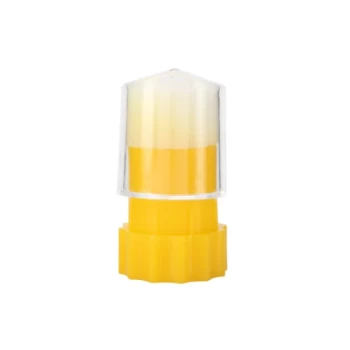
- One Hand Yellow Queen Marking Catcher Tube Cage Beekeeper Tool Accessory for Queen Bee
- Queen Bee Marking Pen POSCA Queen Marking Pens for Beekeeping Bee Markers
- Plastic Long Marker Device for Catching and Marking Bees Queen Bee Marking Tube and Cage
- Queen Bee Catcher Plastic Bee Marker Bottle with Piston Marking Tube
- Queen Bee Marking Pen UNI Medium Point for Queen and Bee Marking
People Also Ask
- What tools are available to assist in safely marking a queen bee? Essential Gear for Professional Beekeepers
- What equipment is needed to mark a queen bee? A Simple 3-Tool Guide for Every Beekeeper
- Why are high-quality queen bee marking tools essential for pedigree tracking? Master Honey Bee Genetic Integrity
- What are the specific advantages of using international standard marking tools in queen bee production and management?
- What tools are recommended for marking a Queen bee? Ensure a Safe and Successful Mark