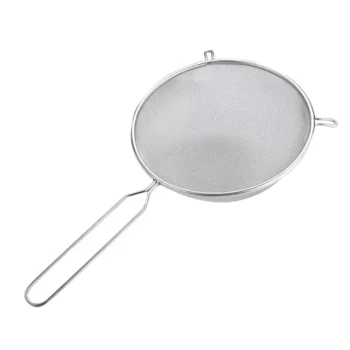
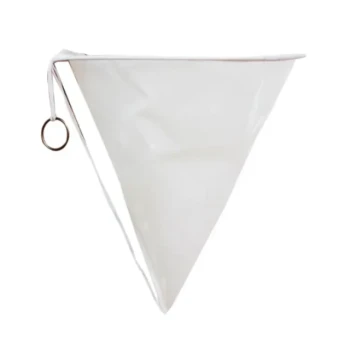
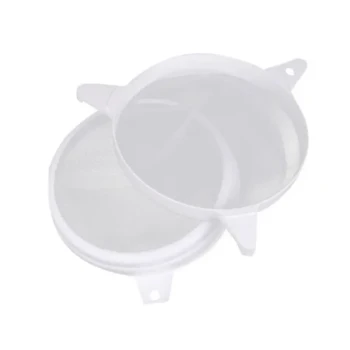
In the primary filtration of stingless bee honey, a fine sieve functions as a high-precision mechanical separator used to remove wax fragments, hive debris, and organic impurities. This critical step ensures the honey meets international food-grade clarity standards while preserving its delicate biological activity and distinct flavor profile.
Core Takeaway: Fine sieving is the bridge between raw harvest and a market-ready product, removing contaminants that cause spoilage or crystallization to ensure a premium, shelf-stable commodity for global distribution.
Enhancing Product Purity and Market Readiness
Precision Mechanical Separation
The primary role of the fine sieve is to intercept solid particles—such as beeswax, propolis bits, and bee debris—that are naturally present after extraction. By utilizing a specific mesh size, processors can effectively "polish" the honey, ensuring the final liquid is clear and free of sediments that could trigger buyer rejection. This mechanical process is strictly physical, meaning it does not rely on heat or chemicals that could degrade the honey's quality.
Standardizing Visual and Sensory Quality
For wholesalers and resellers, visual consistency is a hallmark of a premium product. Fine sieving creates a homogenized appearance that meets the strict aesthetic requirements of modern consumer markets. This transparency is not just about looks; it signals to the end-consumer that the honey has been handled with professional care and industry expertise.
Preserving Nutritional Integrity
Unlike ultra-filtration used in industrial clover honey, the primary fine sieve used for stingless bee honey is designed to leave microscopic pollen grains intact. This allows the honey to retain its unique nutritional markers and "superfood" status, which is a key selling point for high-end distributors. Maintaining this balance ensures the product remains "raw" while still achieving the purity required for commercial sale.
Safeguarding Shelf Life and Chemical Stability
Preventing Early Crystallization
Impurities like wax and dust act as "seeds" or nuclei around which glucose crystals can form. By removing these particles during the primary stage, the fine sieve significantly delays the crystallization process. For distributors, this translates to a longer shelf life and reduced inventory loss due to texture changes.
Mitigating Spoilage and Off-Flavors
Raw stingless bee honey often contains trace amounts of larval proteins or eggs which, if left in the honey, can decompose over time. Fine filtration intercepts these biological materials, preventing the development of rancidity or off-flavors during transit and storage. This step is vital for maintaining the brand's reputation for freshness and exceptional quality.
Improving Downstream Processing Efficiency
In technical or laboratory settings, a clean substrate is essential for accurate physicochemical testing. Fine sieving removes background "noise" from the honey, allowing for more precise analysis of pollen counts and moisture levels. This professional-grade preparation ensures that every batch of honey a distributor receives is backed by accurate data.
Understanding the Trade-offs
Filtration Speed vs. Precision
A finer mesh provides higher purity but results in a slower flow rate during the processing phase. Resellers must ensure their suppliers utilize equipment that balances rapid response times with the necessary level of filtration to avoid bottlenecks in fulfillment.
Pollen Retention and Grading
While removing debris is essential, an overly aggressive filtration process can strip the honey of its natural pollen. Since pollen is often used to verify the botanical origin and authenticity of stingless bee honey, excessive sieving can inadvertently lower the product's perceived value or grading.
Making the Right Choice for Your Sourcing Strategy
Choosing the right filtration standard is essential for meeting the specific needs of your target market.
- If your primary focus is premium retail distribution: Ensure your supplier utilizes fine-pore filtration to guarantee maximum clarity and a "clean" look that appeals to high-end consumers.
- If your primary focus is bulk industrial or pharmaceutical use: Prioritize filtration that focuses on removing all biological debris (larvae/proteins) to ensure long-term stability and chemical purity for secondary processing.
- If your primary focus is "Raw/Artisanal" branding: Opt for a coarser primary sieve that removes large debris while intentionally leaving a higher concentration of pollen for a more "authentic" product profile.
A professionally executed fine-filtration process is the foundation of a reliable, high-quality stingless bee honey supply chain.
Summary Table:
| Feature | Function in Filtration | Value for Distributors |
|---|---|---|
| Mechanical Separation | Removes wax, propolis, and bee debris | Ensures premium visual clarity and market readiness |
| Crystallization Control | Eliminates impurity "seeds" | Extends shelf life and maintains liquid texture |
| Biological Stability | Filters out larval proteins and organic matter | Prevents spoilage, fermentation, and off-flavors |
| Pollen Retention | Preserves microscopic nutritional markers | Maintains "superfood" status and high market value |
| Quality Standardization | Homogenizes honey appearance | Guarantees batch-to-batch consistency for retail |
Elevate Your Honey Production with HONESTBEE
At HONESTBEE, we specialize in empowering commercial apiaries and B2B distributors with a one-stop sourcing solution for professional-grade beekeeping equipment. Whether you need high-precision filtration tools, hive-making machinery, or advanced honey-filling systems, our full-spectrum portfolio is designed to maximize your efficiency and profit margins.
Why partner with us?
- Deep Industry Expertise: Specialized tools tailored for stingless bee honey processing.
- Rapid Response & Fulfillment: Ultra-fast delivery to keep your supply chain moving.
- Premium Service: Dedicated support for OEM/ODM requirements and bulk orders.
Ready to scale your distribution with reliable, high-performance equipment? Contact our expert team today to receive a customized quote and optimize your fulfillment process.
References
- Henny Herwina, Ferdhinal Asful. Assistance in the Cultivation of Stingless Bees and the Development of Derivative Products in Sungkai Green Park Ecotourism. DOI: 10.25077/jwa.31.2.343-352.2024
This article is also based on technical information from HonestBee Knowledge Base .
Related Products
- Stainless Steel Double Layer Honey Strainer Sieve Filters
- Stainless Steel Triangle Support Honey Strainer and Filters
- Professional Stainless Steel Honey Filter with Support Handle
- Professional Stainless Steel Honey Filtering Machine with Water Bath Heating for Beekeeping
- Conical Nylon Honey Strainer Filter Bag for Beekeeping and Honey Filtration
People Also Ask
- What are some typical mesh size combinations found in double sieve honey strainers? Expert Guide to Honey Filtration
- How is a double-layer honey filter used for monitoring Varroa mite infestation? Achieve Precise Pest Control Data
- How do double-layer honey filters and white blotting paper function together in Varroa mite detection? Expert Guide
- What is the function of honey sieves, strainers, and filters in processing? Master the 3 Stages of Honey Purity
- What mesh sizes are commonly used in double sieve honey strainers? Achieve Clean, Raw Honey Efficiently