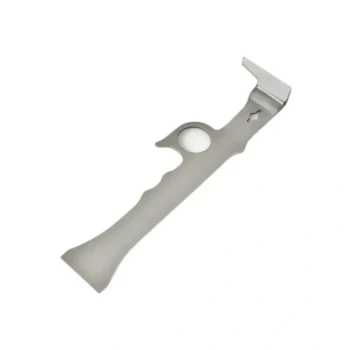
The primary technical purpose of a grafting tool is the non-destructive transfer of fragile, 12-to-24-hour-old honeybee larvae. This high-precision instrument is designed to lift the larva from its natural honeycomb cell and deposit it into an artificial queen cup or culture plate without causing physical injury. Crucially, it allows for the simultaneous transfer of the surrounding royal jelly, which supports the larva during movement and significantly increases the likelihood of acceptance by nurse bees.
Core Takeaway The grafting tool does not simply move an organism; it preserves the larva's micro-environment. Success depends on the tool's ability to maintain the physical integrity of the larval cuticle while transferring the nutritional bed of royal jelly, ensuring the larva remains viable for queen rearing or laboratory research.
The Mechanics of Larval Preservation
Preventing Physical Trauma
The most critical function of a grafting tool is to prevent mechanical damage to the larval cuticle (epidermis).
First-instar (L1) larvae are microscopic and gelatinous; even slight pressure can crush them or tear their skin. Specialized tools, such as Swiss grafting tools or metal spoons, feature extremely fine, smooth tips designed to slide under the larva rather than pinching it.
Maintaining the Nutritional Bed
A successful transfer requires moving more than just the insect.
The tool is technically designed to lift the droplet of original royal jelly along with the larva. Keeping this nutrient solution intact prevents the larva from drying out (desiccation) and ensures immediate feeding continuity once placed in the new cell.
Facilitating Acceptance
For queen rearing, the technical goal is biological acceptance by the colony.
If a larva is damaged or separated from its royal jelly, nurse bees will likely detect the anomaly and remove (cannibalize) it. By using a precision tool to minimize handling stress and transfer the familiar scent of the royal jelly, you maximize the acceptance rate by the nurse bees.
Operational Precision
Targeting the Correct Age
The tool’s dimensions are specifically calibrated for larvae that are 12 to 24 hours old.
At this stage, the larvae are at the optimal size for sexual differentiation into queens but are small enough to be easily damaged. The tool provides the necessary stability to handle this specific developmental stage under microscopic or visual guidance.
Ensuring Sterility
In laboratory settings, the tool acts as a sterile interface.
Using sterile grafting needles prevents the introduction of bacteria or fungi into culture plates. Because larvae are highly susceptible to pathogens, the tool must be composed of materials (like metal or specialized polymers) that can be sterilized to prevent larval mortality or abnormal development.
Understanding the Trade-offs
Rigidity vs. Flexibility
There is a technical trade-off between control and safety depending on the specific tool design.
Rigid tools (like metal spoons) offer stability and are excellent for scooping up the royal jelly bed, but they lack tactile feedback and can crush the larva against the cell wall if the operator is not careful.
Flexible tools (like the Swiss grafting tool) have a thin, pliable tip that conforms to the cell shape, reducing the risk of crushing the epidermis. However, they can be more difficult to control, potentially "flicking" the larva if the tip springs back unexpectedly.
Speed vs. Precision
While commercial operations may prioritize speed, high-speed grafting increases the risk of rolling the larva.
Rolling the larva can drown its breathing spiracles in the royal jelly. A proper grafting tool is designed to keep the larva on the same horizontal plane, but achieving this requires a slower, more deliberate hand motion.
Making the Right Choice for Your Goal
To maximize your success rate, match your technique to your specific objective:
- If your primary focus is Queen Rearing: Prioritize a tool (like a spoon) that lifts a generous amount of royal jelly with the larva to ensure high acceptance rates by nurse bees.
- If your primary focus is Laboratory Research: Prioritize sterile, fine-tipped needles and use microscopic guidance to ensure zero physical trauma to the cuticle for consistent experimental baselines.
The ultimate measure of a grafting tool's utility is the vitality of the larva immediately after the transfer.
Summary Table:
| Feature | Technical Purpose | Impact on Queen Rearing |
|---|---|---|
| Precision Tip | Slide under the 12-24 hour larva | Prevents physical trauma to the delicate cuticle |
| Jelly Scoop | Move larva with its original royal jelly | Prevents desiccation and ensures immediate feeding |
| Material Design | Sterilizable metal or polymers | Minimizes introduction of pathogens and bacteria |
| Flexibility | Conforms to cell wall shape | Reduces risk of crushing larva during extraction |
Maximize Your Colony Productivity with HONESTBEE
At HONESTBEE, we specialize in empowering commercial apiaries and beekeeping distributors with the precision instruments required for success. From high-stability grafting tools to advanced honey-filling machinery, our comprehensive wholesale portfolio covers every essential need—including hive hardware and honey-themed merchandise.
Partner with HONESTBEE to access:
- Premium Quality: Professional-grade tools designed for durability and larval safety.
- Global Supply: A full spectrum of beekeeping machinery and industry consumables.
- Wholesale Value: Competitive pricing tailored for distributors and large-scale operations.
Ready to elevate your beekeeping standards? Contact us today to explore our full catalog!
References
- O. Mishchenko, K. Afara. CПОСОБИ ФОРМУВАННЯ СІМЕЙ-ВИХОВАТЕЛЬОК У ТЕХНОЛОГІЇ ВИРОБНИЦТВА БДЖОЛИНОГО МАТОЧНОГО МОЛОЧКА. DOI: 10.46913/beekeepingjournal.2022.10.04
This article is also based on technical information from HonestBee Knowledge Base .
Related Products
- Stainless Steel Queen Grafting Tool for Beekeeping and Bee Queen Grafting
- Plastic Chinese Queen Grafting Tool for Bee Queen Rearing
- Stainless Steel Beekeeping Queen Grafting Tool for Honey Bee Rearing
- Plastic Beekeeping Honey Bee Larvae Grafting Tools for Queen Rearing and Chinese Grafting
- Double Head Beekeeping Grafting Tools for Beekeepers
People Also Ask
- What are the steps involved in using a queen grafting tool? A Guide to Successful Queen Rearing
- What is grafting in queen rearing? Take Control of Your Apiary's Genetics
- What are the benefits of using a queen grafting tool for queen rearing? Master Precision for Superior Bee Genetics
- What is the step-by-step process for using a queen grafting tool? Master Larva Transfer for Better Queen Rearing
- What is the primary function of a queen grafting tool? Master Precise Larval Transfer for High Queen Acceptance