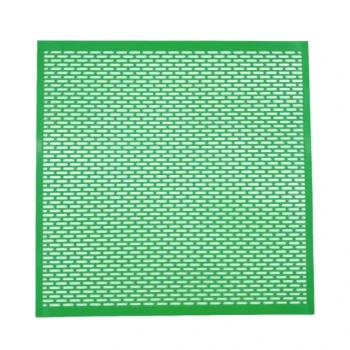
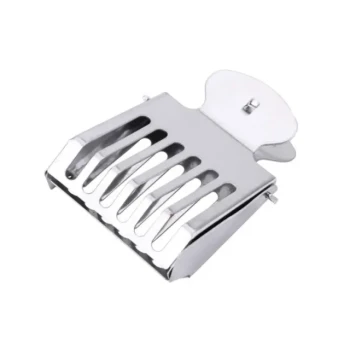
The technical role of a queen excluder is to function as a selective physical barrier within a multi-story hive architecture.
Placed directly between the brood chamber (where eggs are laid) and the honey supers (where surplus honey is stored), it utilizes a precisely gauged grid to segregate the colony based on caste size. By permitting smaller worker bees to pass freely while physically blocking the larger queen, it confines egg-laying to the lower boxes and ensures the upper frames are reserved exclusively for pure honey storage.
Core Insight The queen excluder transforms hive management by strictly enforcing the separation of biological functions: reproduction is contained below, while resource storage is isolated above. This mechanical segregation is the primary driver for achieving commercial-grade honey purity and maximizing extraction efficiency.
The Mechanics of Selective Isolation
Utilizing Physical Dimensions
The excluder operates on a simple but critical size differential between bee castes.
The grid openings—whether made of metal, plastic, or wire slats—are gauged to a precise tolerance. This gap is wide enough for the smaller thorax of a worker bee to navigate without injury.
However, the gap is too narrow for the larger thorax and abdomen of a queen bee (and typically drones) to pass through. This effectively creates a "filter" that sorts bees by their biological role in the hive.
Defining Vertical Zones
In a multi-story hive, the excluder enforces a strict vertical hierarchy.
The area below the screen becomes the permanent brood chamber, where the queen moves, lays eggs, and where larvae are raised.
The area above the screen becomes the "honey super," a designated zone where only worker bees can enter to deposit nectar and cure honey.
Operational Impact on Harvest Quality
Ensuring Product Purity
The primary technical advantage of this device is the prevention of "brood contamination" in the harvest.
Without an excluder, a prolific queen may move upward into the honey supers to lay eggs in empty cells intended for nectar.
The excluder guarantees that the frames removed for harvest contain only pure honey, free from eggs, larvae, or pupae, thereby meeting high commercial quality standards.
Enhancing Extraction Efficiency
Beyond purity, the excluder directly impacts the mechanical efficiency of the harvest process.
Honey is typically harvested using centrifugal extractors, which spin frames at high speeds to force the liquid out.
Frames containing brood are difficult to extract cleanly and can unbalance or contaminate the machinery; by ensuring supers contain only honey, the extraction process remains streamlined and sanitary.
Understanding the Trade-offs
Necessity and Hive Configuration
While technically effective, the use of an excluder is a management decision that relies on specific hive goals.
Some apiarists argue that in hives utilizing multiple deep hive bodies for the brood nest, the queen naturally tends to stay lower, making the excluder less critical.
Drone Restriction
It is important to note that the grid size generally excludes drones (male bees) as well as the queen.
If an upper entrance is not provided or if drones are trapped above the excluder during an inspection, they cannot return to the brood nest or exit the hive, which can lead to drone mortality within the honey supers.
Making the Right Choice for Your Goal
The decision to employ a queen excluder depends largely on your desired balance between colony management style and product quality.
- If your primary focus is Commercial Honey Production: You should use an excluder to guarantee brood-free frames, ensuring the highest purity and maximizing the speed of centrifugal extraction.
- If your primary focus is Natural or Low-Intervention Beekeeping: You may choose to forgo the excluder, relying on ample brood space in the lower boxes to naturally keep the queen from moving up, though this risks some brood in your harvest.
By mechanically enforcing the boundary between the nursery and the pantry, the queen excluder provides the beekeeper with absolute control over the composition of the harvest.
Summary Table:
| Feature | Worker Bee Access | Queen/Drone Access | Primary Function |
|---|---|---|---|
| Brood Chamber | Yes | Yes | Egg laying & larval development |
| Queen Excluder | Pass-through | Blocked | Selective caste filtration |
| Honey Super | Yes | No | Pure honey storage (brood-free) |
| Extraction Impact | High | N/A | Streamlined centrifugal processing |
Scaling Your Apiary Operations?
Maximize your honey purity and operational efficiency with professional-grade solutions from HONESTBEE. As a premier partner for commercial apiaries and global distributors, we provide the full spectrum of high-tolerance queen excluders, hive-making machinery, and advanced honey-filling systems. Whether you are outfitting a large-scale honey production facility or seeking reliable wholesale consumables, our expert team is ready to support your growth.
Contact HONESTBEE Today to Discuss Your Wholesale Requirements
References
- Thomas D. Seeley. The effect of drone comb on a honey bee colony'sproduction of honey. DOI: 10.1051/apido:2001008
This article is also based on technical information from HonestBee Knowledge Base .
Related Products
- High Performance Plastic Queen Excluder for Beekeeping and Apiary Management
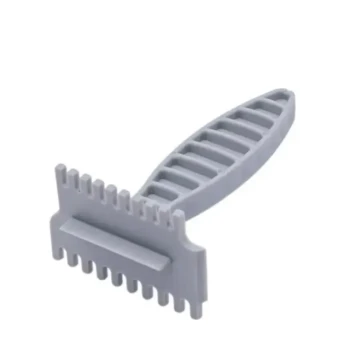
- Lightweight Durable Plastic Queen Excluder Scraper for Beekeeping
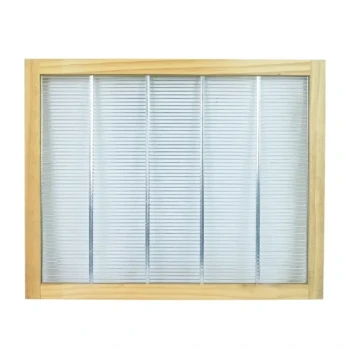
- Premium Wood Framed Metal Wire Queen Bee Excluder
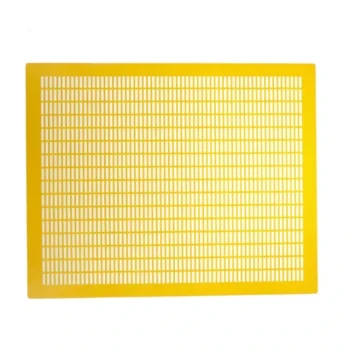
- Professional Plastic Queen Excluder for Modern Beekeeping
- Metal Queen Bee Excluder for Beekeeping
People Also Ask
- What are the characteristics of a plastic queen excluder? Key Benefits for Cost-Effective Beekeeping
- What are the operational and cost advantages of using plastic queen excluders over metal or wire excluders in commercial hive management? Discover how they reduce labor, prevent wing damage, and lower total costs.
- What types of queen excluders are available for beekeepers? Choose the Right Tool for Your Hive
- Why are standardized hive frames and queen excluders essential for maintaining honey purity and quality? Scale Your Purity
- Do plastic queen excluders work? A Cost-Effective Solution for Modern Apiaries