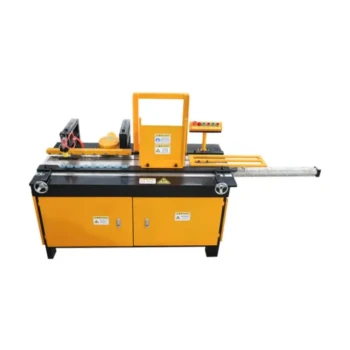
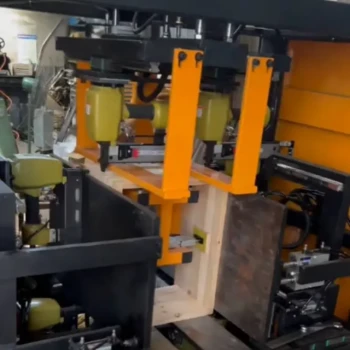
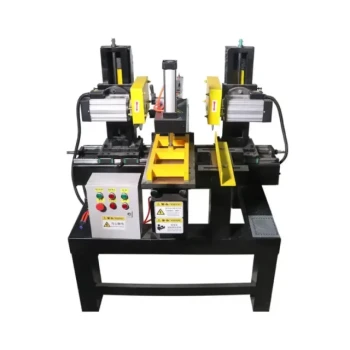
Standardized hive-making machinery acts as the critical logistical catalyst for transforming forest beekeeping from an artisanal activity into a scalable commercial industry. By automating the production of hive components with strict dimensional precision, this machinery significantly reduces manufacturing costs and ensures the complete interchangeability of hardware. This technical uniformity provides the stable, scalable physical infrastructure necessary to establish large, traceable honey supply bases and manage massive colony populations efficiently.
The technical value of this machinery lies in eliminating hardware variables. By guaranteeing that every hive component is identical, operators can automate maintenance, improve colony survival through better thermal regulation, and scale operations rapidly without being slowed by compatibility issues.
The Foundation of Industrial Scalability
Achieving True Interchangeability
The primary technical advantage of standardized machinery is the creation of uniform specifications. In a commercial apiary, frames, supers, and covers must be interchangeable between thousands of hives.
Machinery ensures precise dimensional tolerances that manual construction cannot match. This eliminates the labor costs associated with fitting or modifying individual components. It ensures that any frame fits any box, streamlining inventory management and field operations.
Reducing Bottlenecks in Expansion
Manual hive construction is a significant bottleneck when trying to exploit resource-rich forest areas. Mechanized cutting and assembly facilitate mass production, allowing apiaries to deploy thousands of units rapidly.
This speed is essential for capturing short-lived nectar flows in forest environments. It reduces the hardware investment cost per unit, making the economics of large-scale expansion viable.
Enabling Automation and Mechanization
Standardization is the prerequisite for downstream automation. Automated honey harvesting lines and maintenance systems rely on hives having exact, predictable dimensions.
When the foundation—the hive itself—is standardized, it unlocks the ability to use other advanced tools. This shifts the operation from labor-intensive manual harvesting to efficient, industrial-grade processing.
Enhancing Biological Performance
Improving Overwintering and Survival
Technical precision directly impacts colony health. Machined hives offer superior sealing properties compared to traditional nesting methods or hand-built boxes.
Tighter seals and better structural integrity improve thermal regulation. This is critical for helping colonies survive winter and resist extreme weather, directly reducing colony mortality rates in harsh forest climates.
Disease Control and Traceability
Uniform structures facilitate consistent management practices. When every hive is identical, cleaning and inspection protocols can be standardized, enhancing disease resistance across the population.
Furthermore, standardized hardware supports better tracking. Managers can accurately monitor colony numbers and health data, which is essential for maintaining biodiversity balance in ecological buffer zones.
Understanding the Trade-offs
Initial Capital vs. Long-term OpEx
Adopting standardized machinery requires a shift in capital allocation. While it lowers the long-term operational expenditure (OpEx) by reducing labor and hive replacement costs, it necessitates a higher upfront investment in manufacturing technology.
The Rigidity of Standardization
High-precision standardization creates a rigid system. Once a specification is chosen for mass production, changing dimensions to accommodate new research or local micro-climate adaptations becomes difficult. The success of the operation becomes heavily dependent on the initial choice of specifications.
Making the Right Choice for Your Goal
To leverage standardized machinery effectively, align your hardware strategy with your operational targets:
- If your primary focus is rapid commercial scaling: Prioritize machinery with high throughput capabilities to produce the sheer volume of frames and boxes needed to capture peak forest nectar flows.
- If your primary focus is colony health and stability: Select machinery known for the highest dimensional precision to maximize sealing properties and thermal insulation for overwintering survival.
- If your primary focus is operational diversification: Ensure the machinery supports modular components, allowing you to easily integrate add-ons like pollen traps for multi-product revenue streams.
Standardized machinery does not just build boxes; it builds the reliable, predictable infrastructure required to turn beekeeping into a professional enterprise.
Summary Table:
| Technical Factor | Impact on Commercial Expansion | Primary Benefit |
|---|---|---|
| Dimensional Precision | Eliminates hardware variables and manual fitting | True hardware interchangeability |
| Production Speed | Rapid deployment of thousands of units | Captures short-lived forest nectar flows |
| Structural Sealing | Superior thermal regulation and insulation | Improved overwintering & colony survival |
| System Uniformity | Enables use of automated harvesting lines | Transition from manual to industrial processing |
| Cost Structure | Reduces OpEx through lower labor & replacement | Economical large-scale infrastructure |
Transform Your Apiary into a Scalable Enterprise with HONESTBEE
Standardization is the cornerstone of professional beekeeping. HONESTBEE empowers commercial apiaries and distributors by providing the high-precision machinery needed to eliminate compatibility issues and maximize operational efficiency.
Our comprehensive wholesale portfolio includes:
- Hive-making & Honey-filling Machines: Industrial-grade hardware for standardized production.
- Advanced Beekeeping Tools: A full spectrum of equipment designed for durability and performance.
- Industry Consumables: Everything required to maintain large-scale colony populations.
Whether you are expanding into forest resources or optimizing a distribution network, our expertise ensures your infrastructure is built for growth.
Ready to scale your operations? Contact HONESTBEE today to discover our full range of professional beekeeping solutions.
References
- Janet Lowore, Adrian Wood. African Forest Honey: an Overlooked NTFP with Potential to Support Livelihoods and Forests. DOI: 10.1007/s00267-018-1015-8
This article is also based on technical information from HonestBee Knowledge Base .
Related Products
- High-Efficiency Pneumatic Bee Hive Making Machine for Rapid Box Assembly
- Beehive Handle and Frame Rest Cutting Machine: Your Specialized Hive Machine
- Mini Desktop Bee Hive Frame Forming Making Machine
- Automatic High-Speed Bee Hive Box Stapling Machine
- Beehive Machine Double End Saw for Precision Hive Component Manufacturing
People Also Ask
- How does the introduction of professional beehive-making machinery benefit sustainable beekeeping? Scale Your Apiary
- Why is specialized beehive-making machinery critical for low-defense breeding? Enhance Selection with Precision Tools
- How does the introduction of specialized beehive making machinery contribute to increasing the scale of regional beekeeping industries?
- What is the importance of specialized beehive making machinery in a circular bio-economy? Build Local Sustainability
- Why is specialized beehive-making machinery essential? Scale Your Apiary with Precision Industrial Standards