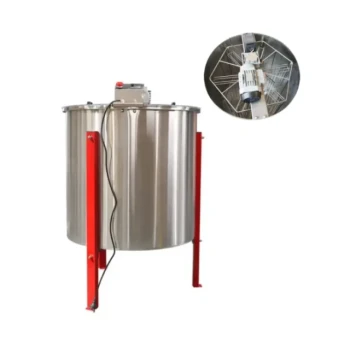
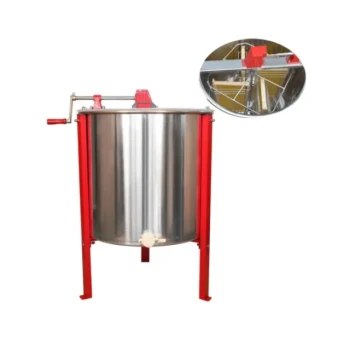
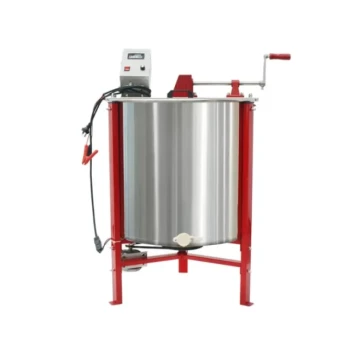
The technical significance of a honey extractor lies in its ability to isolate foraging performance from wax production. By utilizing centrifugal force, the device removes mature honey while preserving the structural integrity of the honeycomb. This non-destructive process enables precise yield quantification and allows the colony to reinvest energy into collection rather than reconstruction.
The extractor is more than a harvesting tool; it is a mechanism for biological variable control. By preserving the wax comb, you eliminate the metabolic tax of rebuilding, ensuring that yield statistics reflect the stock’s true foraging potential rather than its wax secretion limitations.
The Mechanics of Non-Destructive Extraction
Utilizing Centrifugal Force
The core technical function of the extractor is the application of centrifugal force. This physical force spins the honey out of the cells without crushing or heating the wax.
Preserving Structural Integrity
Because the process is mechanical and controlled, the physical structure of the wax combs remains undamaged. This is the prerequisite for the biological advantages that follow.
Isolating True Production Performance
Reducing Metabolic Cost
When combs are destroyed during harvesting, bees must consume significant resources to secrete new wax. By returning intact frames to the hive, you remove this energy burden.
Focusing on Collection
With the nest structure already intact, the colony can redirect its labor and energy. The bees shift their focus entirely to honey collection rather than nest rebuilding.
Assessing Genetic Potential
For a breeding colony, this distinction is vital. It allows you to measure the stock's specific aptitude for foraging and nectar processing, providing a clearer picture of their production efficiency.
Ensuring Statistical Precision
Accurate Yield Measurement
Breeding programs rely on data. The extractor allows for the total removal of liquid honey, which can then be weighed with high precision.
Consistent Yield Statistics
By standardizing the harvesting method and reusing combs, you create a consistent baseline for comparison. This results in reliable yield statistics that accurately represent the performance of the breeding stock.
Operational Considerations and Trade-offs
Equipment Dependency
While technically superior for measuring yield, this method makes the operation dependent on specific mechanical equipment. This introduces a requirement for maintenance and energy to run the extractors, unlike simpler crush-and-strain methods.
Narrowed Performance Scope
By reusing combs, you optimize for honey production, but you effectively bypass testing the colony's wax-building speed. If your breeding goal includes rapid comb building, this method may mask deficiencies in that specific trait.
Making the Right Choice for Your Goal
To accurately assess your breeding stock, you must align your harvesting method with your data requirements.
- If your primary focus is Maximum Foraging Efficiency: Use an extractor to minimize wax production costs and measure the colony's pure nectar-gathering capacity.
- If your primary focus is Colony Management Optimization: Use the extractor to facilitate comb reuse, allowing for faster turnaround times and reduced energy stress on the bees.
True technical precision comes from controlling variables; the extractor removes the variable of wax construction to reveal the raw production power of your bees.
Summary Table:
| Feature | Technical Significance | Impact on Yield Data |
|---|---|---|
| Centrifugal Force | Removes honey without damaging wax cells | Ensures 100% extraction for accurate weighing |
| Comb Preservation | Eliminates metabolic cost of wax secretion | Reflects true foraging potential, not building limits |
| Variable Control | Standardizes the harvesting environment | Provides a consistent baseline for genetic comparison |
| Energy Reallocation | Directs colony labor toward nectar collection | Maximizes productivity during peak honey flows |
Maximize Your Apiary's Genetic Potential with HONESTBEE
Precision in honey yield measurement is the cornerstone of a successful breeding program. At HONESTBEE, we empower commercial apiaries and distributors with the high-performance machinery needed to isolate true foraging data and optimize production.
Our comprehensive wholesale range includes:
- Professional Honey Extractors: Manual and electric models designed for non-destructive harvesting.
- Automated Machinery: From hive-making to honey-filling machines for industrial-scale efficiency.
- Essential Consumables: A full spectrum of beekeeping tools and hardware for diverse climates.
Whether you are scaling a commercial operation or supplying the industry's top professionals, our equipment ensures your bees' raw production power is never masked by subpar tools. Contact HONESTBEE today to discuss our wholesale solutions and elevate your beekeeping standards.
References
- Ahmet Güler, Abdurrahman Aydın. The effects of instrumental insemination on selected and unselected breeding characteristics in honeybee (Apis mellifera L.). DOI: 10.1007/s13592-022-00947-0
This article is also based on technical information from HonestBee Knowledge Base .
Related Products
- HONESTBEE 72 Frame Industrial Electric Honey Extractor for Beekeeping
- Commercial Electric 12 Frame Honey Extractor Spinner Motorized Honey Extractor
- HONESTBEE 3-Frame Manual Acrylic Honey Extractor
- electric honey extractor honey centrifuge 3 frame honey extractor stainless steel honey frame extractor
- HONESTBEE 6 Frame Self Reversing Electric Honey Extractor for Beekeeping
People Also Ask
- What is the importance of balancing honeycomb frames within a honey extractor? Ensure Stability and Protect Machinery
- How is honey separated from the frames after they are uncapped? Efficient Extraction Methods for High Yields
- What are the main benefits of using a honey extractor? Maximize Yields and Protect Your Honeycomb
- What are the recommended methods for removing honey from the honeycomb? Top Extraction Techniques for Maximum Efficiency
- How do manual honey extractors compare to electric honey extractors? Choosing the Right Tool for Your Apiary Growth