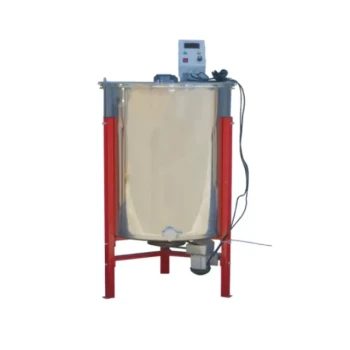
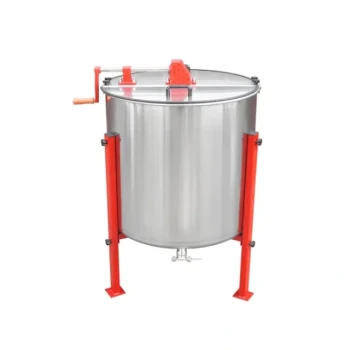
The two primary methods for extracting honey are using centrifugal force to spin the liquid out of the frames, or crushing and straining the comb to separate the honey from the wax. While both achieve the same end result, the decision relies heavily on your equipment budget and whether you wish to preserve the honeycomb structure for future use.
Core Takeaway The choice of extraction method dictates the future of your hive's resources. Spinning extracts honey while leaving the wax comb intact for the bees to reuse, whereas crushing destroys the comb but offers a low-cost, equipment-light entry point that yields harvestable beeswax.
Method 1: Centrifugal Extraction (Spinning)
This is the standard method for commercial and serious hobbyist beekeepers. It relies on a machine called a honey extractor to fling honey out of the cells using high-speed rotation.
The Preparation Phase
Before extraction can begin, the honey cells must be opened. Beekeepers use a hot uncapping knife or a similar tool to slice off the thin layer of wax caps sealing the honey.
The Extraction Process
Once uncapped, the frames are placed vertically inside the extractor drum. The machine spins the frames at high speeds—either via a hand crank or an electric motor—forcing the honey out of the comb and onto the inner walls of the drum.
Resulting Material
The liquid honey drains to the bottom of the tank for collection. Crucially, the wax comb remains largely intact inside the wooden frame, allowing it to be returned to the hive.
Method 2: Crush and Strain
This method is often preferred by beginners or those harvesting from top-bar hives where frames are not used. It is a destructive process that harvests both honey and wax simultaneously.
The Manual Technique
First, the honey-filled comb is cut away from the frame or top bar. The pieces are placed in a food-grade bucket and physically crushed to break open the cells.
The resulting mash is poured through cheesecloth or a paint strainer bag. Gravity separates the mixture, allowing the liquid honey to drip through while the cloth catches the wax particles.
Using a Mechanical Press
For a more efficient crush, beekeepers can use a honey press. Pieces of comb are loaded into a mesh basket, and a heavy plate is screwed down to apply immense pressure.
This forces the honey out into a catch bowl, which is then passed through a double strainer. This mechanical pressure is effective even in cooler ambient temperatures, such as 15 degrees Celsius.
Understanding the Trade-offs
Choosing a method requires balancing initial investment against long-term hive productivity.
Impact on the Colony
Centrifugal extraction is less taxing on the bees. Because the comb is preserved, bees can immediately refill the empty cells with nectar.
Crushing destroys the comb. The bees must consume significant amounts of honey and energy to rebuild the wax structure before they can store new honey.
Equipment and Cost
Spinning requires specialized machinery. Extractors can be bulky to store and represent a significant financial investment.
Crushing is low-cost and simple. It requires minimal tools—often just buckets and strainers—making it accessible for small-scale operations.
Making the Right Choice for Your Apiary
Select the method that aligns with your production goals and available resources.
- If your primary focus is maximum honey production: Choose centrifugal extraction to preserve drawn comb, allowing bees to focus on nectar collection rather than wax building.
- If your primary focus is low startup costs or wax harvesting: Choose the crush and strain method to minimize equipment expense and obtain a supply of clean beeswax alongside your honey.
Ultimately, both methods yield high-quality honey; the "best" approach is simply the one that fits the scale of your operation and your budget.
Summary Table:
| Feature | Centrifugal Extraction (Spinning) | Crush and Strain Method |
|---|---|---|
| Core Equipment | Honey Extractor, Uncapping Knife | Buckets, Strainers, or Honey Press |
| Comb Status | Preserved (Reusable by bees) | Destroyed (Harvested as wax) |
| Initial Cost | Higher (Machinery investment) | Lower (Minimal tools required) |
| Honey Yield | Higher (Saves bee energy) | Moderate (Bees must rebuild comb) |
| Best For | Commercial & Scale-up Apiaries | Beginners & Small-scale Operations |
Maximize Your Harvest with HONESTBEE Professional Solutions
Whether you are scaling a commercial apiary or supplying beekeeping enthusiasts, HONESTBEE provides the industrial-grade tools you need to succeed. From high-capacity centrifugal honey extractors and honey-filling machines to durable hardware and essential consumables, we offer a comprehensive wholesale portfolio designed for efficiency and durability.
Why partner with HONESTBEE?
- Comprehensive Wholesale Range: We supply everything from hive-making machinery to honey-themed merchandise.
- Industry Expertise: We cater specifically to distributors and commercial beekeepers with reliable equipment.
- Value-Driven Results: Enhance your production speed while maintaining the highest honey quality.
Ready to upgrade your apiary’s performance? Contact us today to discuss your wholesale needs!
Related Products
- HONESTBEE 72 Frame Industrial Electric Honey Extractor for Beekeeping
- Commercial Electric 12 Frame Honey Extractor Spinner Motorized Honey Extractor
- HONESTBEE 6 Frame Self Reversing Electric Honey Extractor for Beekeeping
- HONESTBEE 3-Frame Manual Acrylic Honey Extractor
- Stainless Steel Manual 8 Frame Radial Honey Extractor Machine for Beehives
People Also Ask
- What is the importance of balancing honeycomb frames within a honey extractor? Ensure Stability and Protect Machinery
- How is honey separated from the frames after they are uncapped? Efficient Extraction Methods for High Yields
- What are the main benefits of using a honey extractor? Maximize Yields and Protect Your Honeycomb
- What are the recommended methods for removing honey from the honeycomb? Top Extraction Techniques for Maximum Efficiency
- How do manual honey extractors compare to electric honey extractors? Choosing the Right Tool for Your Apiary Growth