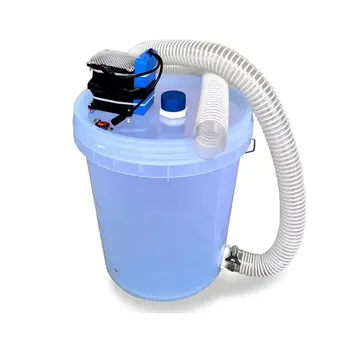
The value of a vacuum chamber in industrial bee bread production lies in its ability to overcome the physical resistance of pollen granules and ensure long-term product stability. Specifically, it utilizes vacuum induction during pretreatment to force lactic acid bacteria and sugar solutions deeply into the pollen structure, preventing uneven fermentation. Additionally, vacuum technologies facilitate low-temperature drying to prevent spoilage without degrading nutrients.
By manipulating pressure, vacuum chambers synchronize the biological fermentation process and enable low-temperature drying. This dual capability ensures a standardized industrial output that resists spoilage while retaining the delicate bioactivity of the original pollen.
Optimizing the Fermentation Process
The Mechanics of Vacuum Induction
The primary industrial challenge in creating artificial bee bread is ensuring the starter culture penetrates the tough exterior of pollen granules. Vacuum induction solves this by removing air from the pollen's internal structure.
When the vacuum is released, the pressure difference forces the surrounding liquid—containing the lactic acid bacteria inoculum and sugar solution—rapidly into the granule. This turns a slow, surface-level interaction into a deep, structural saturation.
Achieving Batch Uniformity
In large-scale production, inconsistency leads to waste and variable product quality. Vacuum pretreatment ensures that every granule in the batch receives the same level of inoculation at the same time.
This leads to synchronized fermentation throughout the entire batch. The result is a uniform product profile that meets strict industrial quality standards, rather than a mix of fermented and unfermented material.
Ensuring Stability and Preservation
Precise Moisture Control
Beyond fermentation, vacuum chambers are critical for the drying phase to stabilize the final product. Industrial vacuum dryers reduce the moisture content of the bee bread and honeycombs to a precise range of 14.00% to 15.00%.
Reaching this specific moisture threshold is a critical pre-processing step. It effectively inhibits mold growth and prevents microbial spoilage, ensuring the product has a viable commercial shelf life.
Protecting Bioactive Components
Traditional heat drying can destroy the very nutrients that make bee bread valuable. Vacuum environments lower the boiling point of water, allowing for effective drying at much lower temperatures, typically around 40°C.
This low-temperature approach preserves heat-sensitive bioactive components, such as enzymes and vitamins. It allows manufacturers to produce a dry, stable product that retains the nutritional potency of the raw ingredients.
Understanding the Trade-offs
Equipment Cost vs. Product Quality
While vacuum chambers significantly enhance quality, they represent a higher capital investment compared to standard convective dryers or passive fermentation tanks. Manufacturers must weigh the cost of this specialized equipment against the market demand for a premium, high-bioactivity product.
Process Complexity
Introducing vacuum steps adds variables to the production line that require precise monitoring. Operators must strictly control pressure levels and cycle times; incorrect settings can physically damage the pollen structure or fail to achieve the required moisture drop, risking batch spoilage.
Strategic Application in Production
To maximize the value of vacuum technology, align its use with your specific production targets:
- If your primary focus is Fermentation Consistency: Prioritize vacuum induction during the pretreatment phase to ensure deep inoculum penetration and synchronized biological activity.
- If your primary focus is Nutrient Preservation: Utilize vacuum drying to remove moisture at low temperatures (40°C), protecting heat-sensitive enzymes and vitamins.
- If your primary focus is Shelf Stability: Calibrate vacuum dryers to strictly achieve the 14-15% moisture window to prevent microbial spoilage and mold.
Ultimately, the vacuum chamber transforms bee bread production from a variable biological process into a controlled, scalable industrial operation.
Summary Table:
| Feature | Function in Production | Industrial Benefit |
|---|---|---|
| Vacuum Induction | Forces inoculum/sugar into pollen granules | Ensures synchronized batch fermentation |
| Low-Temp Drying | Removes moisture at approx. 40°C | Preserves heat-sensitive enzymes & vitamins |
| Moisture Control | Reaches precise 14.00% - 15.00% range | Prevents mold and extends commercial shelf life |
| Pressure Control | Removes air from internal pollen structures | Eliminates unfermented material waste |
Elevate Your Bee Bread Production with HONESTBEE
Transition from variable biological processes to a controlled, high-output industrial operation. HONESTBEE provides the specialized beekeeping machinery and tools necessary to scale your business. Whether you are a commercial apiary seeking precision vacuum chambers for nutrient preservation or a distributor looking to supply the full spectrum of hive-making and honey-filling technology, we offer the comprehensive wholesale solutions you need.
Our value to you:
- Advanced Machinery: High-efficiency vacuum systems and honey-processing hardware.
- Industry Expertise: Solutions tailored for commercial-scale fermentation and stability.
- Complete Portfolio: From essential consumables to honey-themed cultural merchandise.
Ready to optimize your production and maximize bioactivity? Contact HONESTBEE today for a consultation!
References
- G Madzgarashvili. Making Bee Bread from Pollen Without a Bee Colony. DOI: 10.26717/bjstr.2022.42.006733
This article is also based on technical information from HonestBee Knowledge Base .
Related Products
- Portable Electric Bee Vacuum with Lithium Battery and 20L Collection Bucket
- High-Efficiency Pneumatic Bee Hive Making Machine for Rapid Box Assembly
People Also Ask
- What are the advantages of using portable bee vacuums for sampling honey bees? Optimize Nosema Detection Efficiency
- Who is qualified to use a bee vacuum? Essential Safety and Experience Requirements for Effective Bee Relocation
- What potential problems can occur when using a bee vacuum? Prevent Colony Mortality and Ensure Safe Bee Removal
- What are the benefits of using a bee vacuum? Safely Remove & Preserve Honey Bee Colonies
- Why do people use bee vacuums? A Humane Solution for Live Bee Removal