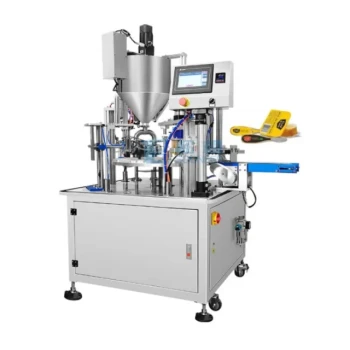
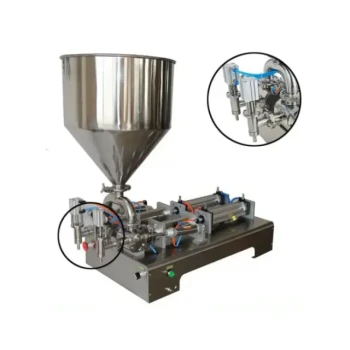
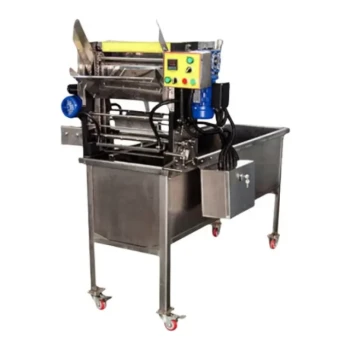
Automated honey-filling equipment leverages high-precision quantitative filling and sealing technology to transform honey processing from a labor-intensive bottleneck into a streamlined operation. For commercial apiaries, this technology enables the efficient recovery of honey as a pollination by-product while enforcing strict hygiene standards.
The strategic value of this equipment extends beyond simple processing speed. By automating the packaging workflow, operations can decouple honey production from labor demands, allowing professional teams to redirect their focus toward field-based colony maintenance and ensuring high-quality pollination services.
Strategic Resource Allocation
Freeing Human Capital for Field Work
For operations where pollination is the primary business model, honey processing often serves as a distraction from core activities.
Automated filling releases human resources from the packing line. This allows skilled apiarists to focus on the biological needs of the operation, such as monitoring pollination quality and maintaining colony health in the field.
Reducing Operational Friction
Manual bottling is slow and labor-intensive, often creating a backlog during peak harvest times.
Industrial-grade machinery increases production throughput significantly. This ensures that honey is processed rapidly, preventing processing delays from interfering with the logistical movements of hives required for agricultural pollination contracts.
Economic and Market Advantages
Monetizing the Pollination By-product
In a pollination-focused model, honey is often treated as a secondary by-product that must be managed efficiently to remain profitable.
Mechanization minimizes material loss and reduces unit costs through precise dosing. This creates a viable economic loop where honey revenue supports the maintenance of beekeeping hardware and the protection of local flora, ensuring the sustainability of the pollination service.
Standardization and Brand Trust
Accessing high-value retail markets requires a consistency that manual processing rarely achieves.
Automated equipment provides standardized packaging and professional presentation. This visual consistency enhances market recognition and consumer trust, enabling the operation to secure better pricing and distribution channels for their secondary product.
Quality Control and Hygiene
Minimizing Contamination Risks
Manual handling introduces significant risks regarding sanitation and foreign particles.
Automated systems operate in a closed and controlled environment, minimizing contact between the honey and the atmosphere. This significantly lowers the risk of secondary contamination and ensures the final product meets international food safety standards.
Preserving Chemical Stability
The environment in which honey is bottled affects its shelf life and chemical properties.
Precise sealing controls the final moisture content and prevents oxidation-induced acidity. By maintaining stable conductivity and preventing moisture absorption, the equipment ensures the honey retains its quality from extraction to the consumer's table.
Understanding the Trade-offs
Capital Expenditure vs. Labor Savings
While automation reduces long-term labor costs, it requires a significant upfront capital investment. Operations must calculate if the volume of honey produced as a by-product justifies the expense of industrial-grade machinery compared to manual labor.
Maintenance and Technical Overhead
Automated systems introduce a new layer of technical complexity to an agricultural operation.
Unlike manual tools, filling machines require regular specialized maintenance and calibration to ensure dosing accuracy and seal integrity. Operations must be prepared to manage these technical requirements to prevent downtime.
Making the Right Choice for Your Goal
To determine if automated filling equipment aligns with your operational strategy, consider your primary objectives:
- If your primary focus is Pollination Quality: Invest in automation to minimize the labor hours spent in the honey house, maximizing the time your team spends managing hives in the field.
- If your primary focus is Retail Revenue: Prioritize equipment that offers standardized, hygienic packaging to build the brand recognition necessary for high-value markets.
- If your primary focus is Cost Control: Use automation to reduce material waste and precisely calculate unit costs, ensuring the honey by-product remains profitable.
Success in commercial pollination requires balancing biological management with logistical efficiency; automated filling equipment is the lever that stabilizes this balance.
Summary Table:
| Strategic Factor | Key Benefit of Automation | Impact on Pollination Operations |
|---|---|---|
| Labor Allocation | Redirects staff to hive maintenance | Improved colony health & pollination quality |
| Production Speed | High throughput & reduced bottlenecks | Faster logistical turnaround for hive movement |
| Product Quality | Precise dosing & airtight sealing | Minimized waste and extended honey shelf life |
| Market Value | Professional, standardized packaging | Enhanced brand trust and higher retail margins |
| Hygiene | Closed-system processing | Guaranteed compliance with food safety standards |
Maximize Your Apiary's Efficiency with HONESTBEE
Transitioning from manual labor to automation is the key to scaling your pollination services. At HONESTBEE, we specialize in supporting commercial apiaries and distributors with high-performance honey-filling machines, hive-making equipment, and a full spectrum of professional beekeeping tools.
Whether you need to streamline your honey house or source industrial-grade consumables, our comprehensive wholesale solutions are designed to reduce your operational friction and boost your bottom line.
Ready to elevate your production? Contact us today to explore our machinery and tool catalogs!
References
- Martine J. Barons, Aditi Shenvi. Where the bee sucks: a dynamic Bayesian network approach to decision support for pollinator abundance strategies. DOI: 10.1093/jrsssa/qnad126
This article is also based on technical information from HonestBee Knowledge Base .
Related Products
- Fully Automatic Honey Filling Packaging Machine for Processing Line
- Automatic Honey Filling and Filtering Machine for Beekeeping Bottle Filling
- Precision Durable Efficient HONESTBEE Rotary Honey Filling Machine
- Precision Automated Packaging Turntable Honey Spoon Filling Sealing Packing Machine
- Semi Automatic Small Honey Bottle Filling Machine Honey Filler
People Also Ask
- Why are fully automatic honey filling and packaging lines essential? Boost Your Honey's Market Value and Quality
- What is a fully-automatic honey filler? Streamline Your Production with High-Precision Automation
- How do automated honey filling and packaging machines affect profitability? Boost Margins with HONESTBEE Technology
- How do automated honey filling and packaging machines contribute to the market value of honey products? Maximize Your ROI
- How do industrial-grade automated honey filling and packaging machines mitigate the risk of physical contamination?