The primary challenge of supering for comb honey lies in the unforgiving requirement for precise timing and constant monitoring. Unlike extracted honey, where equipment management is flexible, comb honey demands that you add supers exactly when a major nectar flow begins to ensure the bees draw, fill, and cap the comb rapidly.
Core Takeaway Supering for comb honey is a race against time that leaves little margin for error. Success requires synchronizing your management perfectly with the local nectar flow to force rapid wax construction and capping, whereas extracted honey production offers a much more lenient timeline for adding and removing equipment.
The Criticality of Timing
Synchronizing with the Nectar Flow
In extracted honey production, you have significant leeway regarding when you place supers on the hive. In comb honey production, however, timing is absolute.
You must add supers containing foundation precisely as the nectar flow begins. This triggers the bees' instinct to expand storage immediately, rather than idling or preparing to swarm.
The Requirement for Speed
The goal is not just to get the honey, but to force the bees to work quickly.
Bees must draw out the comb, ripen the honey, and cap it in a short burst of activity. If the super is added too early or too late, the bees may fail to draw the comb out fully or may do so unevenly.
Prompt Removal
The clock keeps ticking even after the honey is capped.
While supers for extracted honey can often be left on the hive for extended periods, comb honey must be removed promptly once finished. Leaving it on too long risks the quality of the aesthetic finish, which is the hallmark of good comb honey.
The Energy and Resource Equation
The Metabolic Cost of Wax
Producing comb honey places a higher metabolic demand on the colony than extracted honey.
As noted in the supplementary data, foundation helps reduce the energy bees expend on wax secretion. However, in comb honey production, bees are still required to build out the full depth of the cell from the foundation, diverting energy that could otherwise be used for nectar collection.
Reliance on Foundation Templates
To achieve the high quality required for comb honey, the bees' work must be uniform.
Foundation acts as a precision-engineered template, ensuring the combs are flat and uniformly sized. This structure is essential for modern processing, but it relies heavily on the beekeeper managing the hive density and flow conditions so the bees utilize this template immediately.
Understanding the Trade-offs
Operational Rigidity
The biggest downside to comb honey production is the lack of flexibility. You cannot simply manage the hives on a convenient weekend schedule; you must manage them according to the bloom and the bees' immediate response.
The Consequence of Delays
If you miss the start of the nectar flow, the bees may not accept the foundation or draw it out properly. Conversely, if you are late removing the supers, the perfect white cappings may become discolored or damaged, reducing the value of the final product.
Making the Right Choice for Your Goal
To decide which method suits your current management style, consider the following:
- If your primary focus is High-Quality Comb Honey: You must commit to frequent monitoring and have the availability to add or remove supers the moment the nectar flow dictates.
- If your primary focus is Volume and Flexibility: You should prioritize extracted honey, as it allows for reusable drawn comb and does not require the same day-to-day precision in supering.
Mastering comb honey is a testament to a beekeeper's ability to read the environment and the hive simultaneously.
Summary Table:
| Feature | Comb Honey Supering | Extracted Honey Supering |
|---|---|---|
| Timing Accuracy | Absolute; must align with nectar flow | Flexible; can be done in advance |
| Wax Production | High; bees must draw new comb | Low; uses pre-drawn reusable comb |
| Monitoring | Frequent; daily to weekly during flow | Moderate; based on hive volume |
| Removal Speed | Immediate after capping to avoid stains | Delayed; can wait for harvest season |
| Product Goal | Aesthetic perfection & white cappings | Maximum honey volume & efficiency |
Elevate Your Apiary with HONESTBEE Professional Equipment
Success in comb honey production hinges on precision and the right tools. At HONESTBEE, we empower commercial apiaries and distributors with the high-performance machinery and supplies needed to master the most challenging honey flows.
Whether you need specialized hive-making machines to craft perfect supers, advanced honey-filling lines for your retail honey-themed merchandise, or a reliable wholesale supply of premium beekeeping tools and consumables, we have the expertise to scale your operations.
Ready to optimize your production and maximize your yield? Contact our team today to discover how our comprehensive equipment range can streamline your beekeeping business.
Related Products
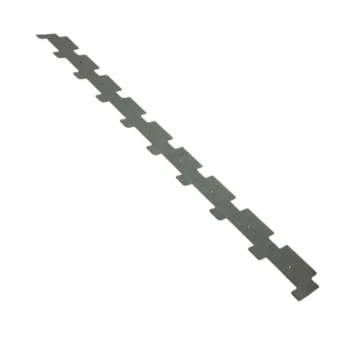
- Heavy Duty Castellated Iron Frame Spacer for Honey Supers
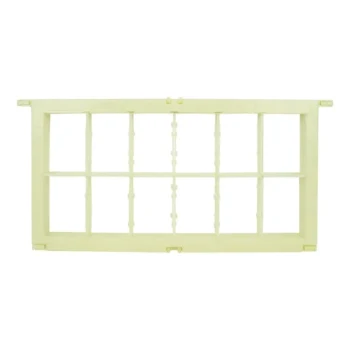
- Professional Sectional Comb Honey Frame with 250g Cassette System for Beekeeping
- Heart-Shaped Comb Honey Frame and Honeycomb Cassette
- Professional Wide Blade Honey Scraper for Beekeeping and Honey Processing
- Durable 16 Way Circular Bee Escape for Efficient Honey Harvesting
People Also Ask
- What are honey super frames and what foundation options are available? Choose the Best Support for Your Bees
- What are the reasons and drawbacks of using nine frames in a ten-frame honey super? Boost Extraction Speed Today
- What are honey super frames and how many are needed per box? A Beekeeper's Essential Guide
- What are honey super frames and their foundation options? Choose the Best Support for Your Hive's Honey Production
- Why might a beekeeper use fewer than the standard number of frames in a honey super? Boost Extraction Efficiency