To prevent contamination of your harvest, you must strictly remove all honey supers before applying oxalic acid to the hive. This physical separation is the only guaranteed method to keep chemical residues out of the honey intended for human consumption.
Oxalic acid is a potent tool for Varroa management, but it carries a risk of contaminating harvestable honey. To ensure food safety, supers must be removed prior to treatment and should not be reinstalled for at least 1-2 days.
The Protocol for Protecting Your Honey
Removal Before Application
Before mixing your solution or powering up a vaporizer, physically take the honey supers off the hive.
The treatment is designed to target mites on the bees and in the brood chamber, not to treat the honeycomb used for harvest.
The Reinstallation Timeline
Once the treatment is complete, do not immediately restack the supers.
You must wait 1-2 days before putting the honey supers back on. This window allows the bees to circulate air and eliminates residual oxalic acid from the hive environment.
Why Contamination Matters
While oxalic acid is a natural compound, high concentrations in honey are undesirable and potential health hazards.
Adhering to the removal and waiting period ensures your final product remains pure and meets food safety standards.
Crucial Safety Considerations
Personal Protective Equipment (PPE)
While your focus is on protecting the honey, you must not neglect your own safety.
Always wear gloves, goggles, and a respirator when handling oxalic acid. The application method often creates vapors or mists that are dangerous to the eyes and lungs.
Handling the Chemical Dust
Be especially cautious during the preparation phase.
Do not inhale the dust when measuring or mixing the solution. The fine particles can cause immediate respiratory irritation or damage.
Ensuring a Safe Harvest
To balance effective mite control with high-quality honey production, follow these guidelines:
- If your primary focus is honey purity: Remove all supers before starting and strictly observe the 1-2 day waiting period before reassembly to prevent residue.
- If your primary focus is operator safety: Prioritize the use of a respirator and goggles to avoid inhaling dust or vapors during both preparation and application.
By systematically separating your harvest from the treatment cycle, you protect both the quality of your honey and the health of your hive.
Summary Table:
| Requirement | Action to Take | Rationale |
|---|---|---|
| Honey Supers | Remove before treatment | Prevent chemical residue in harvestable honey |
| Wait Time | 1-2 Days post-treatment | Allows hive ventilation and residue dissipation |
| Operator Safety | Wear Respirator, Goggles, & Gloves | Protects against dangerous vapors and dust |
| Application | Target brood chamber only | Focuses treatment on mites without affecting harvest |
Elevate Your Beekeeping Operation with HONESTBEE
Protecting your harvest is just the first step in successful apiary management. HONESTBEE supports commercial apiaries and distributors with high-performance wholesale solutions. From precision honey-filling machines and hive-making equipment to professional-grade beekeeping tools and essential consumables, we provide the infrastructure you need to scale.
Ready to enhance your production efficiency and product quality? Contact HONESTBEE today to explore our comprehensive portfolio and discover how our industry expertise can grow your business!
Related Products
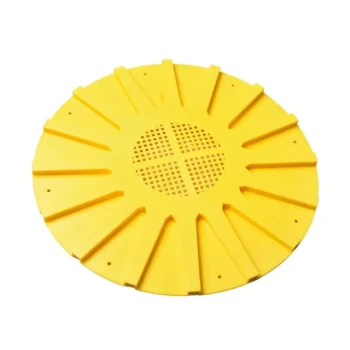
- Durable 16 Way Circular Bee Escape for Efficient Honey Harvesting
- Professional Plastic Honey Dipper for Easy Honey Drizzling
- Honey Concentrating Vacuum Heating Thickening Machine Dehumidifier for Honey
- Professional Honey Filter with Tripod Support Stand
- Double Wall Honey Heating Stirring Homogenizer Mixing Machine with Various Capacity
People Also Ask
- How long should a bee escape be placed before harvesting honey? The 24-48 Hour Guide to a Stress-Free Harvest
- What is the primary function of a bee escape? Simplify Your Honey Harvest with Stress-Free Hive Management
- What are some common types of bee escapes and how are they typically mounted? Optimize Your Honey Harvest Efficiency
- How can a bee escape be adapted for use in a Warre hive? Effective Customization Methods for Successful Harvesting
- What is a bee escape and why is it used in beekeeping? A Guide to Gentle Honey Harvesting