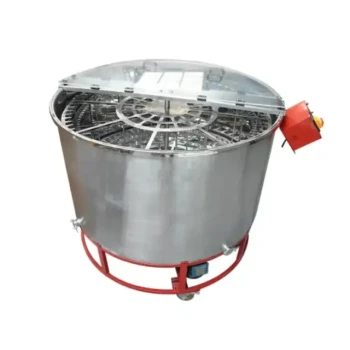
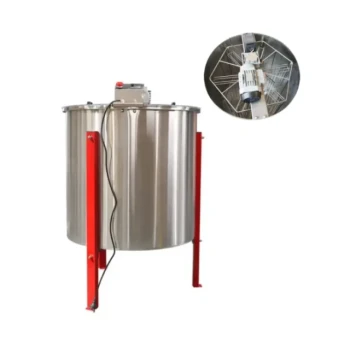
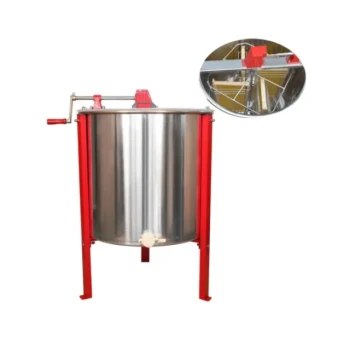
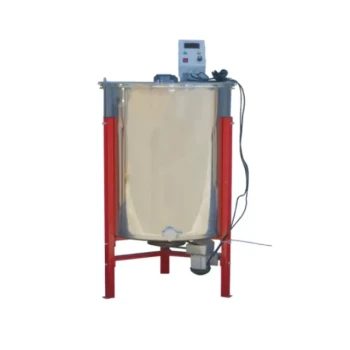
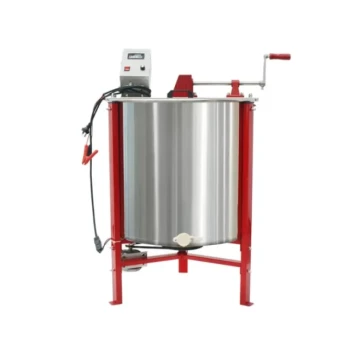
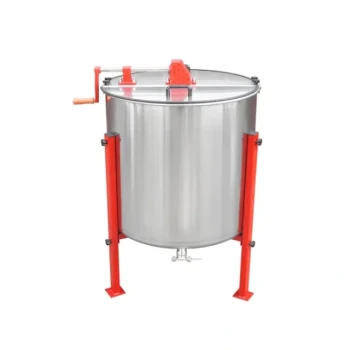
If you choose to use soap to clean a honey extractor, you must apply it in very small quantities and rinse the equipment with extreme thoroughness. Any trace of soap left inside the machine creates a significant risk of chemical contamination. If residue remains, it will compromise the quality of future batches, effectively making your honey inedible.
Core Takeaway While soap can be used, it introduces a high risk of contaminating your honey with chemical residue. The golden rule of extractor maintenance is that rinsing must be exhaustive—if you use soap, you must ensure absolutely zero trace remains before storage.
Strict Protocols for Soap Usage
If you determine that soap is necessary for your cleaning process, you must adhere to a strict application and removal protocol to protect your harvest.
Minimal Application
You should use only a mild detergent and apply it in very small quantities. Using a large amount of soap increases the difficulty of rinsing and raises the probability of residue staying behind.
The Rinsing Requirement
Rinsing is the most critical step when soap is involved. You must flush the interior of the extractor repeatedly with warm water. Continue rinsing until you are certain that absolutely no soap film or suds remain on the stainless steel or plastic components.
Complete Drying
After washing and rinsing, allow the extractor and all disassembled frames to dry completely. This prevents moisture-related issues when you reassemble the unit for storage.
Preparation Before Cleaning
Before applying water or soap, you must prepare the extractor to ensure the cleaning process is effective.
Maximizing Honey Recovery
Close the honey gate and tilt the unit to allow the remaining liquid to pool in one area. Leave it to drain overnight, preferably in a warm room to lower the honey's viscosity. Collect this honey the next day and run it through a sieve.
Physical Debris Removal
Disassemble the extractor by removing frames and detachable parts. Use a honey uncapping knife or tool to scrape away wax and propolis from the interior walls and frames before introducing water.
Understanding the Trade-offs
While soap is effective at removing grime, it is often considered unnecessary and risky by experienced apiarists.
The Contamination Risk
The primary reference explicitly warns that soap residue makes honey inedible. Unlike water, which evaporates, soap leaves a chemical film that alters the flavor and safety of your product.
Chemical-Free Alternatives
Because of the risks associated with soap, the most common cleaning method involves using only clean water and rags. Other chemical-free methods include using a pressure washer or allowing bees to clean the remaining honey from the drum before you wash it.
Exterior Maintenance
For the outside of the extractor, aggressive cleaning is rarely needed. A damp cloth with cold water is usually sufficient to wipe away dust and minor spills.
Making the Right Choice for Your Goal
Select your cleaning method based on the level of residue and your risk tolerance.
- If your primary focus is risk elimination: Avoid soap entirely and use hot water, a pressure washer, or the "bee cleaning" method to prevent chemical contamination.
- If your primary focus is deep cleaning: Use a mild detergent in tiny amounts, but commit to a rinsing process that is three times longer than you think is necessary.
Treat your extractor not just as a tool, but as a vessel for food production where purity is paramount.
Summary Table:
| Protocol Step | Key Requirement | Purpose |
|---|---|---|
| Detergent Type | Mild, small quantities | Minimizes chemical film buildup |
| Rinsing | Repeated warm water flush | Eliminates all suds and soap residue |
| Drying | Complete air dry | Prevents moisture issues during storage |
| Preparation | Scrape wax and propolis | Ensures cleaning reaches the surface |
| Risk Level | High (Chemical) | Prevents making honey inedible |
Elevate Your Honey Production Standards with HONESTBEE
Maintaining a pristine extraction process is vital for the success of any commercial apiary or honey distributor. At HONESTBEE, we understand that your reputation depends on the purity of your harvest. We provide a comprehensive range of professional-grade beekeeping machinery, from high-durability stainless steel honey extractors and honey-filling machines to essential consumables and cultural merchandise.
Whether you are scaling your commercial operations or looking for reliable wholesale equipment, our team is dedicated to supplying the tools and expertise you need to ensure food safety and efficiency.
Ready to upgrade your apiary's performance? Contact us today to discuss your equipment needs!
Related Products
- HONESTBEE 72 Frame Industrial Electric Honey Extractor for Beekeeping
- Commercial Electric 12 Frame Honey Extractor Spinner Motorized Honey Extractor
- HONESTBEE 6 Frame Self Reversing Electric Honey Extractor for Beekeeping
- HONESTBEE 3-Frame Manual Acrylic Honey Extractor
- Stainless Steel Manual 8 Frame Radial Honey Extractor Machine for Beehives
People Also Ask
- What is the importance of balancing honeycomb frames within a honey extractor? Ensure Stability and Protect Machinery
- How is honey separated from the frames after they are uncapped? Efficient Extraction Methods for High Yields
- What are the main benefits of using a honey extractor? Maximize Yields and Protect Your Honeycomb
- What are the recommended methods for removing honey from the honeycomb? Top Extraction Techniques for Maximum Efficiency
- How do manual honey extractors compare to electric honey extractors? Choosing the Right Tool for Your Apiary Growth