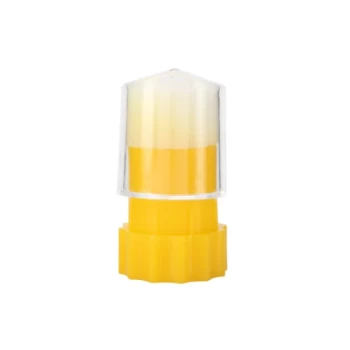
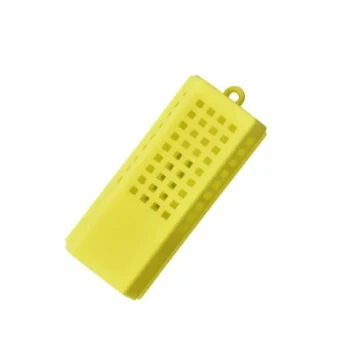
Artificial queen cell cups are the foundational consumable in modern apiculture, serving as the primary carrier for grafted larvae during the queen rearing process. These components mimic the physical geometry of natural queen cells to induce worker bees to initiate nursing behavior and secrete the high volumes of royal jelly required for queen differentiation.
By providing a standardized environment for larval development, artificial queen cell cups enable beekeepers to transition from small-scale queen rearing to industrial-level mass propagation with consistent success rates.
The Functional Role in Queen Differentiation
Mimicking Natural Biological Structures
Artificial queen cell cups are engineered to replicate the base shape and dimensions of a natural queen cell. This structural mimicry is essential because it signals to nurse bees that the larva inside is destined to become a queen, triggering the necessary biological response.
Inducing Maximum Royal Jelly Secretion
The design of the cup ensures that larvae receive a concentrated and sufficient nutrient supply during their early, critical development stages. By acting as a specialized reservoir, these cups facilitate the intensive feeding of royal jelly that determines a queen’s future reproductive capacity.
Efficiency and Scale for Commercial Operations
Standardization of Larval Development
For wholesalers and large-scale apiaries, standardization is the key to profitability. Artificial cups provide a uniform developmental space, ensuring that every queen produced meets specific quality benchmarks and physiological standards.
Integration with Professional Rearing Systems
These consumables are designed for seamless integration with grafting frames and queen-rearing cages. This compatibility allows for high-density management within cell builder colonies, which is vital for distributors looking to offer a comprehensive full-spectrum product portfolio to their clients.
Understanding the Trade-offs: Material and Acceptance
Plastic vs. Natural Wax Cups
While plastic cups offer durability and ease of sterilization, research suggests that cups made from or coated in natural beeswax often have higher bio-affinity. This can lead to significantly higher acceptance rates by worker bees, a critical factor for professional breeders.
The Risk of Low-Quality Materials
Inferior materials can negatively impact the pH levels or chemical properties of the royal jelly. Distributors must prioritize sourcing high-quality, food-grade materials to ensure the survival and health of the larvae, maintaining their reputation for professional industry expertise.
Optimizing Your Sourcing Strategy
Choosing the right supply partner for queen rearing consumables involves balancing product variety with logistical reliability. At the wholesale level, the ability to provide a "one-stop" solution for cups, cages, and frames is a significant competitive advantage.
- If your primary focus is high-volume commercial clients: Prioritize standardized plastic cups that offer durability and compatibility with automated or semi-automated grafting systems.
- If your primary focus is specialized, high-success breeding: Source beeswax-based or high-affinity polymer cups that maximize larval acceptance rates for premium queen production.
- If your primary focus is supply chain stability: Partner with providers who offer ultra-fast delivery and efficient order fulfillment to prevent any downtime during the sensitive spring rearing season.
By mastering the technical nuances of these essential consumables, distributors can provide the expert-level service and reliable supply chains that modern beekeeping operations demand.
Summary Table:
| Feature/Role | Primary Function | Commercial Benefit |
|---|---|---|
| Structural Mimicry | Replicates natural cell geometry | Induces high larval acceptance rates |
| Nutrient Reservoir | Concentrates royal jelly supply | Ensures superior queen reproductive capacity |
| Standardized Design | Uniform developmental space | Enables industrial-level mass propagation |
| Material Compatibility | Integrates with frames/cages | Streamlines grafting and colony management |
| Quality Material | Maintains pH & food-grade safety | Increases survival rates and colony health |
Elevate Your Wholesale Inventory with HONESTBEE’s Professional Queen Rearing Solutions
At HONESTBEE, we empower commercial apiaries and B2B distributors with a one-stop sourcing experience. Our comprehensive wholesale catalog includes premium artificial queen cell cups and a full spectrum of beekeeping machinery, tools, and consumables.
Partner with us to benefit from:
- Deep Industry Expertise: High-quality, food-grade products designed for maximum larval acceptance and profit margins.
- Rapid Fulfillment: Ultra-fast delivery and efficient order processing to ensure you never miss the sensitive spring rearing season.
- Full-Spectrum Portfolio: From specialized hardware like honey-filling machines to essential industry consumables and cultural merchandise.
Ready to secure a reliable supply chain and professional-grade equipment? Contact HONESTBEE today to discuss our volume pricing and OEM/ODM support!
References
- Abd Al‐Majeed Al‐Ghzawi, Maqbool Saed Altalhi. Assessing the Productivity of Colonies Headed by Preheated Honeybee Queens. DOI: 10.3390/insects16080858
This article is also based on technical information from HonestBee Knowledge Base .
Related Products
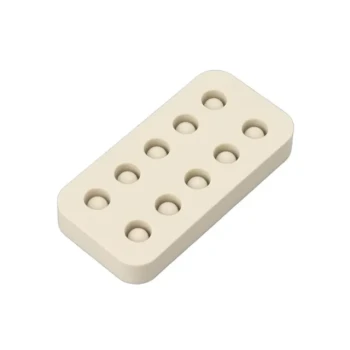
- 10-Cell Silicone Beeswax Bee Queen Cups Forming Mold
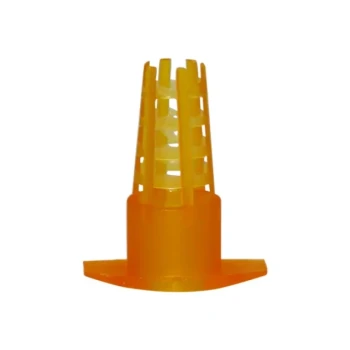
- JZBZ Type Wide Base Plastic Queen Cell Cups for Base Mounting and Queen Rearing
- Brown Nicot Queen Cell Cups for Breeding Queen Bees Beekeeping
- Clear Black Plain Polystyrene Queen Bee Grafting Cell Cups No Lug for Bee Queen Cup
- JZBZ Push-In Queen Cell Cups for Beekeeping
People Also Ask
- How do beeswax queen cell cups function? Optimize Queen Rearing with Biological Mimicry
- What is the biological function of beeswax queen cell cups? Boost Acceptance in Artificial Queen Rearing
- What role do specialized queen rearing tools play in developing mite-resistant honeybee stock? Master Genetic Selection
- What materials are used to make artificial queen cell cups for grafting? Beeswax vs. Plastic Guide
- What roles do specialized queen cell cups play in royal jelly production? Optimize Your Hive's Secretion and Yield