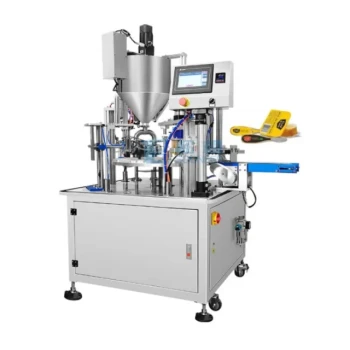
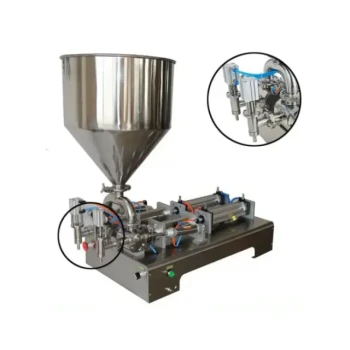
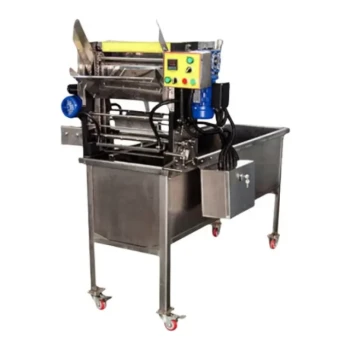
Automated honey-filling machines serve as the critical operational pivot that allows apiaries to transition from labor-intensive manual processing to scalable commercial production. These systems directly mitigate labor shortages by utilizing precise quantitative controls and advanced sealing technologies to replace high-intensity manual tasks, simultaneously increasing filling speeds and significantly reducing product waste.
By standardizing the packaging process, automated filling ensures honey transforms from a raw agricultural product into a consistent commercial commodity. The technology acts as a force multiplier, allowing producers to maintain high throughput and rigorous hygiene standards even with a reduced workforce.
Solving the Labor Constraint
The most immediate impact of automated filling technology is the decoupling of production volume from workforce size.
Replacing High-Intensity Labor
Manual honey packaging is labor-intensive and repetitive. Automated machines utilize precise quantitative control to execute these tasks, effectively replacing the need for large teams of manual packers. This allows operations to maintain continuity even during labor shortages.
Increasing Throughput Speed
Beyond simply replacing workers, automation fundamentally changes the pace of production. These machines are engineered to significantly increase filling speeds, enabling apiaries to process high volumes of honey rapidly to meet seasonal distribution requirements.
Enhancing Efficiency and Resource Utilization
While labor reduction is the immediate benefit, the deeper value lies in the optimization of the product itself.
Minimizing Material Waste
Manual filling often leads to overflow and inconsistency. Automated systems, often utilizing servo-driven or pneumatic control systems, ensure accurate dispensing into containers. This precision minimizes product waste and overflow, directly lowering production costs.
Ensuring Weight Consistency
For commercial viability, every unit must meet specific standards. High-precision automation ensures consistent product weight across thousands of units. This reliability is vital for meeting commercial distribution requirements and achieving brand premiums.
Optimizing Hygiene and Quality
Automated filling is not just about moving liquid; it is about preserving the organic integrity of the honey.
Eliminating Secondary Contamination
Manual packaging introduces multiple points of human contact, increasing the risk of contamination. Automated machines function within a sterile environment, significantly reducing the risk of secondary contamination during the filling process.
Preventing Oxidation
Advanced filling systems often feature fully enclosed stainless steel piping. This design prevents the honey from contacting air during processing, effectively reducing oxidation and ensuring the product maintains its stability and quality from the factory to the consumer.
Critical Operational Considerations
While automation solves labor and consistency issues, it represents a fundamental shift in how an apiary operates.
The Shift to Industrial Standards
Implementing this technology is a commitment to transitioning from small-scale production to modern commercialized beekeeping. It requires integrating complex hardware, such as systems requiring servo-drive maintenance and hygienic piping management, rather than simply managing a workforce.
Dependence on Hardware Precision
The efficiency of the line is entirely dependent on the calibration of the equipment. To achieve the benefits of reduced waste and oxidation, the machinery must be maintained to provide high-precision quantitative filling; otherwise, the benefits of consistency and cost-savings are lost.
Making the Right Choice for Your Goal
When evaluating automated honey-filling technology, align the equipment capabilities with your specific operational bottlenecks.
- If your primary focus is Scalability and Cost: Prioritize machines with servo-driven quantitative controls to maximize throughput speed and eliminate the financial loss caused by material overflow.
- If your primary focus is Product Quality and Branding: Select systems with enclosed stainless steel piping and advanced sealing technology to prevent oxidation and guarantee the hygiene required for premium market positioning.
Automated filling technology is the essential hardware component that converts a high-yield harvest into a shelf-ready, commercially viable product.
Summary Table:
| Feature | Impact on Production | Benefit to Commercial Apiaries |
|---|---|---|
| Servo-Driven Filling | Replaces high-intensity manual labor | Reduces labor costs and workforce dependency |
| Quantitative Precision | Eliminates overflow and material waste | Lowers production costs and ensures weight consistency |
| Enclosed SS Piping | Minimizes air contact and contamination | Prevents oxidation and preserves premium honey quality |
| High-Speed Automation | Decouples volume from workforce size | Enables rapid processing for seasonal distribution peaks |
Scale Your Honey Production with HONESTBEE Precision
Transitioning from manual labor to automated efficiency is the key to thriving in today's competitive honey market. At HONESTBEE, we specialize in empowering commercial apiaries and distributors with the high-performance machinery needed to scale operations seamlessly.
Our comprehensive range includes precision honey-filling machines, hive-making hardware, and specialized industrial consumables designed to eliminate waste, ensure hygiene, and maximize your throughput. Whether you are looking to overcome labor shortages or elevate your brand's quality standards, our expert team is ready to provide the wholesale equipment and technical support your business deserves.
Ready to transform your production line? Contact us today for a custom solution!
References
- Jaisy Aghniarahim Putritamara, Dewi Masyithoh. Do Dynamic Capabilities and Digital Transformation Improve Business Resilience during the COVID-19 Pandemic? Insights from Beekeeping MSMEs in Indonesia. DOI: 10.3390/su15031760
This article is also based on technical information from HonestBee Knowledge Base .
Related Products
- Fully Automatic Honey Filling Packaging Machine for Processing Line
- Automatic Honey Filling and Filtering Machine for Beekeeping Bottle Filling
- Precision Durable Efficient HONESTBEE Rotary Honey Filling Machine
- Precision Automated Packaging Turntable Honey Spoon Filling Sealing Packing Machine
- Semi Automatic Small Honey Bottle Filling Machine Honey Filler
People Also Ask
- Why are fully automatic honey filling and packaging lines essential? Boost Your Honey's Market Value and Quality
- What is a fully-automatic honey filler? Streamline Your Production with High-Precision Automation
- How do automated honey filling and packaging machines affect profitability? Boost Margins with HONESTBEE Technology
- How do automated honey filling and packaging machines contribute to the market value of honey products? Maximize Your ROI
- How do industrial-grade automated honey filling and packaging machines mitigate the risk of physical contamination?