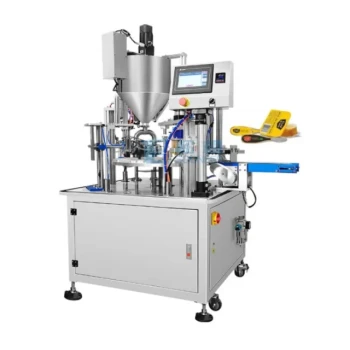
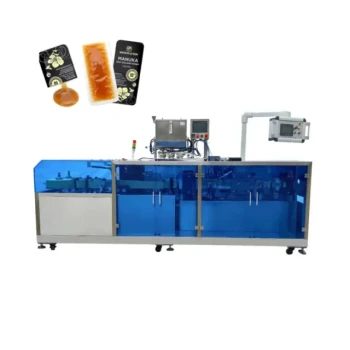
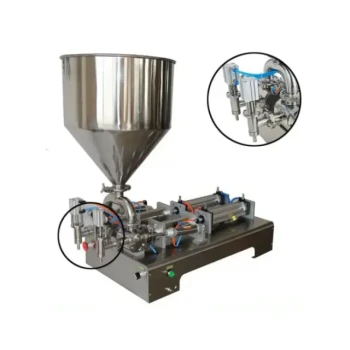
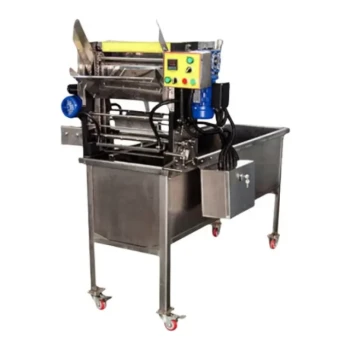
Automated honey filling machines serve as the critical infrastructure bridging raw apiary production and consumer retail markets. By utilizing precise volumetric control and hygienic sealing processes, these systems convert bulk honey into standardized, shelf-ready units that meet the strict consistency, safety, and throughput standards required for large-scale distribution.
While the visible function of these machines is increasing packaging speed, their deeper commercial role is risk mitigation and standardization. They provide the necessary technical assurance regarding net weight, hygiene, and product purity that allows a local apiary to transition into a global or large-scale retail supplier.
Transforming Bulk Supply into Retail Assets
Precision Through Volumetric Control
The primary technical function of these machines is to manage quantitative packaging. Using high-precision metering, they ensure that every container receives the exact volume of product required by labeling regulations.
This eliminates the variability inherent in manual filling. It ensures strict compliance with net weight regulations, which is a prerequisite for entering formal retail channels.
Managing High-Viscosity Materials
Honey presents unique challenges due to its viscosity, which changes based on temperature and dehydration levels. Industrial fillers are specifically engineered to handle high-viscosity, filtered honey without clogging or inconsistency.
By controlling flow rates accurately, these machines significantly reduce product loss during dispensing. This maximization of raw material usage directly improves the economic viability of the operation.
Ensuring Product Integrity and Safety
Eliminating Secondary Pollution
In a commercial distribution chain, food safety is paramount. Automated fillers utilize sealed and sterile processes that isolate the honey from the environment during the bottling phase.
This effective isolation prevents secondary pollution—contamination that occurs after processing but before sealing. By removing human contact from the filling stage, the risk of biological or physical contamination is drastically reduced.
Preserving Active Components
For high-value or medicinal-grade bee products, preserving biological activity is essential. Advanced automation maintains the stability of active components like enzymes by minimizing exposure and processing time.
This capability allows producers to market products as pharmaceutical-grade or dietary supplements. It ensures the product on the shelf retains the quality standards promised to the consumer.
Unlocking Market Access
Standardization for Brand Building
Retailers and consumers demand consistency. Automated machines ensure uniformity in product appearance, fill levels, and packaging integrity across every batch.
This consistency is the "technical assurance" required for brand building. It proves reliability to distributors, ensuring that seasonal variations in honey types do not result in variable packaging quality.
Meeting International Trade Requirements
Global distribution systems have rigorous entry requirements regarding hygiene and packaging standards. Automated filling is often a necessary guarantee for accessing international trade channels.
Without the rigorous hygiene control and standardized data provided by these machines, it is difficult for bee products to pass the audits required for large-scale commercial distribution.
Understanding the Operational Trade-offs
The Complexity of Viscosity Management
While automation solves flow issues, it introduces mechanical complexity. Handling dehydrated, high-viscosity honey requires robust machinery that may need specific calibration for different honey varieties to prevent equipment strain or inaccuracy.
Hygiene vs. Maintenance
The "sealed and sterile" benefit relies entirely on the machine's maintenance. Because the system is closed to prevent environmental contamination, cleaning protocols must be rigorous to prevent internal cross-contamination between batches.
Making the Right Choice for Your Distribution Goals
To leverage automation effectively, you must align the machine's capabilities with your specific market position.
- If your primary focus is Mass Market Retail: Prioritize machines with high-speed volumetric controls to maximize throughput and ensure strict compliance with weight labeling regulations.
- If your primary focus is Medicinal or Premium Honey: Prioritize systems with advanced hygiene isolation to preserve active enzymes and ensure pharmaceutical-grade purity.
- If your primary focus is International Export: Select equipment that offers verifiable hygiene data and standardized sealing to meet rigorous global trade audits.
Ultimately, automated filling is not just a packaging step; it is the strategic gateway that converts a raw agricultural commodity into a verifiable, tradeable commercial asset.
Summary Table:
| Key Feature | Commercial Impact | Primary Benefit |
|---|---|---|
| Volumetric Control | Guaranteed Net Weight Compliance | Eliminates manual error and product waste |
| Hygienic Sealing | Prevention of Secondary Pollution | Ensures food safety and shelf-life stability |
| Viscosity Handling | Consistent Flow of Filtered Honey | Optimizes production speed for various honey types |
| Process Automation | Standardized Product Appearance | Builds brand trust and meets retail/export audits |
Scale Your Apiary Operations with HONESTBEE
Transitioning from raw production to global distribution requires more than just honey—it requires precision. HONESTBEE specializes in empowering commercial apiaries and distributors with the high-performance machinery needed to dominate the market.
From automated honey-filling machines designed for high-viscosity products to specialized hive-making hardware and honey-themed cultural merchandise, we provide the full spectrum of tools and consumables your business needs to grow.
Ready to elevate your production standards and unlock international trade?
Contact HONESTBEE Today to Discuss Your Wholesale Needs
References
- D. P. Abrol. Introduction of<i>Apis mellifera</i>in Jammu and Kashmir: present status and future prospects. DOI: 10.1080/0005772x.2004.11099616
This article is also based on technical information from HonestBee Knowledge Base .
Related Products
- Fully Automatic Honey Filling Packaging Machine for Processing Line
- Automatic Honey Filling and Filtering Machine for Beekeeping Bottle Filling
- Precision Durable Efficient HONESTBEE Rotary Honey Filling Machine
- Semi Automatic Small Honey Bottle Filling Machine Honey Filler
- Precision Automated Packaging Turntable Honey Spoon Filling Sealing Packing Machine
People Also Ask
- Why are fully automatic honey filling and packaging lines essential? Boost Your Honey's Market Value and Quality
- What is a fully-automatic honey filler? Streamline Your Production with High-Precision Automation
- How do automated honey filling and packaging machines affect profitability? Boost Margins with HONESTBEE Technology
- How do automated honey filling and packaging machines contribute to the market value of honey products? Maximize Your ROI
- How do industrial-grade automated honey filling and packaging machines mitigate the risk of physical contamination?