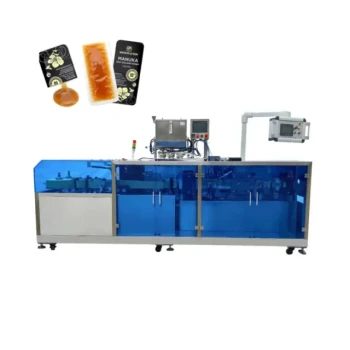
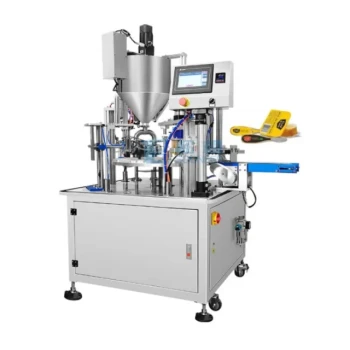
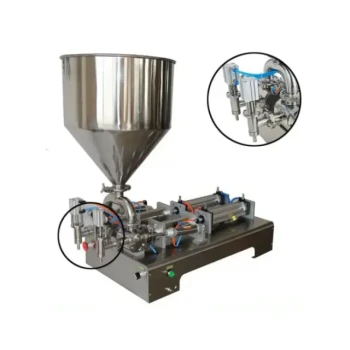
Automatic honey-filling machines serve as the critical bridge between raw agricultural production and standardized retail distribution. In the specific context of urban processing, their primary role is two-fold: they provide high-precision volumetric filling to ensure strict compliance with commercial net weight standards, and they utilize enclosed filling processes to protect the product from urban environmental contaminants like dust and airborne impurities.
The transition to automatic filling transforms honey from a variable bulk product into a consistent, branded commodity. By eliminating manual inconsistency and environmental exposure, these machines ensure the food safety and standardized quality required to compete in modern retail markets.
Ensuring Precision and Standardization
Achieving Volumetric Accuracy
Commercial retail requires exact adherence to net weight labeling. Automatic machines employ high-precision metering controls to dispense the exact volume of honey required for each unit.
This eliminates the weight variances inherent in manual packing. It ensures that every jar leaving the facility meets the legal and commercial standards necessary for retail shelves.
Establishing Brand Consistency
Beyond legal compliance, uniformity is key to consumer trust. Automated filling ensures that the fill line in every jar is identical, creating a professional visual presentation.
This consistency allows urban producers to move beyond farmers' markets. It enables them to meet the stringent packaging requirements of supermarkets and formal distribution channels.
Protecting Quality in Urban Environments
The Enclosed Processing Advantage
Urban processing facilities face higher risks of environmental pollutants than rural extraction sites. The primary reference highlights that automatic fillers use an enclosed filling process.
This design acts as a vital shield. It specifically prevents contamination from dust, exhaust particulates, or other airborne impurities common in city settings, preserving the honey's natural purity.
Eliminating Secondary Contamination
Manual handling is the most common source of biological contamination in food processing. Automated systems remove the "human element" from the filling stage.
By creating a sterile, touch-free journey from tank to jar, these machines significantly reduce bacterial risks. This ensures high food safety standards are met consistently across all batches.
Understanding the Trade-offs
Maintenance and Cleaning Demands
While automation improves hygiene, it introduces mechanical complexity. These machines require rigorous, disciplined cleaning protocols, particularly for the anti-drip mechanisms and seals.
Failure to properly sanitize the equipment between batches can lead to cross-contamination. This is especially critical when processing different seasonal varieties of honey.
Balancing Cost against Volume
The shift to automation involves a substantial upfront investment compared to manual labor. This expenditure is only justified if the production volume is high enough to absorb the cost.
For very small, artisanal urban producers, the capital cost may outweigh the efficiency gains. It is essential to ensure your production scale warrants the capacity of an industrial machine.
Making the Right Choice for Your Scale
Integrating an automatic filler is a strategic decision that defines your market reach.
- If your primary focus is Mass Retail Distribution: Prioritize machines with high-speed volumetric controls to ensure total uniformity and legal weight compliance for supermarket shelves.
- If your primary focus is Premium Quality Assurance: Focus on the machine's enclosed design features to guarantee maximum purity and protection against urban environmental contaminants.
By standardizing weight and securing hygiene, automatic filling technology turns a delicate natural resource into a robust, export-ready commercial product.
Summary Table:
| Key Role | Primary Benefit | Operational Impact |
|---|---|---|
| Volumetric Accuracy | Eliminates weight variance | Ensures legal net weight compliance for retail |
| Enclosed Filling | Protects from urban pollutants | Prevents contamination from dust and airborne impurities |
| Automated Flow | Removes manual handling | Reduces biological risk and secondary contamination |
| Brand Standardization | Uniform fill levels | Enhances shelf presentation and consumer trust |
Elevate Your Commercial Apiary with HONESTBEE Professional Solutions
Transitioning from manual labor to industrial efficiency is a critical step for growing beekeeping businesses. HONESTBEE specializes in supporting commercial apiaries and distributors by providing the high-performance tools and machinery needed to scale production.
From high-precision honey-filling machines and hive-making equipment to a comprehensive range of industry consumables and honey-themed cultural merchandise, we offer a complete wholesale portfolio to meet your every need.
Ready to standardize your production and secure your place in the global retail market?
Contact HONESTBEE today for expert consultation and wholesale pricing
References
- Agnieszka Bielska–Brodziak, Marek Suska. Pszczoły miodne w prawie miejscowym. DOI: 10.31743/sp.8883
This article is also based on technical information from HonestBee Knowledge Base .
Related Products
- Fully Automatic Honey Filling Packaging Machine for Processing Line
- Automatic Honey Filling and Filtering Machine for Beekeeping Bottle Filling
- Precision Durable Efficient HONESTBEE Rotary Honey Filling Machine
- Automatic Single-Dose Snap & Squeeze Honey Sachets Packing Machine
- Semi Automatic Small Honey Bottle Filling Machine Honey Filler
People Also Ask
- Why are fully automatic honey filling and packaging lines essential? Boost Your Honey's Market Value and Quality
- What is a fully-automatic honey filler? Streamline Your Production with High-Precision Automation
- How do automated honey filling and packaging machines affect profitability? Boost Margins with HONESTBEE Technology
- How do automated honey filling and packaging machines contribute to the market value of honey products? Maximize Your ROI
- How do industrial-grade automated honey filling and packaging machines mitigate the risk of physical contamination?