Bee hive frames function as the modular skeleton of a modern apiary. They provide a standardized, rigid support system that enables honeybees to secrete wax and construct an organized network of cells. These wax cells form the operational core of the colony, serving simultaneously as storage units for vital resources and nurseries for the next generation.
Core Takeaway: The frame system bridges the gap between biological chaos and scientific management. It transforms the hive from a fragile, fixed structure into a movable "library" of resources, allowing for precise inspection, harvesting, and disease control without compromising the colony's structural integrity.
The Biological Role: Survival and Reproduction
The frame is not just a holder; it is the infrastructure upon which the biology of the hive relies.
The Multi-Purpose Storage Unit
Wax cells within the frame are the primary vessels for the colony's survival assets. They serve as secure storage for energy in the form of honey and protein in the form of pollen.
The Nursery for Colony Growth
Beyond storage, these cells are the critical location for egg-laying and larval development. The wax cells provide the specific environment required for raising the brood from egg to adult bee.
Structural Stability and Yield
The rigidity of the frame directly impacts the colony's output. A stable frame prevents comb collapse, which ensures high reproductive efficiency and maximizes the overall honey yield by allowing bees to focus on production rather than repair.
The Management Role: Inspection and Control
For the beekeeper, the frame is the primary tool for interacting with the colony.
Non-Destructive Inspection
Before modern frames, inspecting a hive often meant cutting out and destroying the comb. Removable frames function like independent modules or studs in a wall.
Beekeepers can extract frames individually to observe queen bee status and larval development without destroying the hive's architecture.
Hygiene and Disease Defense
Standardized wooden frames eliminate the chaotic, dark corners found in natural hives. This allows bees to patrol and clean all areas easily.
This design is critical for preventing infestations, specifically by ensuring no hidden wax moth eggs or larvae are present. It also facilitates the regular replacement of wax foundations to renew the hive environment.
Engineering the "Bee Space"
The physical design of the frame relies on precise measurements to ensure the bees accept the structure.
Scientific Control of Space
Frames are hung vertically with a specific gap between them known as "bee space."
This spacing is a technical requirement; it allows bees to move freely but prevents them from building burr comb that would fuse the frames together.
Component Architecture
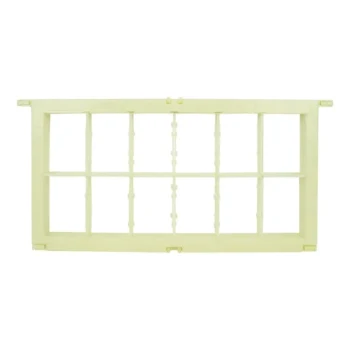
Each frame consists of a top bar (which rests on the hive rabbet), two side bars, and a bottom bar.
To support the heavy wax foundation, frames often utilize 28-gauge wire threaded through holes in the side bars. This reinforcement prevents the comb from sagging under the immense weight of stored honey and brood.
Understanding the Trade-offs
While frames are essential for modern beekeeping, they introduce specific maintenance requirements that must be understood.
The Necessity of Foundation Renewal
Frames are not "set and forget" tools. The wax foundations are consumables that guide the bees to build uniform combs.
Failure to replace these foundations regularly can lead to a buildup of disease pathogens and a reduction in cell size, which can negatively affect the size and health of emerging bees.
Mechanical Complexity
The frame system adds mechanical complexity to the hive. Beekeepers must manage wires, grooves, and foundation sheets.
This effort is the price paid for order; without these guides, bees would construct irregular comb, making management and harvesting significantly more difficult.
How to Apply This to Your Project
- If your primary focus is Colony Health: Prioritize the regular rotation of frames to remove old wax and eliminate potential reservoirs for disease and wax moth larvae.
- If your primary focus is Honey Production: Ensure your frames are wired correctly and structurally sound to support the heavy centrifugal forces used during honey extraction.
- If your primary focus is Hive Management: Utilize standard dimensions to ensure frames remain interchangeable between boxes, allowing for artificial swarming and resource balancing.
The modern beehive frame is the technical compromise that allows human management to coexist with natural bee behavior.
Summary Table:
| Feature | Biological Role | Management Benefit |
|---|---|---|
| Wax Cells | Storage for honey/pollen & larval nursery | Facilitates clean, organized honey harvesting |
| Rigid Frame | Prevents comb collapse & provides stability | Enables non-destructive inspections of queen/brood |
| Bee Space | Allows free movement within the hive | Prevents burr comb and fusion of internal structures |
| Wire Support | Supports heavy wax foundation weight | Endures centrifugal forces during honey extraction |
Scale Your Apiary Operations with HONESTBEE
At HONESTBEE, we understand that high-quality frames are the backbone of a productive colony. Whether you are a commercial apiary looking to maximize honey yield or a distributor seeking reliable equipment for your clients, we provide the full spectrum of beekeeping solutions.
Our comprehensive wholesale offering includes:
- Precision-Engineered Hardware: Specialized hive-making and honey-filling machines.
- Durable Equipment: Standardized frames, 28-gauge wiring, and robust beehive tools.
- Essential Consumables: High-quality wax foundations and hive components.
Enhance your efficiency and protect your colony health. Contact HONESTBEE today to access our professional-grade inventory and industry expertise.
References
- K Satpute Sachin. Monitoring of Honey Bee Hiving System using Sensor Networks. DOI: 10.17577/ijertv9is060296
This article is also based on technical information from HonestBee Knowledge Base .
Related Products
- Assembled Wooden Bee Frames with Beeswax Foundation Ready to Use by HONESTBEE
- Assembled Wooden Bee Frames with Plastic Foundation for Durability and Convenience by HONESTBEE
- Wooden Bee Hive Frames for Beekeeping and Wholesale
- Plastic Bee Frame Beekeeping Hive Frames for Wholesale
- HONESTBEE Wired and Assembled Wooden Bee Frames Foundation for a Thriving Hive
People Also Ask
- Under what circumstances should bee frames be destroyed? Protect Your Apiary from American Foulbrood
- Do bee frames need foundation? Choose the Right Approach for Your Apiary
- How should frames be rearranged as a bee colony grows? Master Hive Expansion and Nest Management
- What are bee frames and how are they sized? A Professional Guide to Standardization & Material Choice
- Can beekeepers switch between wooden and plastic frames? Optimize Your Hive's Performance