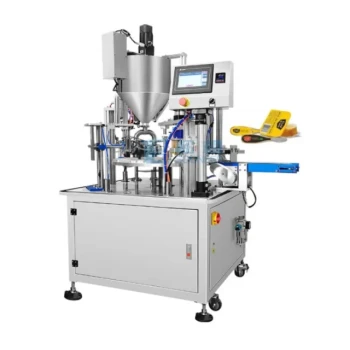
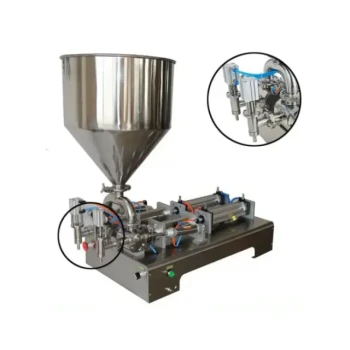
The role of control systems in honey filling machines is to act as the central nervous system, coordinating mechanical components to achieve consistent, high-speed production. These systems, typically built around Programmable Logic Controllers (PLCs), enable the precise regulation of filling speed, volume, and timing, allowing independent machines to function as a unified, automated facility workflow.
Core Takeaway Control systems bridge the gap between mechanical capability and product quality. By automating critical variables like pressure and timing, they overcome the challenges of honey's viscosity to ensure identical fill levels, standardized hygiene, and significant reductions in product waste.
The Operational Mechanics of Control
Precision Dosing and Volume Regulation
The primary function of the control system is to manage the quantity of honey dispensed.
Using PLCs to govern servo-driven or pneumatic mechanisms, the machine ensures that every container receives an exact volume. This eliminates the variability inherent in manual filling and ensures the final product meets strict weight specifications.
Speed and Viscosity Management
Honey is a viscous fluid, and its flow rate changes with temperature and texture.
Control systems dynamically adjust the filling speed to handle these thick properties without clogging nozzles or causing drips. This regulation maintains a steady throughput regardless of minor fluctuations in the honey's consistency.
Synchronization with Workflow
Modern control systems are designed for standardized integration.
They allow the filling machine to communicate with upstream and downstream equipment, such as bottle cleaners, cappers, and labelers. This creates a cohesive automation line where the filling timing is perfectly synced with the conveyor movement, significantly reducing labor costs.
Quality Assurance and Hygiene
Minimizing Oxidation and Contamination
Advanced control systems manage fully enclosed piping networks.
By precisely controlling the flow within stainless steel systems, the machinery prevents the honey from coming into contact with air. This preserves the organic integrity of the honey by reducing oxidation and preventing external contaminants from entering the product stream.
Waste Reduction
Manual or poorly controlled filling often leads to overfilling "just to be safe," which causes product loss over time.
Control systems enforce accurate quantitative filling, ensuring that you are not giving away free product. Minimizing drips and spills also keeps the exterior of bottles clean, reducing the need for post-fill cleaning.
Understanding the Trade-offs
Complexity and Maintenance
While PLCs provide immense control, they introduce technical complexity.
A highly automated system requires operators who understand digital interfaces and technicians capable of troubleshooting electronic logic, not just mechanical gears. If a PLC fails, it can potentially halt the entire production line until specialized support arrives.
Cost vs. Flexibility
Automated control systems represent a significant upfront investment.
For massive industrial operations, this cost is amortized quickly through efficiency. However, for small apiaries with highly variable bottle sizes or small batches, the time required to reprogram the control system for different setups may outweigh the speed benefits compared to simpler, semi-automatic gravity or piston fillers.
Making the Right Choice for Your Goal
To select the right level of control for your facility, consider your specific production targets:
- If your primary focus is strict inventory control and premium branding: Prioritize systems with servo-driven controls to ensure exact fill weights and a professional, consistent appearance for every unit.
- If your primary focus is high-volume throughput: Prioritize machines with PLC integration capabilities that can seamlessly synchronize with automatic cappers and labelers to maximize speed.
- If your primary focus is organic certification and purity: Look for systems featuring enclosed stainless steel piping control to minimize air exposure and contamination risks.
The right control system does not just fill bottles; it protects your profit margins and the reputation of your harvest.
Summary Table:
| Feature | Function in Control System | Primary Benefit |
|---|---|---|
| PLC Integration | Coordinates sensors and mechanical parts | Seamless, high-speed automated workflow |
| Servo-Driven Dosing | Manages precise piston/nozzle movement | Exact fill volumes and reduced product giveaway |
| Viscosity Adjustment | Regulates flow speed based on honey density | Prevents clogging and drips across batches |
| Workflow Sync | Interfaces with cappers and labelers | Lower labor costs and continuous production |
| Enclosed Piping | Automates flow within stainless steel | Preserves purity and prevents oxidation |
Elevate Your Honey Production with HONESTBEE Precision Engineering
Transitioning from manual processes to an automated facility requires more than just machinery; it requires a strategic partner. HONESTBEE specializes in catering to commercial apiaries and distributors by providing a comprehensive wholesale ecosystem.
Our advanced honey filling machines, equipped with state-of-the-art PLC control systems, ensure your product quality remains consistent while your overhead decreases. From specialized hive-making and honey-filling machinery to high-quality industrial consumables, we supply the full spectrum of tools needed to scale your operations.
Ready to maximize your yield and protect your profit margins?
Contact HONESTBEE Today for a Custom Solution
Related Products
- Precision Durable Efficient HONESTBEE Rotary Honey Filling Machine
- Semi Automatic Small Honey Bottle Filling Machine Honey Filler
- Economy Small Honey Filling Machine Honey Bottle Filler Packaging Machine
- Commercial Rotary Honey Filling Machine for Production
- Fully Automatic Honey Filling Packaging Machine for Processing Line
People Also Ask
- How do honey filling machines work? Achieve Precision & Speed for Your Apiary
- What is a key feature of the new generation of the honey filling machine? The Advanced Electronic Control Unit
- How do high-precision honey filling machines ensure quality? Optimize Your Commercial Production with HONESTBEE
- What quality control role does professional honey filling equipment perform? Ensure Consistency and Product Stability
- What are the common types of bottling machines used for honey? Choosing the Right Solution for Your Apiary