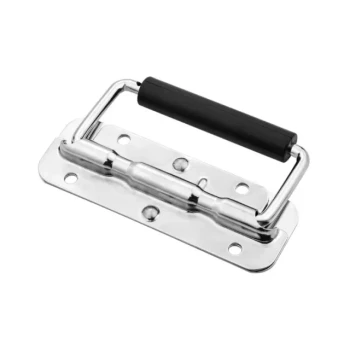
Industrial-grade metal load cells serve as the precise foundation for modern hive monitoring. Installed directly at the base of the beehive, these sensors continuously record the total weight of the colony structure. By leveraging high-precision linearity, they allow beekeepers to detect minute honey weight increments without disturbing the bees.
Core Insight: By tracking total mass with industrial precision, these sensors convert raw weight data into a non-invasive timeline of foraging efficiency and honey production cycles.
The Mechanics of Weight-Based Monitoring
To understand the role of these sensors, it is necessary to look at how they capture data and the specific technical attributes that make them effective for daily monitoring.
Strategic Placement for Total Mass
The load cells are integrated into the bottom of the hive setup. Because they support the entire structure, they capture the total hive weight.
This positioning is critical because it captures the net result of all inputs and outputs. It creates a complete picture of mass accumulation without missing variables that might be overlooked by internal frame sensors.
High-Precision Linearity
Beehives are heavy, often weighing nearly 100 kilograms when full. Industrial-grade sensors are required because they offer linearity across this wide range.
Linearity ensures that adding 100 grams of nectar is measured accurately, whether the hive is empty or near capacity. This consistency allows for repeatable measurements day after day, ensuring that data trends are real and not sensor drift.
Non-Invasive Data Collection
Traditional inspection requires opening the hive, using smoke, and physically lifting frames. This disrupts the colony and halts production while the bees recover.
Load cells eliminate this disruption. They detect honey weight increments passively. The beekeeper obtains the necessary data on resource accumulation without ever cracking the propolis seal or stressing the colony.
operational Insights for Commercial Beekeepers
Beyond the hardware mechanics, the primary role of these sensors is to provide decision-support data for commercial operations.
Monitoring Foraging Activity
Daily weight fluctuations are a direct proxy for foraging activity.
When the sensors record a steady increase in weight during daylight hours, it indicates a strong nectar flow and an active workforce. Conversely, a lack of weight gain during expected foraging windows can signal colony health issues or environmental dearth.
Timing Production Cycles
Precision weight data helps optimize the timing of honey production cycles.
By visualizing the rate of weight gain, beekeepers can predict when a hive will reach capacity. This allows for just-in-time harvesting, preventing the hive from becoming honey-bound (running out of storage space) and maximizing the yield per season.
Understanding the Trade-offs
While industrial load cells provide powerful data, relying on total weight measurement introduces specific interpretive challenges.
Aggregate Data vs. Specific Context
The sensors measure total weight, not just honey. While the primary reference notes they detect honey increments, the sensor itself cannot distinguish between honey, brood, pollen, or water weight.
Beekeepers must infer that rapid weight gain during a bloom is honey. However, distinct biological events (like a swarm leaving) must be interpreted based on sudden drops in mass rather than direct visual confirmation.
Reliance on Sensor Stability
Because the system relies on detecting small increments within a large total mass, sensor stability is paramount.
If the load cell lacks the industrial-grade durability mentioned, temperature fluctuations or physical creep could look like honey production. The accuracy of the insight is entirely dependent on the mechanical integrity of the load cell installation.
Making the Right Choice for Your Goal
Implementing load cells changes how you manage your apiary. Here is how to apply this technology based on your specific objectives.
- If your primary focus is Maximizing Yield: Monitor the rate of daily weight gain to identify the exact moment nectar flow slows, indicating the optimal time to harvest.
- If your primary focus is Colony Health: Use the continuous weight records to verify daily foraging activity and detect anomalies, such as a sudden lack of weight gain during clear weather.
Industrial-grade load cells transform beekeeping from a reactive practice based on physical inspection into a proactive science based on precise data.
Summary Table:
| Feature | Function in Hive Monitoring | Benefit for Beekeepers |
|---|---|---|
| Strategic Base Placement | Measures total mass of the hive structure | Captures net results of all inputs/outputs without missing variables |
| High-Precision Linearity | Maintains accuracy across wide weight ranges | Ensures reliable data even when hives reach 100kg+ capacity |
| Non-Invasive Detection | Monitors weight increments passively | Eliminates colony stress and production halts caused by manual inspection |
| Continuous Data Logging | Tracks daily foraging and weight fluctuations | Provides a real-time timeline of nectar flow and resource accumulation |
| Industrial Durability | Resists temperature fluctuations and drift | Guarantees long-term data integrity for commercial decision-making |
Maximize Your Apiary Productivity with HONESTBEE
Transition from reactive inspections to data-driven precision. At HONESTBEE, we specialize in empowering commercial apiaries and distributors with the high-performance tools necessary to scale operations efficiently.
Our comprehensive wholesale portfolio includes:
- Advanced Monitoring Hardware: Industrial-grade load cells and specialized beekeeping sensors.
- Commercial Machinery: Hive-making equipment and precision honey-filling machines.
- Essential Consumables: A full spectrum of professional-grade beekeeping tools and hardware.
Whether you are looking to optimize honey yields or equip large-scale beekeeping operations, HONESTBEE delivers the expertise and equipment you need to succeed.
Contact us today to explore our wholesale solutions
References
- Pietro Catania, Mariangela Vallone. Design of an innovative system for precision beekeeping. DOI: 10.1109/metroagrifor.2019.8909256
This article is also based on technical information from HonestBee Knowledge Base .
Related Products
- Premium Comfort Grip Spring-Loaded Hive Handles
- Professional Galvanized Steel Frame Rest for Beehives
- Metal Hive Feet Bee Hive Stand for Ant Protection
People Also Ask
- How do the geometry and dimensions of hive handles influence operational safety and control? Expert Design Insights
- How do bee hive handles facilitate the evaluation of food stores? Use the Lift Test for Winter Survival
- What are the different types of hive tools available? Choose the Right Tool for Your Apiary
- How do hive tools and queen rearing equipment facilitate the bee colony splitting process? Restore Your Apiary Faster
- Why are professional hive tools & observation equipment necessary for queen rearing evaluation? Master Your Quality