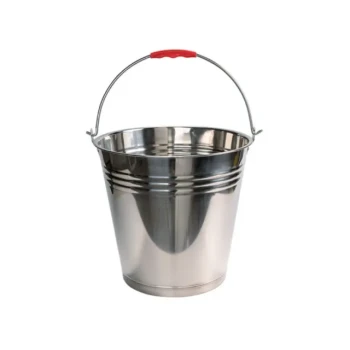
Industrial-grade storage buckets serve as the critical primary interface between raw harvesting and commercial processing. They act as a sealed, corrosion-resistant temporary storage medium that protects raw honey from environmental contamination—such as dust, moisture, and forest debris—while ensuring the product’s physical and chemical stability during transport from the collection site.
By providing a high-strength, chemically inert, and airtight environment, these containers prevent oxidation, fermentation, and contamination. They are essential hardware for preserving the hygienic quality, volatile flavors, and market value of honey as it moves from the apiary to the processing facility.
Preserving Chemical and Physical Integrity
The Barrier Against Environmental Contamination
Harvesting often takes place in complex outdoor environments where exposure to elements is a constant risk. Industrial-grade buckets provide a sealed environment immediately upon collection.
This seal is vital for blocking external contaminants like dust, forest debris, and foreign odors. By isolating the honey, the container ensures that the original biochemical indicators remain stable during the chaotic harvesting phase.
Preventing Chemical Reactivity
Raw honey is naturally acidic, which presents a challenge for traditional storage materials like metal. Industrial-grade plastic buckets are preferred because they are corrosion-resistant and chemically inert.
Unlike metal containers, these food-grade plastics do not react with the honey’s acids. This prevents the introduction of metal ions, ensuring the honey maintains its high purity and physicochemical characteristics.
Moisture Control and Fermentation Prevention
Honey is hygroscopic, meaning it readily absorbs moisture from the air. If the water content rises too high, the honey will ferment and spoil.
The superior sealing capabilities of industrial buckets create a quality protection barrier against atmospheric moisture. This is particularly critical in high-humidity environments or during long-distance transport, preventing fermentation and preserving the honey's shelf life.
Logistical Advantages in Transport
Durability on Rough Terrain
Apiaries are often located in remote areas requiring transport over difficult ground. Industrial-grade containers are designed to be impact-resistant and durable.
Compared to fragile options like glass or heavy options like clay, these buckets significantly reduce breakage rates. This durability minimizes product loss during the transition from the apiary to the market.
Economic Efficiency and Scale
These containers are lightweight yet offer large capacities, making them ideal for wholesale trade and raw material transfer. Their design allows for economies of scale by maximizing volume while minimizing the deadweight added to logistics.
By reducing the physical weight of the packaging, producers can significantly lower logistics costs. This efficiency helps generate consistent economic returns for large-scale operations.
Facilitating Natural Clarification
Beyond simple transport, these buckets play an active role in the initial processing of raw honey. The airtight environment allows for a settling process during storage.
As the honey sits undisturbed, air bubbles and fine particles naturally rise to the top. This facilitates natural clarification before the honey ever reaches the filtration machinery at the processing plant.
Understanding the Trade-offs
The Necessity of Food-Grade Certification
While "industrial-grade" implies durability, it does not automatically imply safety for consumption. It is imperative that these buckets are explicitly certified as food-grade.
Using general-purpose industrial plastics can lead to the leaching of harmful chemicals into the honey. Beekeepers must ensure the material is specifically designed to resist acidic food products without degrading.
Short-Term vs. Long-Term Storage
These buckets are optimized as temporary storage media and transport vessels. While they are excellent for the logistics phase, they are not always intended for indefinite, multi-year aging of honey.
Making the Right Choice for Your Operation
To maximize the value of your harvest, align your container choice with your specific operational priorities:
- If your primary focus is Flavor Preservation: Prioritize containers with superior airtight seals to prevent the loss of volatile flavors and the absorption of external odors.
- If your primary focus is Purity and Chemistry: Ensure you select high-quality food-grade plastic to prevent acid-metal reactions and the introduction of metal ions.
- If your primary focus is Logistics and Cost: Opt for lightweight, high-capacity, impact-resistant designs to reduce breakage rates and shipping overheads.
Select the container that treats your honey not just as a cargo, but as a chemically complex asset requiring protection.
Summary Table:
| Feature | Benefit for Honey Harvesting | Impact on Market Value |
|---|---|---|
| Airtight Sealing | Prevents moisture absorption & fermentation | Preserves shelf life and flavor |
| Corrosion Resistance | No reaction with honey's natural acidity | Maintains chemical purity |
| Impact Resistance | Reduces breakage during rough transport | Minimizes product loss & waste |
| Natural Clarification | Allows air bubbles & debris to settle | Simplifies downstream filtration |
| Lightweight Design | Increases transport volume efficiency | Lowers overall logistics costs |
Maximize Your Harvest Value with HONESTBEE
At HONESTBEE, we understand that for commercial apiaries and distributors, the right equipment is the difference between premium honey and a compromised harvest. We provide a comprehensive wholesale range of industrial-grade, food-safe beekeeping tools, machinery, and consumables specifically designed to protect your honey’s integrity from hive to market.
Whether you need specialized honey-filling machines, high-durability storage solutions, or hive-making hardware, our portfolio is built to scale your operations and lower your overhead. Don't let logistics compromise your quality.
References
- Gede Suarta, I Gusti Agung Nyoman Dananjaya. Community income of honey bee cultivation in protected forest edge area. DOI: 10.21744/irjmis.v8n6.1938
This article is also based on technical information from HonestBee Knowledge Base .
Related Products
- Food Grade Plastic Honey Bucket Pail for Beekeeping
- Premium Stainless Steel Honey Tank Bucket Pail with Reinforced Handle and Polished Finish
People Also Ask
- What key operational precautions should be taken when using honey buckets and extractors fitted with bottom drain taps?
- What functions do food-grade honey buckets perform? Safeguard Your Harvest and Optimize Apiary Logistics
- Why are food-grade plastic buckets preferred for honey? Protect Quality with Modern Honey Collection Tools
- What is the significance of food-grade plastic honey collection buckets? Boost Quality in Forest Honey Logistics
- What is a honey pail? The Essential Container for Protecting Your Honey's Value