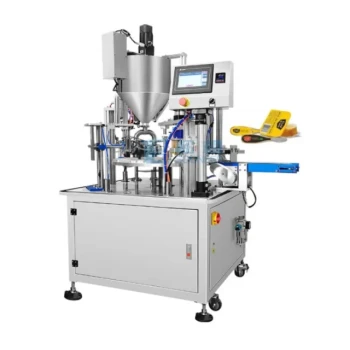
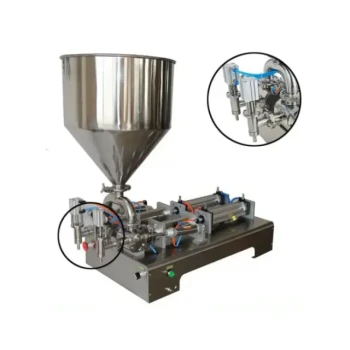
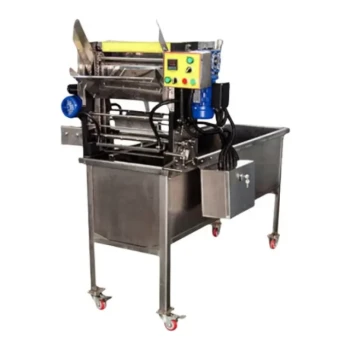
Professional automated filling and packaging machines serve as the critical infrastructure that converts raw bulk honey into high-value retail products. By automating the transition from the hive to the shelf, this equipment ensures precise measurement, hygienic sealing, and efficient processing, which are essential for scaling operations and meeting food safety standards.
The Core Transformation While manual processing limits producers to low-margin wholesale trade, automated machinery unlocks the high-margin retail market. It does this by guaranteeing the consistency, hygiene, and aesthetic quality required to build a competitive brand and meet international export standards.
Transforming Bulk Material into Retail Value
Moving Beyond Commodity Trading
The primary economic role of this machinery is transforming bulk raw honey into consumer-ready units. By efficiently packaging honey into specific retail sizes (such as 0.33kg or 0.5kg), producers can capture significant unit price premiums compared to selling in bulk wholesale containers.
Precision Material Handling
Honey is naturally viscous, making manual handling slow and prone to inconsistency. Industrial-grade machines utilize high-precision metering pumps to manage this viscosity, ensuring that every bottle contains the exact marketed weight. This precision minimizes raw material waste, which directly improves the profit margin per unit.
Operational Efficiency and Labor Reduction
Automated lines drastically reduce the reliance on manual labor for repetitive tasks like filling, capping, and labeling. This lowers long-term operational costs and allows human resources to be redirected toward quality control and logistics, rather than physical packaging.
Preserving Quality and Ensuring Safety
Maintaining Chemical Integrity
Honey is sensitive to heat and handling; improper processing can spike Hydroxymethylfurfural (HMF) levels, indicating degradation. Professional equipment is designed to facilitate flow without overheating, ensuring the honey’s biochemical indicators remain within optimal ranges. This preserves the natural nutrients and sensory qualities expected in high-end markets.
Eliminating Contamination Risks
Automated systems operate in a closed processing environment, which is vital for food safety. By removing direct human contact, these machines prevent secondary contamination from bacteria or foreign debris. They also ensure seals are airtight, preventing moisture absorption which can cause fermentation and spoilage.
Standardization for Export
To enter international markets, honey products must meet rigorous standardization criteria. Automated lines integrate cleaning, filtration, and vacuum capping to ensure hygiene consistency across thousands of units. This mechanical reliability helps producers comply with strict international food safety and export regulations.
Understanding the Operational Trade-offs
The Necessity of Uniformity
Automation requires standardization to function correctly. Unlike manual packing, which can accommodate irregular jars, automated lines require consistent container specifications. Producers must commit to standardized packaging materials to prevent jams and ensure the vacuum capping systems function effectively.
Integration Complexity
An automated line is not just a filler; it is an ecosystem that often includes filtration, bottle cleaning, and labeling. Operating this equipment requires a shift from traditional beekeeping skills to process management, ensuring that all components—from thermal pre-processing to final labeling—work in synchronization.
Making the Right Choice for Your Goal
When integrating automation into your processing facility, align the equipment capabilities with your specific business objectives:
- If your primary focus is entering the Export Market: Prioritize systems with closed-environment capabilities and integrated filtration to ensure strict compliance with international hygiene and HMF standards.
- If your primary focus is Maximizing Profit Margins: Focus on machines with high-precision metering pumps to eliminate over-filling and material waste, ensuring you get the maximum retail yield from your bulk supply.
Ultimately, professional automation is not just about speed; it is the tool that secures product integrity and elevates honey from a raw agricultural commodity to a premium commercial brand.
Summary Table:
| Key Feature | Role in Honey Processing | Economic/Quality Impact |
|---|---|---|
| High-Precision Metering | Eliminates overfilling and ensures exact unit weight. | Maximizes profit margins per unit. |
| Closed Environment | Removes human contact and prevents secondary contamination. | Ensures food safety and export compliance. |
| Automated Capping | Provides airtight, vacuum sealing. | Prevents moisture absorption and fermentation. |
| Integrated Handling | Processes viscous honey without excessive heat. | Maintains low HMF levels and preserves nutrients. |
| Standardized Output | Ensures uniform packaging and labeling. | Increases retail value and brand competitiveness. |
Elevate Your Honey Brand with HONESTBEE Professional Solutions
Transitioning from bulk commodity trading to premium retail markets requires equipment that guarantees consistency and hygiene. HONESTBEE empowers commercial apiaries and distributors with high-performance honey-filling and packaging machinery designed to minimize waste and maximize your product's value.
Beyond specialized hardware like hive-making and honey-filling machines, we provide a full spectrum of beekeeping tools, equipment, and industry consumables to scale your operation. Let us help you meet international standards and increase your profit margins.
Ready to automate your success? Contact us today to explore our wholesale offerings!
References
- V. Pyl, H. I. Ganush. The main directions of development of cooperative and integration relations in the beekeeping industry of the Republic of Belarus. DOI: 10.29235/1818-9806-2022-12-53-61
This article is also based on technical information from HonestBee Knowledge Base .
Related Products
- Fully Automatic Honey Filling Packaging Machine for Processing Line
- Precision Automated Packaging Turntable Honey Spoon Filling Sealing Packing Machine
- Automatic Single-Dose Snap & Squeeze Honey Sachets Packing Machine
- Automatic Honey Filling and Filtering Machine for Beekeeping Bottle Filling
- Precision Durable Efficient HONESTBEE Rotary Honey Filling Machine
People Also Ask
- Why are fully automatic honey filling and packaging lines essential? Boost Your Honey's Market Value and Quality
- What is a fully-automatic honey filler? Streamline Your Production with High-Precision Automation
- How do automated honey filling and packaging machines affect profitability? Boost Margins with HONESTBEE Technology
- How do automated honey filling and packaging machines contribute to the market value of honey products? Maximize Your ROI
- How do industrial-grade automated honey filling and packaging machines mitigate the risk of physical contamination?