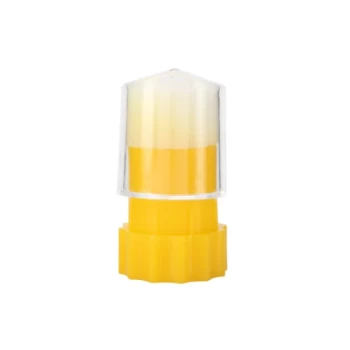
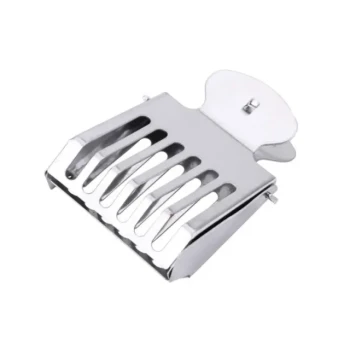
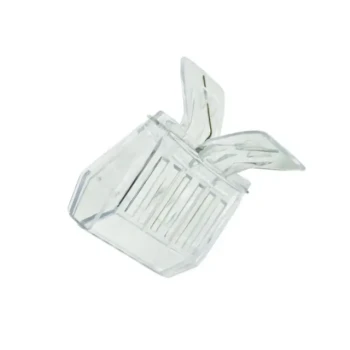
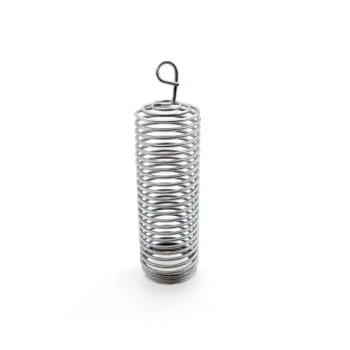
In the precise world of honeybee research, queen bee marking markers serve as a critical tool for establishing a reliable biological timeline. By applying permanent color codes to newly emerged bees, researchers transform indistinguishable workers into trackable subjects. This process enables the accurate recapture of specific batches at exact intervals—such as seven days post-hatching—ensuring that downstream experiments, like fat body dissection, are based on data with absolute temporal accuracy.
Queen bee marking markers act as a durable timestamp, allowing researchers to isolate specific age cohorts within a chaotic hive environment. This ensures that biological samples are not just random selections, but precise data points validated by their known age.
Securing Experimental Precision
Creating Identifiable Cohorts
The primary function of these markers is to distinguish a specific group of bees from the colony's general population.
Researchers apply the marker to newly emerged young bees before introducing them to the colony. This establishes a "Day Zero" baseline for that specific group.
Facilitating Accurate Recapture
Once the marked bees are returned to the hive, they mix with thousands of other workers.
The permanent color code allows scientists to visually scan the colony and retrieve the specific batch of bees later. This is crucial for studies requiring data at fixed points, such as seven days after the bees emerged.
Ensuring Biological Validity
Many physiological characteristics in bees change rapidly as they age.
For procedures like fat body dissection, the validity of the data depends entirely on the age of the bee. The marking system guarantees that the tissue samples collected correspond exactly to the developmental stage being studied.
Understanding the Trade-offs
Manual Effort vs. Data Quality
While effective, this method is labor-intensive. It requires the physical capture and marking of individual bees, which scales linearly with the sample size needed.
However, this manual cost is the trade-off for high-fidelity data. Automated methods or random sampling cannot provide the age verification required for sensitive physiological experiments.
Permanence and Visibility
The markers are designed to be permanent, but application technique matters.
If the mark is not applied correctly, it may fade or be groomed off by other bees. This would lead to a loss of sample size, as any bee with an ambiguous mark must be excluded to maintain experimental integrity.
Optimizing Sample Integrity
To ensure your research yields valid physiological data, you must choose the right identification strategy for your specific goals.
- If your primary focus is exact physiological benchmarking: Use permanent markers to create distinct age cohorts, ensuring every dissected sample (e.g., fat bodies) comes from a bee of known age.
- If your primary focus is tracking survival rates: Leverage the color-coding system to monitor the presence of specific batches over time without the need for electronic tagging.
By converting a generic hive population into distinct, trackable cohorts, marking markers serve as the foundational tool for rigorous, age-based honeybee research.
Summary Table:
| Key Feature | Functional Role | Research Benefit |
|---|---|---|
| Color Coding | Establishes 'Day Zero' for specific cohorts | Enables precise age-based data collection |
| High Visibility | Facilitates rapid visual recapture | Reduces labor time during hive inspections |
| Ink Permanence | Maintains identification over life cycles | Ensures long-term experimental data integrity |
| Manual Application | Individual worker/queen verification | Eliminates ambiguity in physiological sampling |
Elevate Your Apiary Operations with HONESTBEE
Precision matters whether you are conducting advanced honeybee research or managing a commercial enterprise. HONESTBEE specializes in supporting commercial apiaries and distributors with a comprehensive range of professional-grade beekeeping tools, machinery, and essential consumables.
From precise marking tools that ensure experimental integrity to high-capacity honey-filling machines and hive-making hardware, our portfolio is designed to enhance your efficiency and productivity. Let us supply your business with the specialized equipment and honey-themed cultural merchandise needed to thrive in today’s market.
Ready to scale your production? Contact us today to explore our wholesale offerings and discover how HONESTBEE delivers superior value to beekeeping professionals worldwide.
References
- S. Lazarov, Zlatko Puškadija. Impact of Different Sugar Syrups on the Development of the Fat Body in Worker Bees (Apis mellifera macedonica). DOI: 10.3390/agriculture15010083
This article is also based on technical information from HonestBee Knowledge Base .
Related Products
- Plastic Long Marker Device for Catching and Marking Bees Queen Bee Marking Tube and Cage
- Queen Bee Marking Tube Cage Bottle Catcher Holder with Clear Plastic Plunger Marker
- Plastic Queen Bee Catcher Marker Tube Holder for Queen Marking Bottle
- Plastic Queen Marking Tube Cage with Plunger for Beekeeping
- One Hand Yellow Queen Marking Catcher Tube Cage Beekeeper Tool Accessory for Queen Bee
People Also Ask
- Where on the queen bee's body should the mark be applied? Master the Art of Safe Queen Identification
- What are the primary objectives for marking a queen bee? Master Hive Management and Data Tracking
- Why is the physical marking of a queen bee important? Ensure Precise Colony Replacement Cycle Tracking
- How do you capture and immobilize a bee for marking? Master Safe Queen Handling for Your Apiary
- What are the different methods for applying a mark to a queen bee? Master Safe and Effective Queen Marking Techniques