The mark must be applied specifically to the top center of the queen’s thorax. Visually, this should be a small, solid, and contrasting dot of paint, approximately 2-3 millimeters in diameter, situated on the "bald" spot directly between her wing attachments.
Precision is far more important than speed when marking a queen. A well-placed mark allows for easy identification, but paint applied to the wrong area can inhibit her movement or sensory abilities, causing the hive to reject and kill her.
Pinpointing the Exact Location
The Thorax
The target area is exclusively the thorax. This is the middle section of the bee's body where the legs and wings attach.
The "Bald" Spot
Within the thorax, aim for the smooth, hairless area right between the connection points of her wings. This provides a stable surface for the paint to adhere to without matting down her body hair.
Visual Characteristics of the Mark
Size and Shape
The mark should be a distinct dab or dot roughly 2-3 millimeters across. It needs to be large enough to be seen easily, but small enough that it does not run or drip.
Contrast
The color must contrast sharply with the queen's body. Use a bright, opaque color to ensure she stands out immediately against the darker comb and other bees.
Critical Safety Precautions
Zero Tolerance Zones
You must absolutely avoid getting paint on the head, abdomen, or wings.
The Risks of Misapplication
Paint on the antennae or eyes will blind her or ruin her ability to sense the hive environment. Paint on the wings can prevent flight during swarming or mating, and paint on the abdomen may interfere with her breathing or flexibility.
Rejection Risks
If the mark is sloppy or covers her sensory organs, the colony may view her as damaged or foreign. This often leads to "balling," where the worker bees attack and kill the queen.
Achieving a Clean Application
Immobilization
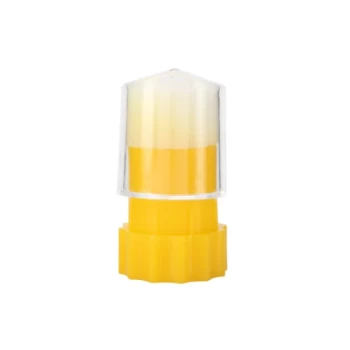
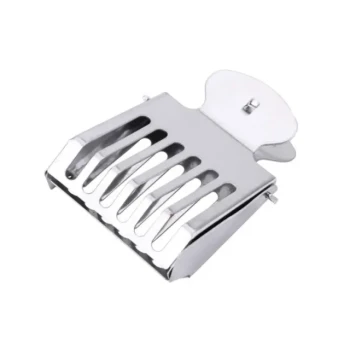
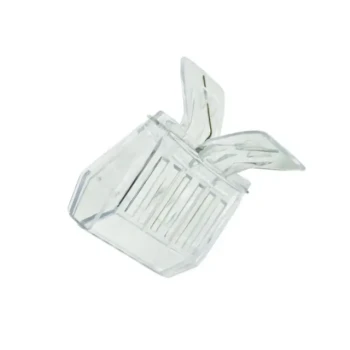
To ensure the mark is round and centered, the queen must be still. Using a push-in cage or a "piston" plunger device with foam is recommended to hold her safely without crushing her.
Paint Consistency
Use a non-toxic, water-based paint pen or enamel. Always test the pen on a separate surface first to ensure the flow is controlled and not gloopy.
Drying Time
Once the mark is applied, hold the queen (or keep her caged) for 30 to 60 seconds. Releasing her before the paint is dry can cause the mark to smear onto her wings or other bees.
Making the Right Choice for Your Goal
- If your primary focus is safety: Use a plunger or push-in cage to immobilize the queen, ensuring the dot is placed perfectly on the thorax without risk of her moving.
- If your primary focus is longevity: Ensure the thorax is dry before applying, and allow the paint to cure for a full minute so the mark remains distinct for the queen's lifespan.
A successful mark is not just about visibility; it is about applying a clean identifier without compromising the queen's biology.
Summary Table:
| Aspect | Requirement | Critical Caution |
|---|---|---|
| Target Location | Top center of the thorax | Avoid head, abdomen, and wings |
| Exact Spot | The "bald" area between wings | Do not mat the body hair |
| Mark Size | 2-3 mm solid dot | Avoid drips or large smears |
| Paint Type | Non-toxic, water-based or enamel | Test flow before application |
| Drying Time | 30 - 60 seconds | Prevent smearing or worker rejection |
Elevate Your Apiary Management with HONESTBEE
Successful beekeeping starts with precision and the right tools. At HONESTBEE, we specialize in supporting commercial apiaries and distributors with a comprehensive range of high-quality beekeeping equipment. From professional-grade queen marking kits and specialized hardware to honey-filling machinery and essential consumables, our wholesale offerings are designed to enhance your operational efficiency and colony health.
Ready to scale your beekeeping business? Contact us today to explore our full spectrum of tools and discover how our industry expertise can drive your success!
Related Products
- Plastic Long Marker Device for Catching and Marking Bees Queen Bee Marking Tube and Cage
- Queen Bee Marking Tube Cage Bottle Catcher Holder with Clear Plastic Plunger Marker
- Queen Bee Marking Pen UNI Medium Point for Queen and Bee Marking
- One Hand Yellow Queen Marking Catcher Tube Cage Beekeeper Tool Accessory for Queen Bee
- Queen Bee Marking Pen POSCA Queen Marking Pens for Beekeeping Bee Markers
People Also Ask
- What are the primary objectives for marking a queen bee? Master Hive Management and Data Tracking
- Why is the physical marking of a queen bee important? Ensure Precise Colony Replacement Cycle Tracking
- How do you capture and immobilize a bee for marking? Master Safe Queen Handling for Your Apiary
- What are the different methods for applying a mark to a queen bee? Master Safe and Effective Queen Marking Techniques
- What equipment is necessary for a beekeeper to mark a queen bee? Essential Tools for Safe Queen Identification