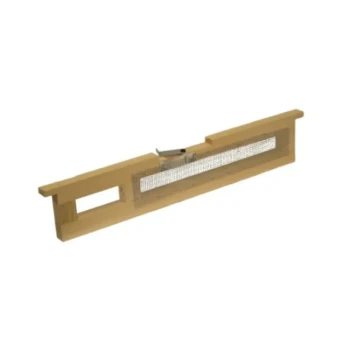
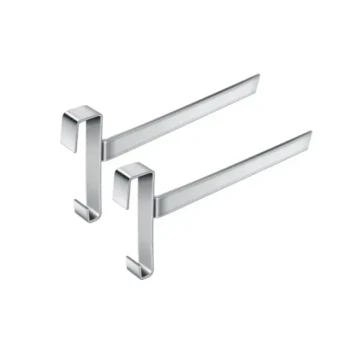
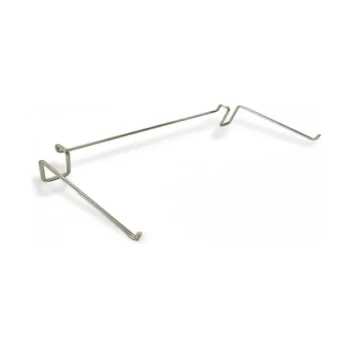
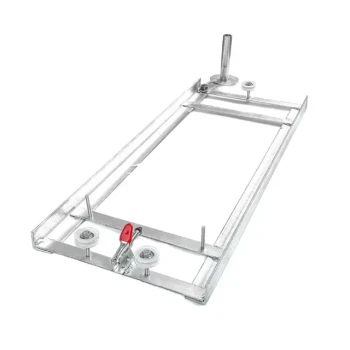
Queen rearing frames and their supporting bars function as the structural backbone of a nursing colony operation. These components are designed to hold dozens of queen cell cups in organized rows, strategically positioning larvae in the precise hive zones where nurse bee density is highest. This arrangement ensures that every developing queen receives the necessary royal jelly for proper development while allowing beekeepers to perform rapid, efficient inspections.
By vertically suspending larvae in the center of the colony, these frames optimize the distribution of biological resources, converting high nurse bee density into consistent feeding and stable environmental conditions for mass queen production.
Optimizing Biological Resources
Strategic Larval Positioning
The primary role of the queen rearing frame is concentration. By arranging queen cell cups in rows along the supporting bars, the frame aggregates a large number of larvae into a compact area.
This placement is not random; it targets the areas of the nursing colony with the absolute highest bee density. This ensures that the developing queens are constantly surrounded by the workforce required to sustain them.
Ensuring Royal Jelly Saturation
The dense arrangement of cups on the bars directly influences nutrition. Because the larvae are positioned in high-traffic zones, they attract immediate attention from nurse bees.
This accessibility guarantees that every queen cell receives sufficient royal jelly feeding. Without this centralized structure, larvae might be spread too thin, leading to inconsistent feeding and lower-quality queens.
Stabilizing the Microclimate
Beyond nutrition, the frame provides a stable physical environment. The wooden structure allows the cells to be suspended vertically in the center of the hive.
This central positioning ensures the uniform distribution of temperature and humidity. By keeping larvae in this stable zone, the frame facilitates a safe transition from the larval to the pupal stage, protecting them from environmental fluctuations.
Enhancing Workflow and Colony Management
Streamlining Colony Inspections
For the beekeeper, the supporting bars offer a massive efficiency advantage. Because the cells are organized in linear rows, the status of dozens of potential queens can be assessed at a glance.
This allows for rapid inspections without the need to disturb the entire hive structure. You can verify acceptance rates and development progress quickly, minimizing stress on the colony.
Facilitating Natural Maintenance
The structure of the frame mimics a natural comb layout enough to trigger beneficial worker bee behaviors. The design facilitates essential tasks such as cleaning, waxing, and the secretion of resources.
Standardized frames help optimize the spatial distribution of the brood. This scientific layout reduces the internal "regulation pressure," allowing adult bees to nurse more efficiently rather than wasting energy managing a chaotic hive structure.
Understanding the Trade-offs
Managing Resource Competition
While the frame allows you to stack dozens of cups, there is a biological limit to how many larvae a colony can support. This is often referred to as the nursing regulation coefficient.
Standardized components help reduce competition, but overloading the bars can still strain the colony's resources. If the density of larvae exceeds the colony's capacity to produce royal jelly, the quality of the resulting queens will suffer, regardless of how well the frame is organized.
Making the Right Choice for Your Goal
To maximize the effectiveness of your queen rearing frames, align your usage with your specific objectives:
- If your primary focus is Maximum Quantity: Fully utilize the rows on the supporting bars to concentrate larvae, but ensure your nurse bee population is dense enough to saturate that specific zone with royal jelly.
- If your primary focus is Environmental Stability: Prioritize the vertical suspension of the frame in the absolute center of the brood nest to guarantee uniform temperature and humidity for pupation.
Ultimately, the queen rearing frame is a tool for focusing the colony’s energy, transforming chaotic biological potential into a streamlined production line.
Summary Table:
| Feature | Role in Nursing Colony | Impact on Queen Quality |
|---|---|---|
| Strategic Positioning | Concentrates larvae in high-density nurse bee zones | Ensures 100% access to royal jelly feeding |
| Vertical Suspension | Maintains frame in the hive's central thermal core | Provides uniform temperature and humidity |
| Linear Bar Design | Organizes cells into accessible, standardized rows | Enables rapid inspection and high acceptance rates |
| Spatial Optimization | Reduces internal regulation pressure on worker bees | Maximizes the nursing capacity of the colony |
Scale Your Apiary with HONESTBEE Professional Equipment
At HONESTBEE, we understand that commercial success in queen rearing requires precision and efficiency. We specialize in supporting commercial apiaries and distributors with a comprehensive wholesale range of high-performance beekeeping tools and machinery.
Whether you need precision-engineered queen rearing frames, honey-filling machines, or specialized hive-making hardware, our portfolio is designed to streamline your operations and maximize your yields. Partner with us to access professional-grade consumables and honey-themed cultural merchandise tailored for the global market.
Ready to upgrade your beekeeping infrastructure? Contact HONESTBEE Today to discuss our wholesale offerings and how we can support your business growth.
References
- Miriam Bixby, M. Marta Guarna. Honey Bee Queen Production: Canadian Costing Case Study and Profitability Analysis. DOI: 10.1093/jee/toaa102
This article is also based on technical information from HonestBee Knowledge Base .
Related Products
- JZBZ Langstroth Queen Rearing Frame for Beekeeping
- Premium Nicot Style Cell Bar Holder and Queen Cell Cup Holder System
- Professional Wooden Requeening Frame for Beekeeping
- No Grafting Queen Rearing Kit: System for Royal Jelly Production and Queen Rearing
- Premium Nicot Style Queen Rearing Kit with Hair Roller Bee Cages
People Also Ask
- Why use finishing colonies for queen cell capping? Secrets to Superior Queen Quality and Performance
- How do queen rearing frames and grafting needles function together? Master the Doolittle Method for High-Quality Queens
- What is the purpose of queen rearing frames? Master Controlled Queen Production for Your Apiary
- What are the functions of queen rearing frames and artificial queen cells? Master Bee Genetic Improvement
- What roles do professional queen rearing frames and artificial queen cells play? Scaling Your Queen Bee Production