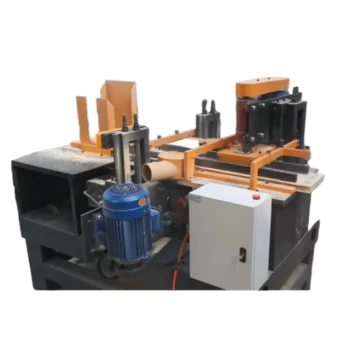
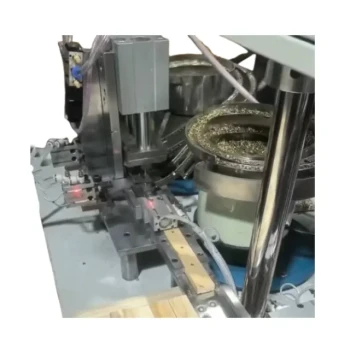
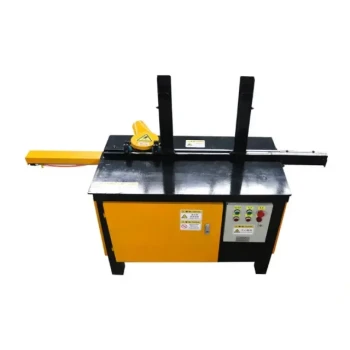
Standardized beehive manufacturing machines serve as the critical infrastructure foundation for high-efficiency commercial beekeeping. By utilizing high-precision woodworking or molding technology, these machines create colony management spaces with absolute consistency. This structural precision allows beekeepers to strictly control environmental variables, enabling them to align colony growth cycles with major floral blooms to maximize the output of honey and beeswax.
The core value of this machinery extends beyond simple manufacturing; it establishes a predictable physical standard that makes large-scale mechanization, biological optimization, and intensive colony management possible.
Maximizing Production through Biological Alignment
Synchronizing Population with Nectar Flows
The primary role of standardized machinery is to ensure the precision of the colony management space. When the physical environment is consistent, beekeepers can predict how a colony will expand within the hive.
This predictability allows for precise human intervention, ensuring the adult bee population peaks exactly when major flora begin to bloom. By aligning the biological cycle of the bees with local botany, operations achieve maximum output efficiency for bee products.
Preserving the "Bee Space"
Standardized machines strictly adhere to the "bee space" principle (typically associated with Langstroth designs). This precision ensures that internal frames remain removable without damaging the honeycomb structure.
By maintaining exact dimensions, these hives allow for frequent inspections and management without triggering the bees' instinct to build burr comb, which would otherwise glue components together and impede management.
Enabling Scalability and Mechanization
Ensuring Component Interchangeability
In a commercial operation, equipment must be universal. Industrial-grade manufacturing guarantees that a frame, super, or lid from one hive fits perfectly onto any other hive in the apiary.
This interchangeability is a physical prerequisite for large-scale beekeeping, allowing for the rapid swapping of components during splits, harvesting, or maintenance without customization or fitting adjustments.
Facilitating Automated Operations
Uniform hive structures provide a reliable foundation for downstream automation. Automated honey harvesting systems and maintenance equipment rely on hives having exact, predictable dimensions.
Machine-made hives accelerate assembly speed and ensure the durability required to withstand mechanical handling, significantly reducing labor costs and increasing operational speed.
Enhancing Colony Health and Stability
Optimizing the Microclimate
High-precision processing guarantees superior sealing integrity and structural consistency. This reduces drafts and minimizes heat loss, creating a stable internal microclimate.
This protection is critical for overwintering success and breeding efficiency, as the colony expends less energy on temperature regulation and more on brood rearing and honey production.
Improving Biosecurity
Standardized manufacturing supports compliance with modern biosecurity standards. Smooth, precision-cut components leave fewer gaps for pests to enter and fewer rough surfaces where pathogens can linger.
By reducing the risk of pest infestation and disease, these hives support a higher survival rate and long-term revenue potential for the enterprise.
Understanding the Trade-offs
Initial Capital Investment
Implementing industrial-grade manufacturing machinery requires significant upfront capital. For smaller operations, the cost of high-precision woodworking or composite processing equipment may outweigh the benefits of in-house production compared to purchasing pre-made supplies.
Maintenance and Technical Expertise
Operating high-precision machinery shifts the skill requirement from traditional carpentry to industrial machine maintenance. Operations must ensure they have the technical capability to maintain calibration, as even slight deviations in cutting can eliminate the benefits of interchangeability and "bee space."
Making the Right Choice for Your Goals
To determine how to integrate standardized manufacturing into your operation, assess your specific production targets:
- If your primary focus is maximizing yield: Prioritize machinery that ensures absolute internal dimensional accuracy to perfectly align colony peak population with floral blooms.
- If your primary focus is rapid expansion: Focus on high-throughput systems that guarantee component interchangeability, allowing for fast, modular scaling of apiary sites.
- If your primary focus is colony survival: Select equipment capable of working with superior insulation materials or composite designs to ensure maximum sealing integrity and climate control.
Standardization is not just about building boxes; it is about eliminating variables to transform beekeeping from a craft into a predictable, scalable science.
Summary Table:
| Key Feature | Benefit to Commercial Operations | Impact on ROI |
|---|---|---|
| Dimensional Precision | Maintains 'Bee Space' & prevents burr comb | Reduces labor & inspection time |
| Interchangeability | Universal fit for frames, supers, and lids | Enables rapid large-scale scaling |
| Structural Sealing | Optimizes microclimate & thermal retention | Increases overwintering success rates |
| Automated Compatibility | Foundation for mechanical harvesting systems | Lowers long-term operational costs |
Transform Your Beekeeping Operation with HONESTBEE
At HONESTBEE, we specialize in empowering commercial apiaries and global distributors with the industrial-grade tools necessary for modern apiculture. From high-precision hive-making machinery to automated honey-filling systems, our comprehensive wholesale portfolio is designed to eliminate variables and maximize your yield.
Whether you are looking to upgrade your manufacturing capabilities with specialized hardware or source high-quality industry consumables, we provide the technical expertise and equipment durability required for peak performance. Ready to standardize your success?
Contact HONESTBEE Today to explore our full spectrum of beekeeping machinery and wholesale solutions.
References
- Olatz Etxegarai-Legarreta, Valeriano Sanchez‐Famoso. The Role of Beekeeping in the Generation of Goods and Services: The Interrelation between Environmental, Socioeconomic, and Sociocultural Utilities. DOI: 10.3390/agriculture12040551
This article is also based on technical information from HonestBee Knowledge Base .
Related Products
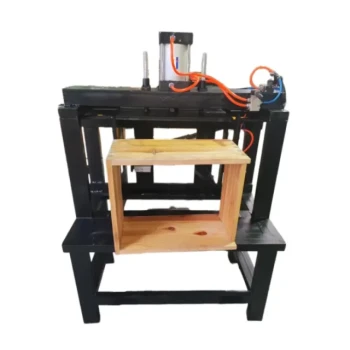
- High-Efficiency Pneumatic Bee Hive Making Machine for Rapid Box Assembly
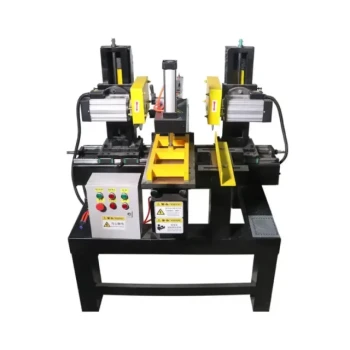
- Beehive Machine Double End Saw for Precision Hive Component Manufacturing
- Mini Desktop Bee Hive Frame Forming Making Machine
- HONESTBEE Top Bar & Bottom Bar Forming Machine | Bee Frame Machine
- Beehive Handle and Frame Rest Cutting Machine: Your Specialized Hive Machine
People Also Ask
- How does the introduction of professional beehive-making machinery benefit sustainable beekeeping? Scale Your Apiary
- Why is specialized beehive-making machinery critical for low-defense breeding? Enhance Selection with Precision Tools
- How does the introduction of specialized beehive making machinery contribute to increasing the scale of regional beekeeping industries?
- What is the importance of specialized beehive making machinery in a circular bio-economy? Build Local Sustainability
- Why is specialized beehive-making machinery essential? Scale Your Apiary with Precision Industrial Standards