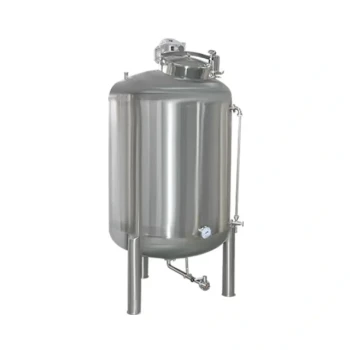
A honey processing warehouse acts as the strategic link between raw agricultural production and commercial retail success. It serves as a critical node responsible for the storage, standardized processing, and labeling of bee products, effectively bridging the gap between the fluctuating output of small-scale beekeepers and the strict, stable demands of the retail market.
Core Takeaway: This facility acts as a "standardization engine," converting heterogeneous (mixed quality) honey batches from various sources into uniform, safe, and shelf-stable products that meet the rigorous entry standards of supermarkets and international supply chains.
Bridging Supply and Demand
Transforming Raw Inputs
The primary challenge in the honey supply chain is variability. Raw honey arrives in heterogeneous batches with different moisture levels, purities, and consistencies.
The processing warehouse unifies these inputs. It creates a uniform product that ensures every jar on a supermarket shelf tastes and looks consistent, regardless of which specific hive it came from.
Stabilizing Market Access
Retail chains require consistency and reliability that individual beekeepers often cannot provide alone. The warehouse creates a buffer between supply and demand.
By consolidating fluctuating agricultural output, the facility ensures a stable supply for large-scale retail markets, allowing producers to meet volume requirements without sacrificing quality.
Ensuring Quality and Safety
Critical Filtration and Dehydration
Standardization requires precise physical processing. The facility utilizes specialized machinery for filtration and impurity removal, eliminating physical debris without stripping the honey of its value.
Equally important is moisture control. Equipment stabilizes water content to prevent fermentation and deterioration, a necessary step for ensuring the product is shelf-stable for formal distribution.
Preserving Nutritional Integrity
Modern processing is not just about cleaning; it is about preservation. Advanced facilities use precise temperature control during processing.
This ensures that while impurities are removed, the active nutritional components and essential properties of the honey remain intact, satisfying the requirements of high-end markets.
Automation and Hygiene Standards
Minimizing Contamination Risks
Manual handling is a significant risk factor in food production. Processing warehouses utilize automatic honey filling equipment to create a sterile packaging environment.
This automation significantly reduces the risk of secondary contamination from human contact. It ensures the final product remains additive-free and pure throughout the packaging process.
Meeting Certification Requirements
To enter regulated markets, honey must have a traceable history. Industrial machinery supports traceability and hygiene safety, allowing producers to adhere to organic policies.
This level of rigor is a prerequisite for obtaining quality certifications. Without the controlled environment of a processing warehouse, entering the export market or high-end retail sectors is virtually impossible.
Understanding the Trade-offs
Operational Complexity vs. Output
While a processing warehouse enables scale, it introduces significant operational complexity. High-precision machinery requires strict maintenance to ensure metering accuracy and temperature stability.
The Cost of Standardization
Achieving a "retail-ready" product means investing in specialized packaging materials. These containers protect against air and moisture to prevent spoilage, but they also represent a higher cost base compared to raw sales.
Producers must balance the cost of industrial-grade filtration and filling equipment against the increased revenue potential of entering high-end commercial markets.
Making the Right Choice for Your Supply Chain
Establishing or utilizing a honey processing warehouse transforms a local agricultural product into a global commodity.
- If your primary focus is Market Expansion: Prioritize standardization capabilities to turn heterogeneous batches into uniform products that meet supermarket entry codes.
- If your primary focus is Product Safety: Invest in automated filling systems to minimize secondary contamination and ensure compliance with international hygiene standards.
- If your primary focus is Brand Value: Focus on packaging quality that seals out moisture and odors, acting as the physical carrier for your brand in retail channels.
By standardizing quality and securing safety, the processing warehouse converts raw potential into commercial value.
Summary Table:
| Core Function | Strategic Impact | Key Equipment Involved |
|---|---|---|
| Standardization | Converts mixed batches into uniform products | Filtration & Dehydration Machinery |
| Quality Control | Ensures moisture stability and purity | Temperature-controlled Processing Tanks |
| Safety & Hygiene | Minimizes secondary contamination | Automatic Honey Filling Equipment |
| Market Access | Meets retail volume and certification needs | Industrial Packaging & Labeling Systems |
| Traceability | Enables organic and export compliance | Automated Monitoring & Traceability Tools |
Scale Your Honey Production with HONESTBEE
Transitioning from raw harvesting to global retail requires more than just honey—it requires the right infrastructure. HONESTBEE empowers commercial apiaries and distributors with a comprehensive suite of professional beekeeping solutions.
From high-precision honey-filling machines and industrial hive-making hardware to a full spectrum of industry consumables and honey-themed cultural merchandise, we provide the tools you need to achieve market-ready standardization. Whether you are building a new processing warehouse or upgrading an existing facility, our wholesale offerings are designed to maximize your efficiency and brand value.
Ready to elevate your supply chain? Contact our experts today to discover how HONESTBEE can transform your raw output into a premium commercial commodity.
References
- Alexsandra Batista Cândido Siqueira, Eulita de Souza Morais. Beekeeping developed by family farming in Rio Grande do Norte: an analysis of the interaction with markets. DOI: 10.1590/1806-9479.2025.285791
This article is also based on technical information from HonestBee Knowledge Base .
Related Products
- Heavy Duty Stainless Steel Honey Processing Machine Decrystallizing Tank
- Double Wall Honey Heating Stirring Homogenizer Mixing Machine with Various Capacity
- Electric Double Wall Honey Filtering Machine Purifier Equipment for Honey Processing Plant
- Fully Automatic Honey Filling Packaging Machine for Processing Line
- Honey Concentrating and Filtering Dehumidifier Machine 2T Capacity for Honey
People Also Ask
- What are the features of the processing tanks offered? Engineered for Purity and Efficiency
- What types of stainless steel processing tanks are used for honey? Essential Equipment for Quality Honey Production
- What design options are available for honey processing tanks? Optimize Efficiency with Custom Geometries
- What types of stainless steel are used for honey processing? Ensure Food Safety with 304 & 316 Grade Equipment
- Why is industrial-grade stainless steel processing equipment required for honey harvesting? Ensure Purity & Compliance