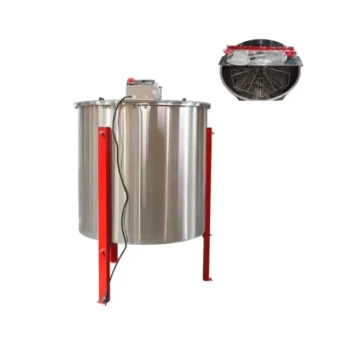
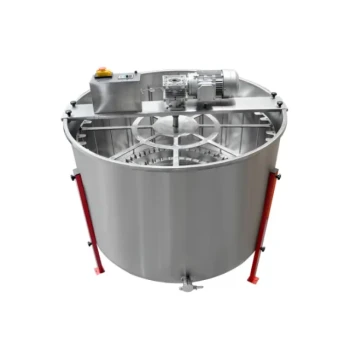
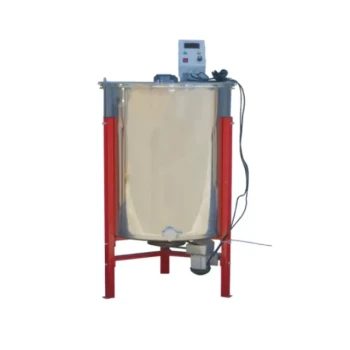
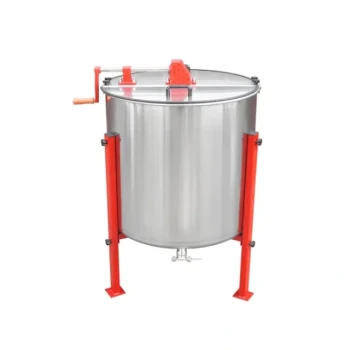
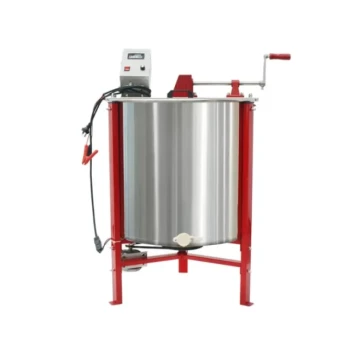
The industrial honey extractor is the central engine of modern honey harvesting. It utilizes centrifugal force to spin mature honey out of honeycomb frames, effectively separating the liquid from the wax structure. Unlike traditional manual methods that crush the combs, this mechanical process extracts the honey while preserving the physical integrity of the frame, allowing for immediate reuse.
The Core Value The industrial extractor does more than just harvest; it acts as a conservation tool for the hive. By removing honey without destroying the comb, it allows beekeepers to return intact frames to the colony, significantly reducing the energy bees must consume to rebuild wax and directly increasing future honey yields.
The Mechanics of Preservation and Purity
Centrifugal Separation
The fundamental mechanism of the extractor is high-speed rotation. Frames are loaded into the machine, which spins to generate centrifugal force. This force flings the honey out of the wax cells, separating it cleanly from the structure.
Replacing Destructive Methods
This technology modernizes the harvesting process by rendering traditional methods obsolete. Older techniques, such as squeezing and filtering, required crushing the combs to release the honey. The extractor eliminates this destruction, transforming a labor-intensive chore into an efficient mechanical cycle.
Enhancing Product Clarity
Because the combs are not crushed, the risk of introducing wax particles and debris into the honey is minimized. This results in superior clarity and purity in the final product, reducing the need for aggressive downstream filtration that might strip pollen or nutrients.
Impact on Yield and Efficiency
The Cycle of Reuse
The most significant impact of the industrial extractor occurs after the honey is collected. Because the honeycomb structure remains undamaged, the empty frames can be recycled immediately back into the hive.
Reducing Biological Energy Costs
Bees consume a significant amount of energy and resources to secrete wax and build combs. When they are given recycled, intact combs, they are spared this effort. The energy they save is redirected toward gathering nectar, which leads to increased annual honey production.
Shortening the Harvest Cycle
By automating the separation process and preserving the infrastructure of the hive, the extractor shortens the overall harvesting cycle. This enables continuous, large-scale production that manual methods simply cannot support.
Critical Standards and Quality Control
Material Safety
To function correctly in a commercial setting, these extractors must utilize food-grade materials, typically stainless steel. This prevents chemical contamination and ensures the equipment meets stringent market safety standards.
Preserving Sensory Profiles
Industrial extraction is designed to be non-invasive chemically. By using mechanical force rather than heat or extensive processing, the system maximizes the preservation of the honey’s nutritional components and specific floral aromas.
Making the Right Choice for Your Goal
If your primary focus is Maximizing Yield:
- Prioritize centrifugal extractors to ensure honeycombs remain intact, allowing bees to focus energy on nectar production rather than wax rebuilding.
If your primary focus is Product Quality:
- Utilize stainless steel, food-grade equipment to prevent contamination and preserve the honey's natural floral aroma and nutritional value.
The industrial honey extractor is not just a harvesting tool; it is a yield-multiplier that bridges the gap between biological efficiency and industrial scale.
Summary Table:
| Feature | Function in Post-Processing | Key Benefit for Beekeepers |
|---|---|---|
| Centrifugal Force | Spins honey out without crushing wax cells | Preserves frames for immediate reuse |
| Mechanical Separation | Replaces manual squeezing and filtering | Minimizes wax debris and improves clarity |
| Stainless Steel Build | Ensures food-grade contact surfaces | Prevents contamination and meets safety standards |
| Non-Invasive Extraction | Avoids excessive heat or chemicals | Maintains natural floral aromas and nutrients |
| Cycle Efficiency | Automates the harvesting workflow | Reduces labor time and increases production scale |
Elevate Your Honey Production with HONESTBEE
As a professional commercial apiary or distributor, your success depends on efficiency and equipment reliability. HONESTBEE specializes in empowering large-scale operations with a comprehensive wholesale range of beekeeping tools, from high-capacity industrial honey extractors to specialized hive-making and honey-filling machinery.
By choosing our food-grade, high-performance equipment, you reduce biological energy costs for your hives and maximize the clarity and value of your honey. Let us help you bridge the gap between biological efficiency and industrial scale.
Contact us today to explore our wholesale solutions and see how our hardware and industry consumables can transform your yield.
References
- Alemayehu Abebe, Alebachew Habtamu. Analysis of honey production systems in three agro-ecologies of Benishangul-Gumuz, Western Ethiopia. DOI: 10.5897/jaerd2014.0705
This article is also based on technical information from HonestBee Knowledge Base .
Related Products
- HONESTBEE 72 Frame Industrial Electric Honey Extractor for Beekeeping
- Commercial Electric 12 Frame Honey Extractor Spinner Motorized Honey Extractor
- 32 Frame Commercial Electric Honey Extractor for Beekeeping and Honey Production
- Commercial 48-Frame Stainless Steel Honey Extractor
- 8-Frame Electric Self-Reversing Honey Extractor Spinner for Commercial Honey Extraction Equipment
People Also Ask
- What is the importance of balancing honeycomb frames within a honey extractor? Ensure Stability and Protect Machinery
- How is honey separated from the frames after they are uncapped? Efficient Extraction Methods for High Yields
- What are the main benefits of using a honey extractor? Maximize Yields and Protect Your Honeycomb
- What are the recommended methods for removing honey from the honeycomb? Top Extraction Techniques for Maximum Efficiency
- How do manual honey extractors compare to electric honey extractors? Choosing the Right Tool for Your Apiary Growth