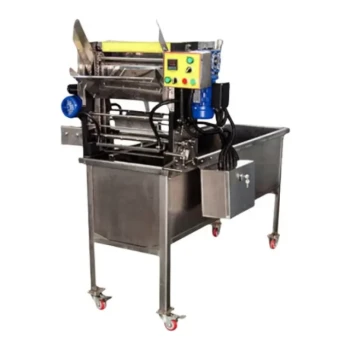
Automated honey-filling machinery serves as the primary line of defense against microbial contamination by eliminating direct human contact and establishing a controlled, closed processing environment. By mechanizing the transfer of honey from bulk storage to retail packaging, this equipment drastically reduces the introduction of dangerous pathogens such as Clostridium botulinum spores, molds, and yeasts, while simultaneously preserving the product's natural chemical stability.
Automated filling does not just package the product; it acts as a preservation shield. By ensuring an airtight seal and a sterile environment, automation maintains honey’s high osmotic pressure—its natural defense against bacteria—thereby preventing fermentation and spoilage.
Minimizing External Exposure
Eliminating Manual Contact
The most significant vector for contamination in food processing is the human element. Automated machinery removes the need for manual handling, ensuring that skin flora and other contaminants carried by operators do not come into contact with the honey.
Creating a Closed-Loop Environment
High-standard automated fillers operate as closed systems. This isolates the honey from the surrounding factory air, significantly lowering the risk of airborne particulates, dust, or wild fungal spores settling into the product during the filling stage.
Targeting Specific Microbial Threats
Controlling Yeast and Mold
Honey is naturally resistant to many bacteria, but it is vulnerable to yeasts and molds that thrive in sugar-rich environments. Automated systems reduce the "open time" of containers, minimizing the window of opportunity for these organisms to enter and colonize the surface.
Preventing Clostridium Botulinum
The primary reference highlights the specific risk of Clostridium botulinum spores. By using sanitary, automated fluid paths that are easily cleaned and sterilized, manufacturers can effectively mitigate the risk of these dangerous spores contaminating the final consumer product.
Preserving Honey's Natural Defenses
Maintaining High Osmotic Pressure
Honey effectively kills bacteria through high osmotic pressure, which draws water out of microbial cells. Automated filling ensures the honey is processed quickly without degradation, preserving this critical chemical state.
Preventing Moisture Absorption
Honey is hygroscopic, meaning it naturally absorbs moisture from the air. If honey absorbs too much water, its osmotic pressure drops, and fermentation begins. Automated machinery fills and caps containers rapidly, locking out humidity and ensuring the water content remains low enough to inhibit bacterial growth.
Understanding the Vulnerability: The Seal
Why Filling is Only Half the Battle
Even the most sterile filling process is rendered useless if the container is not sealed immediately and effectively. A common pitfall is investing in filling precision while neglecting the capping and sealing mechanism.
The Consequence of Poor Sealing
If the seal is imperfect, air and moisture will eventually penetrate the container. This reintroduces the risk of fermentation and spoilage during storage, regardless of how clean the filling process was. High-quality automation integrates filling and sealing into a single, seamless workflow to prevent this gap in protection.
Making the Right Choice for Your Goal
To maximize the protective benefits of automation, consider your specific production priorities:
- If your primary focus is Food Safety: Prioritize machinery with a "clean-in-place" (CIP) capability and fully enclosed filling circuits to negate the risk of Clostridium botulinum and environmental pathogens.
- If your primary focus is Shelf Stability: Select equipment that integrates filling with immediate, hermetic sealing technologies to prevent moisture absorption and subsequent fermentation.
Automation transforms honey from a raw agricultural product into a secure consumer good by systematically removing the variables that lead to contamination.
Summary Table:
| Feature | Protection Mechanism | Microbial Benefit |
|---|---|---|
| Closed-Loop System | Isolates honey from factory air | Prevents airborne yeast, mold, and dust |
| Manual Contact Removal | Eliminates human handling | Reduces risk of skin flora and pathogens |
| Rapid Capping | Limits exposure to humidity | Prevents fermentation by maintaining low moisture |
| Sanitary Fluid Paths | Easy sterilization/CIP | Mitigates Clostridium botulinum spore risks |
| Hermetic Sealing | Creates an airtight barrier | Preserves osmotic pressure and long-term stability |
Secure Your Honey Quality with HONESTBEE Automation
At HONESTBEE, we understand that for commercial apiaries and honey distributors, food safety is your top priority. Our comprehensive wholesale offering includes precision honey-filling machines and integrated capping systems designed to eliminate contamination risks and maximize shelf stability.
From specialized hardware to essential consumables and honey-themed cultural merchandise, we provide everything needed to scale your operations safely and efficiently. Don't let manual errors compromise your product—Contact Us Today to discover how our machinery can protect your brand!
References
- TOXIC RISKS ASSOCIATED WITH APITHERAPY PRODUCTS. DOI: 10.34302/crpjfst/2022.14.1.12
This article is also based on technical information from HonestBee Knowledge Base .
Related Products
- Fully Automatic Honey Filling Packaging Machine for Processing Line
- Automatic Honey Filling and Filtering Machine for Beekeeping Bottle Filling
- Precision Durable Efficient HONESTBEE Rotary Honey Filling Machine
- Precision Automated Packaging Turntable Honey Spoon Filling Sealing Packing Machine
- Semi Automatic Small Honey Bottle Filling Machine Honey Filler
People Also Ask
- Why are fully automatic honey filling and packaging lines essential? Boost Your Honey's Market Value and Quality
- What is a fully-automatic honey filler? Streamline Your Production with High-Precision Automation
- How do automated honey filling and packaging machines affect profitability? Boost Margins with HONESTBEE Technology
- How do automated honey filling and packaging machines contribute to the market value of honey products? Maximize Your ROI
- How do industrial-grade automated honey filling and packaging machines mitigate the risk of physical contamination?