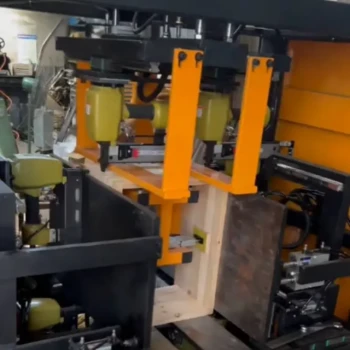
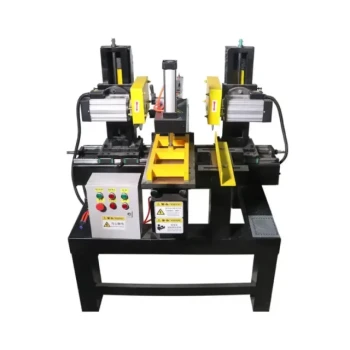
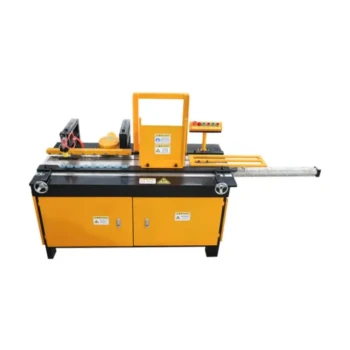
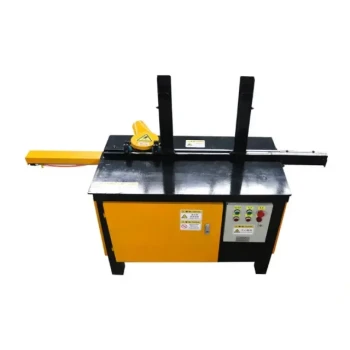
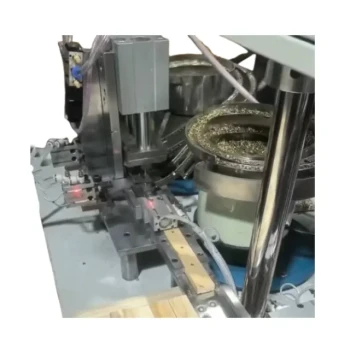
Industrial-grade beehive manufacturing machinery acts as the critical foundation for standardization by utilizing high-precision cutting and molding processes to ensure dimensional uniformity across all hive components. This mechanical precision is essential for maintaining the scientific "Bee Space" to prevent irregular comb construction, while simultaneously creating the interchangeable hardware necessary for streamlined inspections, colony transport, and mechanized honey harvesting.
By eliminating manual inconsistencies, industrial machinery transforms the beehive from a variable craft product into a standardized modular unit. This shift enables commercial apiaries to scale operations, automate extraction, and manage thousands of colonies with predictable efficiency.
The Biological and Mechanical Necessity of Precision
Enforcing the Scientific "Bee Space"
The primary function of industrial manufacturing in beekeeping is the strict enforcement of "Bee Space." This refers to the precise gap required between frames and hive walls to allow bee movement without triggering them to build "burr comb" (unwanted wax bridges).
Industrial machinery ensures that frames and hive bodies adhere to these dimensions with high-precision tolerances. Without this uniformity, inspections become labor-intensive as beekeepers must cut through irregular wax structures to manipulate the hive.
Optimizing the Hive Microclimate
Beyond simple dimensions, advanced processing techniques ensure structural integrity and sealing. Precision-made components fit together tightly, providing the colony with an optimal microclimate.
This structural consistency enhances the colony's ability to adapt to environmental changes and seasonal shifts. By stabilizing the internal environment, the machinery indirectly supports higher survival rates and long-term revenue potential.
Driving Operational Scalability
Enabling Modular Interchangeability
For commercial distributors and large-scale apiaries, the ability to swap parts between hives is non-negotiable. Industrial-grade machinery ensures that a frame or box from one hive is mechanically identical to any other in the operation.
This interchangeability allows for efficient colony splitting, merging, and resource balancing. It significantly improves labor productivity, as field workers do not waste time fitting mismatched components together.
Facilitating Mechanized Extraction
Modern honey production relies on automated extraction lines to process high volumes of product. These automated systems require hive components to have uniform dimensions to function correctly.
Standardized manufacturing ensures that all frames fit seamlessly into automated uncappers and extractors. This seamless integration maximizes throughput and minimizes equipment jams or damage during the harvest.
Supporting Rapid Expansion and Recovery
Industrial production methods, such as CNC cutting and automated assembly, significantly lower the unit production cost while improving durability.
This economic efficiency provides the necessary hardware infrastructure for rapid expansion. It allows commercial operations to quickly acquire the equipment needed to replenish colonies after high annual losses or to capitalize on new floral blooms.
Understanding the Trade-offs
Capital Intensity vs. Unit Cost
Implementing industrial-grade manufacturing requires a shift toward higher upfront capital investment in machinery.
However, this is a necessary trade-off for achieving the low unit costs required for mass deployment. The precision of the machinery also extends the lifespan of the equipment, offsetting the initial cost over time through durability.
Standardization vs. Local Customization
Reliance on industrial machinery implies a commitment to rigid standards (such as Langstroth dimensions).
While this limits the ability to customize hives for unique local preferences, it is the only viable path for global scalability. The efficiency gained through standardization outweighs the benefits of bespoke equipment in a commercial context.
Making the Right Choice for Your Goal
To maximize the value of industrial hive manufacturing, align your equipment choices with your specific operational bottlenecks.
- If your primary focus is Labor Efficiency: Prioritize machinery that guarantees high-tolerance adherence to Bee Space, as this drastically reduces the time spent cleaning burr comb during inspections.
- If your primary focus is Rapid Scalability: Select equipment capable of high-volume, automated production to lower unit costs and ensure you can rapidly deploy hardware to match colony growth cycles.
- If your primary focus is Automated Processing: Ensure your manufacturing specifications are calibrated to perfectly match your honey extraction lines to prevent costly downtime during harvest seasons.
Industrial-grade machinery is not just about making boxes; it is about establishing a predictable, interchangeable infrastructure that allows a biological business to operate with industrial precision.
Summary Table:
| Key Role | Impact on Operations | Primary Benefit |
|---|---|---|
| Dimensional Precision | Enforces strict "Bee Space" | Minimizes burr comb and inspection time |
| Interchangeability | Standardized modular components | Streamlines colony management and resource swapping |
| Automation Readiness | Uniform frame and box dimensions | Enables seamless use of automated honey extraction lines |
| Manufacturing Efficiency | Lower unit costs at high volume | Supports rapid expansion and equipment replacement |
Elevate Your Beekeeping Operation to Industrial Standards
Maximize your apiary's efficiency and scalability with HONESTBEE. As a premier provider for commercial apiaries and distributors, we specialize in the full spectrum of beekeeping machinery, hive-making equipment, and honey-filling systems.
Whether you need precision hardware to enforce "Bee Space" or high-volume tools for rapid expansion, our comprehensive wholesale offering ensures your operation runs with predictable, industrial-grade precision. From specialized manufacturing machinery to essential industry consumables, we provide the infrastructure your business needs to thrive.
Ready to standardize and scale? Contact HONESTBEE today to discover how our equipment and cultural merchandise can transform your honey production!
References
- Anuradha Kumari, Laxmikant Laxmikant. Socio-economic profile and training needs of beekeepers in Samastipur district of Bihar. DOI: 10.15740/has/au/11.1/1-6
This article is also based on technical information from HonestBee Knowledge Base .
Related Products
- High-Efficiency Pneumatic Bee Hive Making Machine for Rapid Box Assembly
- HONESTBEE Top Bar & Bottom Bar Forming Machine | Bee Frame Machine
- Automatic High-Speed Bee Hive Box Stapling Machine
- Mini Desktop Bee Hive Frame Forming Making Machine
- Beehive Machine Double End Saw for Precision Hive Component Manufacturing
People Also Ask
- How does the introduction of professional beehive-making machinery benefit sustainable beekeeping? Scale Your Apiary
- Why is specialized beehive-making machinery critical for low-defense breeding? Enhance Selection with Precision Tools
- How does the introduction of specialized beehive making machinery contribute to increasing the scale of regional beekeeping industries?
- What is the importance of specialized beehive making machinery in a circular bio-economy? Build Local Sustainability
- Why is specialized beehive-making machinery essential? Scale Your Apiary with Precision Industrial Standards