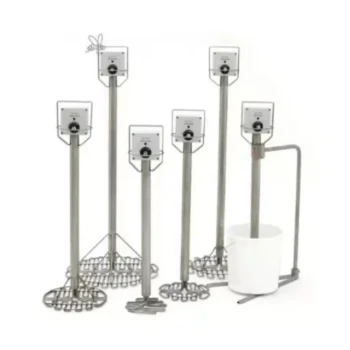
Industrial-grade processing equipment is the technical backbone of organic honey's market viability. It provides the specialized stainless steel filtration, storage, and filling systems necessary to maintain strict hygiene and prevent secondary contamination. Crucially, this machinery supports the physical isolation required to separate organic batches from conventional ones, ensuring the traceability and integrity needed for premium organic certification.
The Core Reality Producing organic honey is only half the battle; preserving its classification during processing is the other. Industrial equipment safeguards the product's value by guaranteeing the separation, purity, and traceability required to access high-end international markets.
Preserving Organic Integrity Through Isolation
Preventing Cross-Contamination
For honey to retain an "organic" label, it must not come into contact with non-organic residues. Industrial-grade stainless steel systems are essential here, as they allow for rigorous cleaning and physical isolation.
This machinery prevents secondary contamination that often occurs with manual handling or shared equipment. By dedicating specific lines or strictly managing batches, producers ensure organic honey never mixes with conventional varieties.
Traceability and Batch Management
High-end markets demand proof of origin. Modern processing equipment allows for precise batch processing based on specific nectar sources.
This capability creates a verifiable production trail. It ensures that the integrity of the honey is documented from the hive to the jar, meeting the stringent audit requirements of global organic certifiers.
Standardization and Sensory Quality
Moisture Control and Stability
Raw honey is susceptible to fermentation if moisture levels are too high. Industrial equipment integrates vacuum dehydration technologies to precisely control water content.
By stabilizing moisture levels, producers prevent spoilage and extend shelf life. This technical intervention transforms a volatile raw ingredient into a stable commercial product suitable for global export.
Enhancing Clarity and Texture
Consumers in premium retail markets expect a product that looks as good as it tastes. Multi-stage filtration systems remove beeswax residues, bee larvae, and physical impurities without stripping essential nutrients.
This improves the honey's sensory transparency and texture. It ensures the product is visually appealing and free of stratification, enhancing its competitiveness on retail shelves.
Understanding the Trade-offs
The "Raw" vs. "Processed" Balance
While industrial processing ensures safety and consistency, there is a risk of over-processing. Aggressive filtration or excessive heating can strip honey of the very enzymes and pollen that make it "organic" and valuable.
Investment vs. Scale
Industrial-grade equipment represents a significant capital expenditure. For smaller producers, the cost of automated filling and dehydration systems may outweigh the premium gained from organic certification unless production volume is sufficiently high.
Operational Efficiency and Sustainability
Reducing Human Contamination
Mechanized extraction and filling significantly reduce human contact with the product. This automation lowers the risk of human-induced contamination, ensuring the honey meets the highest hygiene standards consistently.
Protecting the Hive Resource
Advanced centrifugal extractors separate honey from the comb without destroying the wax structure.
This allows the combs to be reused, reducing the metabolic energy bees must spend on wax production. Instead of building new comb, bees can focus on nectar gathering, increasing overall yield and sustainability.
Securing Your Position in the Premium Market
To leverage processing equipment for maximum competitive advantage, align your technology choices with your specific market targets:
- If your primary focus is Organic Certification: Prioritize equipment that offers distinct batch separation and easy-to-clean stainless steel surfaces to guarantee traceability.
- If your primary focus is Export and Shelf Life: Invest heavily in vacuum dehydration and moisture control systems to prevent fermentation during long shipping and storage periods.
- If your primary focus is Retail Appeal: Focus on multi-stage filtration technology that improves clarity and prevents crystallization without overheating the product.
Ultimately, industrial processing equipment acts not just as a manufacturing tool, but as the guardian of your product's organic status and commercial value.
Summary Table:
| Key Feature | Impact on Organic Honey | Benefit to Commercial Apiaries |
|---|---|---|
| SS304/316 Isolation | Prevents cross-contamination | Ensures compliance with organic certification |
| Vacuum Dehydration | Precise moisture control | Prevents fermentation for longer shelf life |
| Batch Management | Full origin traceability | Meets audit requirements for high-end exports |
| Centrifugal Extraction | Preserves honeycomb structure | Increases yield by allowing comb reuse |
| Multi-stage Filtration | Removes physical impurities | Enhances clarity and retail shelf appeal |
Elevate Your Honey Production with HONESTBEE Professional Solutions
Maintaining organic certification and high-end market competitiveness requires more than just good beekeeping; it demands the right technical infrastructure. HONESTBEE specializes in supporting commercial apiaries and distributors with the complete spectrum of industrial honey processing equipment.
From stainless steel filtration systems and precision honey-filling machines to large-scale hive-making hardware, our wholesale solutions are designed to ensure your product's purity and traceability. Whether you are scaling an organic line or expanding global distribution, we provide the tools, machinery, and essential consumables needed to protect your brand's value.
Ready to optimize your facility? Contact HONESTBEE Today to explore how our specialized machinery can transform your honey production into a high-efficiency commercial operation.
References
- Batllori Sampedro Eduardo Adolfo. The Beekeeping Areas of the State of Yucatán, for the Promotion of their Rational Use and the Transition Towards Organic Honey Production and Botanical Certification. DOI: 10.33425/2770-2928.1029
This article is also based on technical information from HonestBee Knowledge Base .
Related Products
- Electric Double Wall Honey Filtering Machine Purifier Equipment for Honey Processing Plant
- HONESTBEE 72 Frame Industrial Electric Honey Extractor for Beekeeping
- 0.5T Capacity Honey Dehumidifier Dryer with Vacuum Heating and Thickening Filtering Machine
- Heavy Duty Stainless Steel Honey Processing Machine Decrystallizing Tank
- Electric Honey Press Machine for Squeezing Honey Comb Press Equipment
People Also Ask
- What is the process of filtering honey? A Guide to Clean, Pure, and Market-Ready Honey
- What types of equipment are used in honey filtering? Build an Efficient System for Pure, Marketable Honey
- What is the overall importance of using the right equipment in honey filtering? Boost Quality & Marketability
- What role do professional honey harvesting and filtering equipment play in meeting honey market quality standards? Boost ROI
- What are the benefits of drying honey filtering equipment after use? Protect Your Honey Quality & Equipment Investment