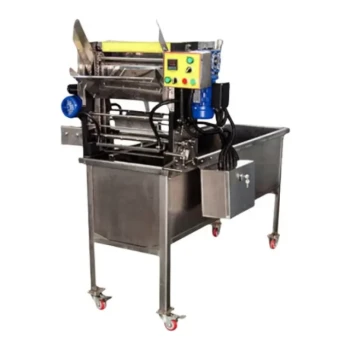
The automatic honey filling machine acts as the definitive hardware solution for scaling Apis cerana production from artisanal beekeeping to industrial commerce. It utilizes high-precision metering systems and automated assembly lines to achieve rapid, hygienic filling. This technology addresses the critical "bottleneck" of post-processing, ensuring the product meets rigorous food safety standards while maintaining the stability and quality necessary for the retail market.
By eliminating the variability and contamination risks associated with manual labor, automatic filling machines provide the standardization and hygiene required to legitimize Apis cerana honey as a competitive, branded commercial product.
Advancing Hygiene and Standardization
The transition from a raw agricultural product to a shelf-ready commodity relies heavily on consistency. Automatic filling machines solve two primary challenges in this phase.
Eliminating Secondary Contamination
Manual handling is the single largest vector for contamination in honey processing. Human contact introduces bacteria and foreign particles.
Automatic machines operate within a closed-loop system, removing human hands from the filling process. This ensures the honey remains sterile from the storage tank to the sealed bottle, meeting strict food safety regulations.
Achieving High-Precision Metering
Commercial retail demands uniformity; every jar must contain exactly the stated volume or weight.
These machines utilize advanced metering sensors to control volume with high precision. This guarantees that physicochemical indicators remain consistent across different batches, preventing consumer complaints and regulatory fines regarding underweight products.
Securing Brand Integrity and Traceability
For premium products derived from Apis cerana, brand value is tied directly to authenticity and purity. The filling machine plays a subtle but vital role here.
Protecting the Pollen Fingerprint
High-quality honey is defined by its origin. Automated equipment minimizes the exposure of honey to the open environment.
By creating a closed cycle, the machinery reduces the risk of external pollen contamination. This ensures the "pollen fingerprint" of the bottled product matches the original apiary samples, forming the hardware foundation for a reliable traceability system.
Preventing Adulteration
Manual filling processes leave room for unauthorized modifications, such as the introduction of cane sugar or syrups.
An automated, closed industrial line significantly raises the difficulty of tampering. This structural integrity assures retailers and consumers that the product has not been adulterated between the hive and the final seal.
Operational Efficiency and Scalability
Beyond quality control, the machine allows apiaries to meet the throughput demands of the modern market.
Accelerating Market Turnover
Manual filling is slow and labor-intensive, creating a backlog during harvest seasons.
Industrial-grade machines offer rapid filling speeds that manual labor cannot match. This accelerates the turnover rate, moving honey from the extraction room to retail shelves faster, which is critical for cash flow in commercial operations.
Quantifiable Production Management
To scale a business, you must be able to measure it.
These machines provide quantifiable output data, allowing managers to monitor daily throughput and set realistic targets. This data-driven approach is essential for optimizing supply chain logistics and reducing raw material waste.
Understanding the Trade-offs
While essential for commercialization, automatic filling technology introduces specific challenges that must be managed.
Thermal Sensitivity Risks
Some machines use temperature-controlled heating to maintain honey fluidity for faster filling.
If not monitored precisely, this heat can degrade the natural enzymes and flavor profiles unique to Apis cerana honey. Overheating turns a premium raw product into a lower-grade sweetener.
Maintenance and Flexibility Complexity
Automated lines require skilled technicians for calibration and sanitation.
Unlike manual labor, a machine cannot easily switch between vastly different bottle shapes or sizes without downtime for re-tooling. This can limit a brand's ability to offer diverse packaging options quickly.
Making the Right Choice for Your Goal
The specific role this machine plays depends on your immediate commercial objective.
- If your primary focus is Regulatory Compliance: Prioritize the machine's closed-loop hygiene capabilities to eliminate secondary contamination and meet food safety standards.
- If your primary focus is Brand Premiumization: Leverage the machine's precision to guarantee consistent weight and its closed system to market the purity and traceability of your Apis cerana honey.
- If your primary focus is Volume Scaling: Focus on the machine's throughput data and assembly line integration to maximize daily output and reduce unit costs.
Ultimately, the automatic honey filling machine is not just a packaging tool; it is the gatekeeper that verifies and preserves the value of your harvest before it reaches the consumer.
Summary Table:
| Feature | Role in Commercialization | Primary Benefit |
|---|---|---|
| Hygienic Closed-Loop | Eliminates manual handling & bacteria | Meets food safety & regulatory standards |
| Precision Metering | Guarantees exact volume per jar | Ensures brand consistency & prevents fines |
| High-Speed Throughput | Accelerates supply chain turnover | Increases cash flow & operational scale |
| Tamper-Evident Line | Prevents adulteration during filling | Protects honey purity & traceability |
| Data-Driven Output | Monitors daily production metrics | Optimizes inventory & logistics management |
Scale Your Honey Business with HONESTBEE Precision
Transitioning from artisanal beekeeping to industrial success requires more than just high-quality honey—it requires professional infrastructure. HONESTBEE specializes in empowering commercial apiaries and distributors with the hardware needed to dominate the retail market.
We provide a comprehensive wholesale catalog including:
- Automated Machinery: High-precision honey-filling and hive-making machines.
- Beekeeping Tools: A full spectrum of professional hardware and equipment.
- Industry Consumables: Essential supplies to keep your operation running smoothly.
- Cultural Merchandise: Honey-themed goods to diversify your brand.
Whether you are looking to eliminate production bottlenecks or ensure the traceability of your Apis cerana products, our expert team is ready to provide the solution.
Contact HONESTBEE Today for a Custom Wholesale Quote
References
- Randall Hepburn, Colleen Hepburn. Bibliography of<i>Apis cerana</i>Fabricius (1793). DOI: 10.1051/apido:2006038
This article is also based on technical information from HonestBee Knowledge Base .
Related Products
- Automatic Honey Filling and Filtering Machine for Beekeeping Bottle Filling
- Fully Automatic Honey Filling Packaging Machine for Processing Line
- Semi Automatic Small Honey Bottle Filling Machine Honey Filler
- Automatic Single-Dose Snap & Squeeze Honey Sachets Packing Machine
- Precision Durable Efficient HONESTBEE Rotary Honey Filling Machine
People Also Ask
- What process advantages do professional honey filtering and filling machines provide? Optimize Your Organic Honey Output
- How do honey filling and filtering machines increase product value? Turn Raw Honey into Premium Export-Grade Goods
- How do honey filtration and filling machinery contribute to industrialization? Scale Your Commercial Honey Production
- What specific issues do industrial filtration and automated filling machinery address? Ensure Honey Quality & Compliance
- How does the use of professional honey filtration and filling machinery facilitate international honey exports?